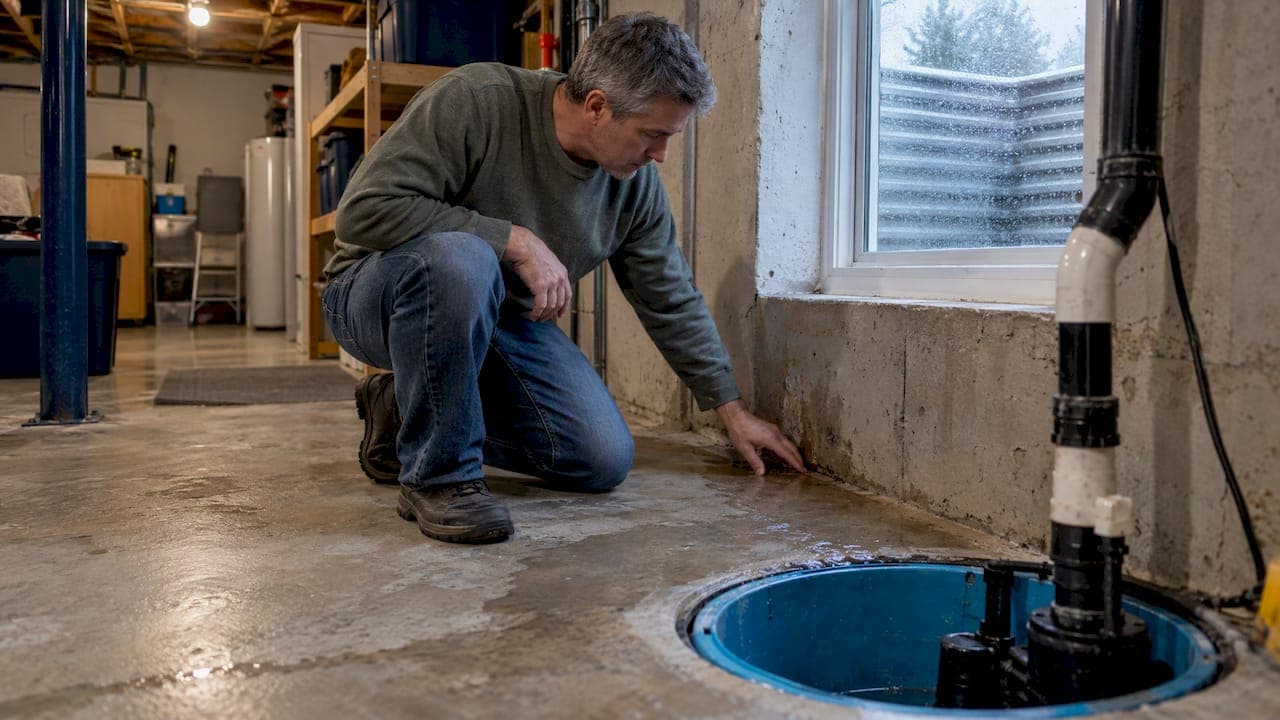
Water backup coverage and flood insurance protect against different events, and a standard homeowners policy includes neither. Water backup covers water that comes up through a sewer, drain or sump pump. Flood insurance covers rising water from outside, such as overflowing rivers, surface water and storm surge. If you want protection against both, you will usually need two separate purchases: a water backup endorsement on your homeowners policy and a flood policy.
This guide explains where the line falls, why claims get denied when homeowners assume the wrong coverage, and how to decide what your home needs.
TL;DR
- A typical homeowners policy covers sudden, accidental water damage like a burst pipe, but excludes flooding and sewer or drain backup.
- Water backup is an optional endorsement (add-on) to your homeowners policy. It covers backups of sewers, drains, septic systems and sump pumps.
- Flood insurance is a separate policy, most often through the National Flood Insurance Program (NFIP). It covers flooding as FEMA defines it.
- A standard NFIP policy has a 30-day waiting period, so you can't buy it when a storm is already in the forecast.
- Many homeowners need both. Ask your agent to check your policy for each gap before the next heavy rain.
Table of Contents
- The quick answer: where water comes from decides the coverage
- What counts as water backup
- What counts as a flood
- Why the standard homeowners policy leaves a gap
- Water backup coverage: what you are buying
- Flood insurance: what you are buying
- Do you need both?
- Water damage vs. flood damage: the wording to know
- How to protect your claim before water arrives
- Our perspective
- Get your water coverage checked
- FAQ
- Sources
The quick answer: where water comes from decides the coverage
Insurers don't sort water losses by how wet your basement is. They sort them by where the water came from.
| Source of the water | Standard homeowners policy | Water backup endorsement | Flood insurance |
|---|---|---|---|
| Burst or leaking pipe inside the home (sudden and accidental) | Typically covered | Not needed | Not applicable |
| Sewer or drain backing up into the home | Typically excluded | Covered | Only when the backup is a direct result of flood conditions |
| Sump pump failure or overflow | Typically excluded | Covered | Generally not the purpose of the policy |
| Septic system backup | Typically excluded | Covered | Generally not the purpose of the policy |
| Rising river, lake or ocean water | Excluded | Not covered | Covered |
| Surface water from heavy rain running toward your home | Excluded | Not covered | Covered when it meets the flood definition |
The table is a starting point. Policy wording varies by carrier and by state, so your own declarations page and endorsements decide what is actually covered.
What counts as water backup
Water backup is water or water-borne material that backs up through sewers or drains, or overflows from a sump, a sump pump or related equipment. The water is coming from your home's plumbing or drainage system, not from a lake, river or storm surge.
Here are common ways it happens:
- A municipal sewer line fills up during heavy rain and pushes wastewater back through your floor drain or lowest toilet.
- A clog in your lateral line, the pipe between your house and the street, sends water back toward the house.
- A sump pump fails during a power outage or simply wears out, and the pit overflows into your basement.
- A septic system backs up because the tank or drain field is overwhelmed.
The damage is often unpleasant as well as expensive. Backup water can carry waste, so cleanup typically means removing flooring, drywall and belongings rather than just drying them out.
The tricky part is that many of these events happen on the same days as storms. A basement that takes on water during a downpour feels like a flood to you. To your insurer, the question is whether water came up through a drain or sump (backup) or came in from the outside as surface water (flood). The two answers lead to different policies.
What counts as a flood
Standard homeowners policies typically exclude damage caused by flooding, including surface water, overflowing bodies of water, and tidal water or surges. Flood insurance exists to fill that gap.
NFIP flood policies cover damage directly caused by flooding. According to FEMA's commentary on the standard flood policy, a policy may also cover sewer backup when that backup is a direct result of flood conditions. That is a narrow overlap. A sewer that backs up on a dry day, or because of a clog, is a different matter, and it belongs with water backup coverage.
NFIP policies also have their own exclusions. For example, they exclude earth-movement damage, with an exception for certain shoreline collapse or subsidence caused by erosion or undermining during a flood.

Flood coverage is built around the building first
A building flood policy does not automatically protect what is inside. FEMA notes that contents are not typically covered by a building flood policy and must be purchased separately. If you own a home, think about two decisions: coverage for the structure, and coverage for your furniture, electronics and clothing. If you rent or own a condo unit, the contents decision is yours too.
For a deeper look at how flood policies work, see our guide to flood insurance basics.
Why the standard homeowners policy leaves a gap
Most homeowners policies are written to cover sudden and accidental events. A pipe bursts behind a wall, and the resulting water damage is typically covered. That is the water damage most people picture when they think of homeowners insurance.
Two big categories fall outside that promise. A typical policy covers sudden and accidental water damage but excludes flooding and sewer or drain backup. Optional water backup endorsements and NFIP flood insurance exist so you can cover those risks on purpose.
This is also the answer to a question many people search: what two events are not covered under homeowners insurance? Two common exclusions are flood and earth movement, including landslide, mudslide, subsidence or sinkhole. Sewer and drain backup is another exclusion you will see on many policies, which is why the endorsement exists.
We break down the broader picture in types of water damage home coverage.
Water backup coverage: what you are buying
The water backup endorsement (sometimes called a rider, or sewer and drain backup coverage) is an add-on to your homeowners policy. It covers backups of sewers, drains, septic systems and sump pumps, which are otherwise excluded.
Because it attaches to your homeowners policy, you buy it from the same agent and often at the same time as your renewal. It typically has its own coverage limit and, in some policies, its own deductible. Both are worth checking, because a limit set low can leave you paying a large share of a basement cleanup yourself.
What to check on a water backup endorsement
- The limit. Ask how much the endorsement pays and whether that limit is separate from or shared with your main dwelling coverage.
- The deductible. Find out whether the endorsement uses the same deductible as the rest of your policy.
- What it names. Confirm that sewers, drains, sump pumps and septic systems are all listed if you have those features.
- Contents and finished space. If you have a finished basement, ask whether belongings and finishes are included.
- Maintenance conditions. Some policies expect a working sump pump or other conditions. Our sump pump coverage checklist walks through what agents look for so a claim is not denied over a detail.
These are questions to ask, not promises about any one carrier. Wording differs between policies, and your agent should read the actual endorsement with you.
Flood insurance: what you are buying
Flood insurance is a separate policy, not an endorsement. Most homeowners buy it through the NFIP, which is run by FEMA and sold through insurance agents. Private flood insurance exists too: private flood net premiums written in the U.S. were about $803 million in 2023, according to the Insurance Information Institute.
Two practical points matter before you buy:
- The waiting period. Standard NFIP policies carry a 30-day waiting period before they take effect. Buying after a storm warning is too late for that storm.
- The gap after a loss. If a flood makes your home unlivable, hotel and living costs are a separate question. Our article on loss of use coverage and the NFIP gap explains how homeowners close it.
Do you need both?
Often, yes. A homeowner who wants protection against both flooding and sewer, septic or sump-pump backups may need NFIP flood insurance and a water backup endorsement. One does not substitute for the other.
The Insurance Information Institute reports that, in a 2023 Triple-I and Munich Re consumer survey, about 22 percent of U.S. homeowners said they were at risk of flood, and 78 percent of those had bought flood insurance. That leaves a meaningful number of at-risk homeowners without a policy, and plenty of them may not realize their homeowners policy would not respond.
A simple way to decide
Ask yourself these questions:
- Does your home have a basement, crawl space or lower level with a floor drain, sump pit or laundry? If yes, water backup coverage is worth pricing. These are the places backups show up.
- Is your home on a septic system? If yes, make sure the endorsement names septic backup.
- Is your home in a mapped flood zone, or near a river, pond, coast or low-lying street? If yes, flood insurance deserves a serious look. Lenders may require it in higher-risk zones.
- Is your home outside a mapped flood zone? Flooding is still possible. Flood risk does not stop at the edge of a map, so price it before you decide it is unnecessary.
- Would you be able to pay for a full basement cleanup and rebuild out of savings? If not, coverage is the cheaper way to carry the risk.
Example: one storm, two different claims
Imagine two neighbors in a Boston-area suburb during the same heavy storm. This example is hypothetical, to show how the claims split.
The first neighbor's sump pump loses power, the pit overflows, and the finished basement takes on water. That is a sump overflow. It would fall under a water backup endorsement if the neighbor had added one, and under nothing if not.
The second neighbor's yard fills with runoff from the street, and water enters through a basement window well. That is surface water. It is a flood, and a standard homeowners policy excludes it. Only a flood policy would respond.
Same storm, same wet basements, two different coverages. That is why an agent asks where the water came from before anything else.

Water damage vs. flood damage: the wording to know
When people search flood versus water damage, they are usually trying to untangle three terms that sound alike:
- Water damage in a homeowners policy usually means sudden and accidental discharge from plumbing or appliances, such as a burst pipe. It is the covered one.
- Water backup means water coming up through sewers, drains or a sump. It is excluded unless you add the endorsement.
- Flood means water from outside, such as rising rivers, surface water and storm surge. It is excluded from homeowners policies and covered by flood insurance.
Frozen pipes are a good example of why the source matters. A pipe that freezes and bursts is typically a sudden and accidental loss, which is a different path than a backup or flood. Our article on frozen pipe damage coverage covers the conditions insurers look at. Winter ice is another water source with its own rules, which we explain in ice dam insurance.
How to protect your claim before water arrives
Coverage works best when you set it up before the loss. A few habits help:
- Read your declarations page once a year and look for a water backup endorsement by name.
- Photograph your basement and its contents so you can document what you owned.
- Test your sump pump and check its battery backup if it has one.
- Keep floor drains clear and know where your main cleanout is.
- Note your flood zone and keep the flood policy renewal date on your calendar.
- Call your agent when you finish a basement. New finished space changes the value at risk.
After a loss, take photos, stop further damage if it is safe, and call your agent or carrier promptly. Do not throw away damaged items until the adjuster has had a chance to see them, unless a health hazard requires it.
Our perspective
Here is what we see most often: homeowners find out which coverage they were missing at the moment they needed it. The basement is wet, the adjuster asks where the water came from, and the answer decides everything.
As an independent agency, we are not tied to one insurance company. That matters here, because water backup endorsements and flood options are not identical from carrier to carrier. We can shop your coverage across carriers and show you the limits and deductibles side by side, so you choose with real numbers in front of you.
Our advice is simple. Look at your home, not at a generic checklist. Have a finished basement, a sump pump or a septic tank? Price water backup. Live near water or in a low spot? Price flood. Do both when your home calls for both, and review them every renewal. With more than 30 years of experience helping families and businesses, we have found that a short conversation up front is far less stressful than a denied claim later.
Mike
Get your water coverage checked
If you are not sure whether your policy includes water backup, or you have never priced flood insurance, we can read through your coverage with you and point out the gaps. Our licensed agents work with your actual home, whether you own a house, a condo or rent. Start on our home insurance page and request a quote.
If you also run a business or build properties, we can review water exposure on those policies too through our business insurance options.
FAQ
Does homeowners insurance cover water backup?
Not by default. A typical policy covers sudden and accidental water damage but excludes sewer and drain backup. You can usually add an optional water backup endorsement to cover sewers, drains, septic systems and sump pumps. Check your declarations page to see whether you already have it.
Is a sump pump overflow a flood?
Generally no. A sump pump failure or overflow is treated as water backup, not flood. That means it is typically excluded from your base homeowners policy and covered only if you have the water backup endorsement. Rising water from outside the home is the flood category.
Does flood insurance cover sewer backup?
Only in a limited case. FEMA's guidance on the standard flood policy says sewer backup may be covered when it is a direct result of flood conditions. A backup caused by a clog or a municipal line problem on a dry day is not the same thing, and a water backup endorsement is the coverage for that.
How soon can I buy flood insurance before a storm?
Not quickly. Standard NFIP policies have a 30-day waiting period before coverage takes effect, so a policy bought once a storm is already forecast will not help for that storm. Buy it well ahead of the wet season.
Do I need both water backup and flood coverage?
If you want both risks covered, yes, because they are separate. Water backup is an endorsement on your homeowners policy, and flood insurance is its own policy. An agent can help you weigh your basement, your drainage and your flood zone to decide which one matters most.
Sources
- Come Rain or High Water: Flood, Water Damage, and the Homeowners Policy, Texas Real Estate Research Center
- FEMA SFIP Commentary
- FEMA flood insurance contents coverage
- Facts + Statistics: Flood insurance, Insurance Information Institute
- Facts + Statistics: Flood insurance, Triple-I