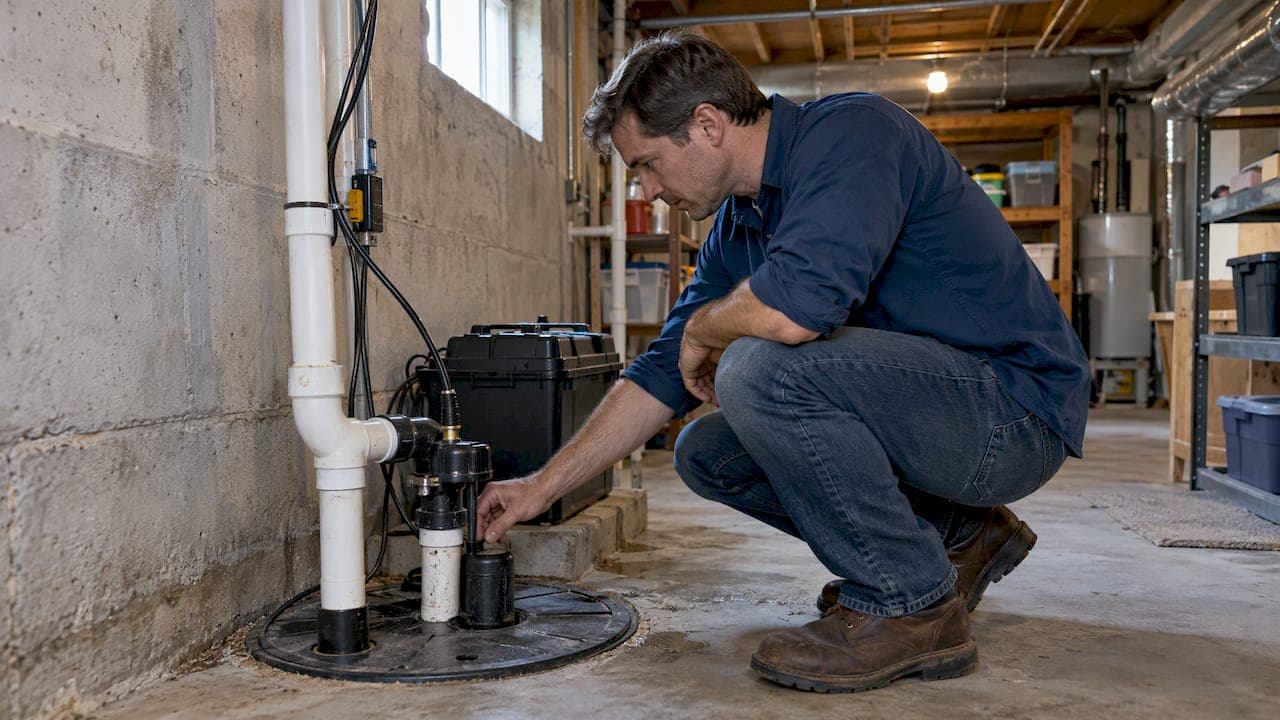
Standard homeowners insurance usually does not cover sump pump failure or sewer backup damage on its own. You typically need to add a water-backup or sump-pump endorsement that pays for cleanup and repairs up to its limit but often excludes replacing the pump itself. If a broader flood caused the loss, NFIP flood policy rules apply instead, so it pays to check that wording too.
TL;DR:
- Most homeowners policies require an endorsement to cover sewer backups and sump pump failures, and they typically exclude pump replacement and external flood damage.
- Claims are often denied due to poor maintenance, illegal plumbing connections, or flood causes outside the policy’s scope, making documentation crucial.
- Water-backup coverage limits usually range from modest to full replacement cost, costing around $40 to $50 annually, with a separate deductible often applying.
- Proper maintenance, including annual sump pump tests and installing a battery backup, significantly improves claim chances and prevents preventable damage.
- Having clear policy language and a detailed maintenance log before a loss will make insurance claims smoother and increase the likelihood of reimbursement.
Table of Contents
- 1. What a water-backup endorsement actually covers
- 2. Common exclusions and why claims get denied
- 3. Limits, deductibles, and what coverage actually costs
- 4. How to add coverage and file a claim that gets paid
- 5. How we help homeowners close this coverage gap
- 6. A quick maintenance checklist worth following
- How MF&T North America can review your policy
- FAQ
- Sources
1. What a water-backup endorsement actually covers
A water-backup or sump-pump endorsement fills the gap your base homeowners policy leaves open. It steps in for specific, well-defined events rather than general water damage, which is why knowing the trigger scenarios matters more than knowing the product name.
Most endorsements respond to:
- Sewer or drain backup that pushes wastewater into your basement.
- Sump pump overflow or discharge failure during heavy rain or a power outage.
- Clogged or blocked drain tile that causes water to pool around your foundation.
- Backup events tied to storms that overwhelm municipal sewer systems.
When a covered event happens, the endorsement typically pays for cleanup, drywall and flooring repairs, and a capped amount of contents coverage for a finished basement. That contents piece usually carries its own sublimit, often lower than the structural repair limit, so a flooded finished basement with furniture and electronics can still leave you with out-of-pocket costs.
What these endorsements commonly will not pay for is just as important. They generally exclude replacing the sump pump itself when it fails from normal wear, exclude damage from external flooding (that falls under NFIP flood policies), and exclude repairs to municipal or private sewer lines. If you want the pump itself replaced after a mechanical failure, you usually need separate equipment-breakdown coverage layered on top, since the water-backup endorsement is built to cover the water, not the hardware that failed.
2. Common exclusions and why claims get denied
Insurers deny sump pump and sewer backup claims more often than homeowners expect, usually because the loss falls into a gap the policy was never designed to cover.
The biggest gap involves flood insurance. The FEMA RSL SFIP commentary clearly states that sump pump discharge and sewer backup are excluded from the National Flood Insurance Program unless a qualifying flood in the surrounding area is the proximate cause of the loss. A finished basement that floods because a sump pump failed during a dry-weather mechanical breakdown is a different claim than one that floods because the whole neighborhood is underwater, and NFIP treats them very differently.
Beyond that flood distinction, claims commonly run into trouble over:
- Wear and tear or lack of maintenance on the pump or check valve.
- Illegal plumbing connections, such as a sump pump or French drain tied directly into the sanitary sewer.
- Equipment breakdown treated as a mechanical failure issue rather than a water-damage issue, which can fall outside the endorsement entirely.
Insurers often ask for maintenance records, photos of the pump and discharge line, and a timeline showing how quickly you acted once water appeared. Missing records or a delayed response are two of the most common reasons adjusters push back on a claim.
Pro Tip: Keep a simple folder, digital or paper, with your sump pump's install date, inspection dates, and any repair receipts. It is the first thing an adjuster will ask for.
3. Limits, deductibles, and what coverage actually costs
Water-backup endorsement limits vary by carrier, but most follow a similar pattern.
- Entry-level limits often start at a modest amount suitable for a small, unfinished basement.
- Mid-tier limits typically cover amounts appropriate for most finished basements with some furniture and flooring.
- Higher limits that may approach full replacement cost are available for basements used as living space or home offices.
The Insurance Information Institute notes that sewer backup coverage is widely sold for a modest additional premium, historically around $40 to $50 a year. Depending on your limit and carrier, current pricing can range higher, but the endorsement remains inexpensive relative to the cost of repairing a flooded finished basement.
Deductibles add another layer to plan for. Some carriers apply a separate deductible to the water-backup endorsement rather than your main homeowners deductible, which means you could owe two deductibles if a single storm causes both wind damage and a sewer backup. Ask your agent whether your endorsement deductible stacks separately or shares the same number as your base policy, since that detail changes your real out-of-pocket exposure.
4. How to add coverage and file a claim that gets paid
Getting this right starts before any water ever hits your basement floor.
- Call your agent and ask directly whether your current policy includes a water-backup or sump-pump endorsement, or whether you are relying on base coverage alone.
- Request the actual policy language so you can see the sublimits, exclusions, and whether pump replacement requires separate equipment-breakdown coverage.
- Confirm the deductible structure and whether sewer line repairs or service line coverage are included or sold separately.
If a loss happens, mitigate first: shut off power to flooded areas if it is safe, remove standing water, and start drying out the space to limit mold risk. Take time-stamped photos before you touch anything, save plumber invoices and repair receipts, and notify your agent promptly. For larger losses, a public adjuster can help document the claim thoroughly.
Pro Tip: Insurers favor homeowners who can show routine maintenance and a battery backup system, so documenting both before a loss strengthens your claim after one.

Our guide to reading a homeowners policy walks through exactly where to find these endorsement details in your own paperwork.
5. How we help homeowners close this coverage gap
We spend a lot of our time walking homeowners through exactly this gap, because it is one of the most commonly misunderstood pieces of a standard policy. As an independent agency, we are not tied to one carrier's version of a water-backup endorsement, so we compare limits and pricing across multiple insurers rather than offering a single option.
We typically recommend adding this endorsement when a home has a finished basement, older sewer infrastructure, or an existing sump pump that has never been formally covered. A full policy review from our team includes a gap analysis, a recommended endorsement limit based on your basement's actual value, and guidance on pairing it with equipment-breakdown or flood coverage if you need all three.
6. A quick maintenance checklist worth following
A little upkeep does more for your claim odds than any policy clause.
- Install a battery backup for your sump pump and test it once a year, especially before storm season.
- Never connect a sump pump or French drain to the sanitary sewer system. It is illegal in most jurisdictions and a common cause of backups.
- Keep a simple mitigation log with inspection dates and any repairs, since it becomes evidence if you ever need to file a claim.
A sump pump inspection once a year catches small problems, like a worn float switch or a cracked discharge pipe, before they turn into a basement full of water.
— Mike
How MF&T North America can review your policy
We can review your current homeowners policy, point out whether you already have a water-backup endorsement, and shop limits across carriers to find options for your basement and budget. Our home insurance page covers homeowners, condo, and renters coverage alongside endorsement options like this one.

- Request a free policy review to check your current sump pump and sewer backup protection.
- Get a quote for a water-backup endorsement sized to your basement's value.
- Schedule a consultation with one of our licensed agents to compare carrier options.
FAQ
Is there such a thing as sump pump insurance?
Sump pump failure is not covered by a standalone policy. It is typically added through a water-backup or sump-pump endorsement attached to your existing homeowners policy, which covers cleanup and repairs but often not the pump itself.
How many years does a sump pump usually last?
Sump pumps vary by model and usage, and manufacturers list different lifespans depending on the unit. Rather than relying on age alone, routine testing and annual inspection are the more reliable way to catch a pump nearing failure.
Should I avoid a house with a sump pump?
A sump pump is a normal feature in homes with basements prone to groundwater intrusion, and it is not a red flag on its own. What matters more is whether the pump is properly maintained, has a battery backup, and is paired with the right water-backup endorsement.
Is sump pump failure covered by State Farm insurance?
Coverage for sump pump failure depends on the specific policy and whether a water-backup endorsement has been added, which varies by carrier and by state. Contact your agent or insurer directly to confirm what your particular policy includes before assuming coverage either way.