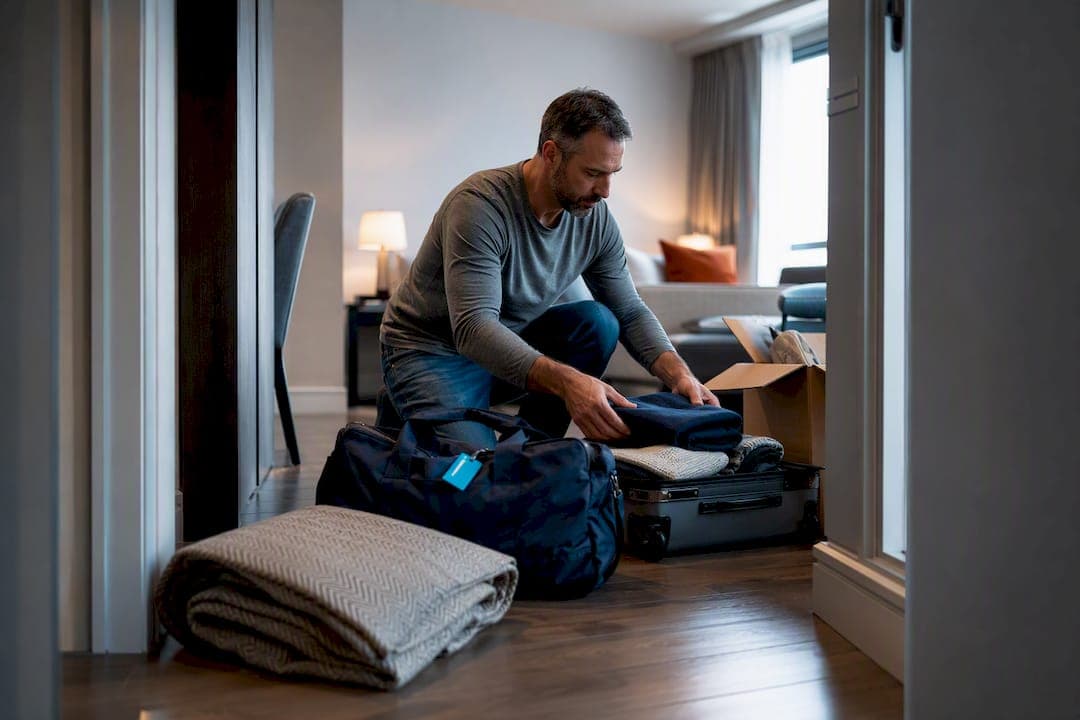
Loss of use coverage, also called additional living expenses (ALE) coverage, reimburses the extra costs you take on when a covered loss makes your home unlivable. It shows up on homeowners, renters, and condo policies, with small differences in how each calculates the payout. Most policies cap it at a percentage of your dwelling or personal property limit, and it pays out as reimbursement for real receipts, not a lump sum you get up front.
TL;DR:
- Loss of use coverage typically limits reimbursement to a percentage of your dwelling or personal property coverage, often between 10% and 30 percent.
- The payout is based on the difference between your normal expenses and the costs incurred during displacement, requiring detailed receipts for reimbursement.
- It activates only when a covered peril makes your home uninhabitable, excluding flood damage under NFIP policies unless a private flood policy is in place.
- Many policies set a time cap of 12 to 24 months or a dollar limit, with slow repairs potentially exhausting the benefit before the limit is reached.
- Reviewing your policy limits, understanding coverage exclusions, and gathering receipts immediately after displacement can help maximize your claim.
Table of Contents
- What Does Loss of Use Cover? Real Examples
- How Loss of Use Limits and Time Caps Work
- When Loss of Use Kicks In, and Where It Doesn't
- Filing a Loss of Use Claim: What to Do First
- Checking Your Own Policy Before You Need It
- What Insurance Agents See When Clients Get Displaced
- Get Your Loss of Use Coverage Reviewed
- Sources
- FAQ
What Does Loss of Use Cover? Real Examples
Loss of use insurance meaning gets clearer once you see it in action. Picture a kitchen fire that leaves smoke damage through your entire second floor. You can't sleep there, cook there, or let your dog wander the yard safely. Your policy's loss of use coverage steps in to cover the gap between your normal monthly costs and what you're paying now because you're displaced.
Covered expenses typically include:
- Temporary housing, such as a hotel room or short-term rental
- The increase in your food costs, since insurers only pay the difference above your usual grocery bill
- Storage fees for belongings pulled from a damaged home
- Pet boarding, when your temporary housing won't allow animals
- Coin laundry or dry cleaning if your washer and dryer are out of commission
- Extra transportation costs, like a longer commute from temporary housing
The reimbursement math matters here. Insurers don't hand you your full hotel bill and grocery receipts side by side and call it even. They pay the difference between what you'd normally spend and what displacement is costing you, which is why Investopedia's guide to ALE stresses keeping every receipt from day one.
The coverage looks a little different depending on what kind of policy you hold. Homeowners policies list this benefit as Coverage D on the declarations page. Renters insurance coverage ties additional living expenses to a percentage of your personal property limit rather than a dwelling amount, since renters don't insure a structure they don't own. Condo owners usually see a blend: their HO6 policy handles ALE similarly to renters coverage, but the condo association's master policy may factor into how quickly repairs happen and how long you're actually displaced.
How Loss of Use Limits and Time Caps Work
Insurers set your loss of use limit as a percentage of another coverage amount, not as a flat dollar figure you choose directly. On homeowners policies, that's usually a percentage of Coverage A (your dwelling limit). On renters and condo policies, it's tied to personal property coverage instead.
- Renters example: If your personal property limit is $30,000 and your ALE allowance is 30%, you're working with a $9,000 loss of use budget, a much smaller cushion than most homeowners carry.
- Time and dollar caps: Many policies apply whichever limit hits first, a dollar cap or a time cap commonly set at 12 to 24 months. A slow rebuild after a major fire can bump against the time cap even if you haven't spent the full dollar amount.
- Partial payments: Insurers sometimes issue a personal property advance early in a total loss, which can preserve your ALE dollars for housing costs rather than draining a single combined limit.
When Loss of Use Kicks In, and Where It Doesn't
Loss of use coverage activates when a covered peril, think fire, a burst pipe, or wind damage, makes your home genuinely unsafe or unlivable. Adjusters generally look at whether basic services like water, electricity, and heat are functioning before declaring a home uninhabitable, and a government evacuation order can trigger the same benefit even before an adjuster arrives in person.
It doesn't activate for everything, though, and the gaps catch people off guard.
- Flood damage under a standard NFIP policy, which excludes ALE in most Standard Flood Insurance Policy forms
- Ordinary wear and tear or long-term maintenance issues
- A voluntary move that isn't tied to an actual covered loss
- Pre-existing damage that predates your policy
The NFIP flood gap catches thousands of policyholders by surprise every hurricane season. The NFIP Claims Manual confirms that most flood policies won't pay a dime toward your hotel room or restaurant meals while your flooded home dries out and gets rebuilt. FEMA does allow advance payments, sometimes $5,000 or up to $20,000 with documentation, but that money goes toward building and contents repair, not toward keeping you housed. If you live somewhere flood risk is real, look into whether a private flood policy on the market offers ALE, since SFIP commentary from FEMA confirms this exclusion is standard across NFIP forms, not an insurer-specific quirk.
Filing a Loss of Use Claim: What to Do First
The first 48 hours after displacement set the tone for how smoothly your claim goes. Insurers move faster when you give them what they need up front instead of chasing paperwork later.
- Call your insurer immediately and get a claim number before you book anything.
- Ask directly about your ALE limit and whether an advance payment is available for urgent housing needs.
- Photograph the damage before cleanup starts, and keep photographing your temporary living situation.
- Save every receipt: hotel folios, restaurant tabs, pet boarding invoices, laundromat receipts, mileage logs.
- Get your adjuster's direct contact information and confirm in writing when they've declared the home uninhabitable.
Pro Tip: Open a dedicated folder, digital or physical, the day you're displaced. Drop every receipt in immediately rather than trying to reconstruct two months of spending later when it's time to submit your claim.
Most insurers pay loss of use on a reimbursement basis: you spend, you submit, they pay you back the documented difference above your normal costs. Some insurers offer a partial advance for urgent needs, particularly in a total loss, which Insurance can help stretch your available funds across a longer displacement.
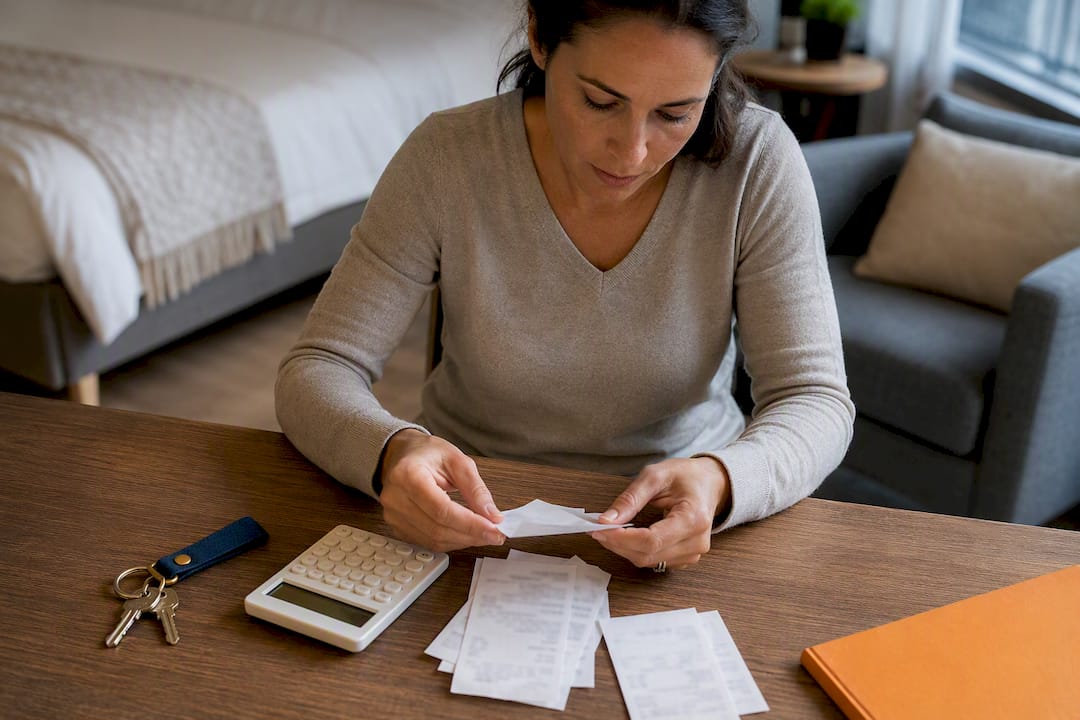
One more thing worth knowing before you're on the phone with a claims adjuster: be careful what you say. Avoid describing your move as voluntary, even loosely, and don't mix in unrelated expenses that have nothing to do with the displacement. Precision in your claim conversations protects your payout.
Checking Your Own Policy Before You Need It
Your declarations page lists your loss of use or ALE limit, usually as "Coverage D" on homeowners policies or as a line item tied to personal property on renters and condo policies. Pull it out and actually read the number, because most people never look until they're already displaced.
Run a quick gut check against your real situation:
- What would three months of local hotel or short-term rental rates cost your household?
- Do you have pets that would need boarding, and what does that run in your area?
- How large is your family, and would you need a two-bedroom rental instead of a single hotel room?
- What's the realistic repair timeline for damage like yours, given current contractor demand?
If that number is higher than your current ALE limit, talk to your agent about raising it or adding an endorsement. It also helps to understand how to read a homeowners insurance policy so you're not deciphering declarations-page jargon for the first time during a crisis.
What Insurance Agents See When Clients Get Displaced
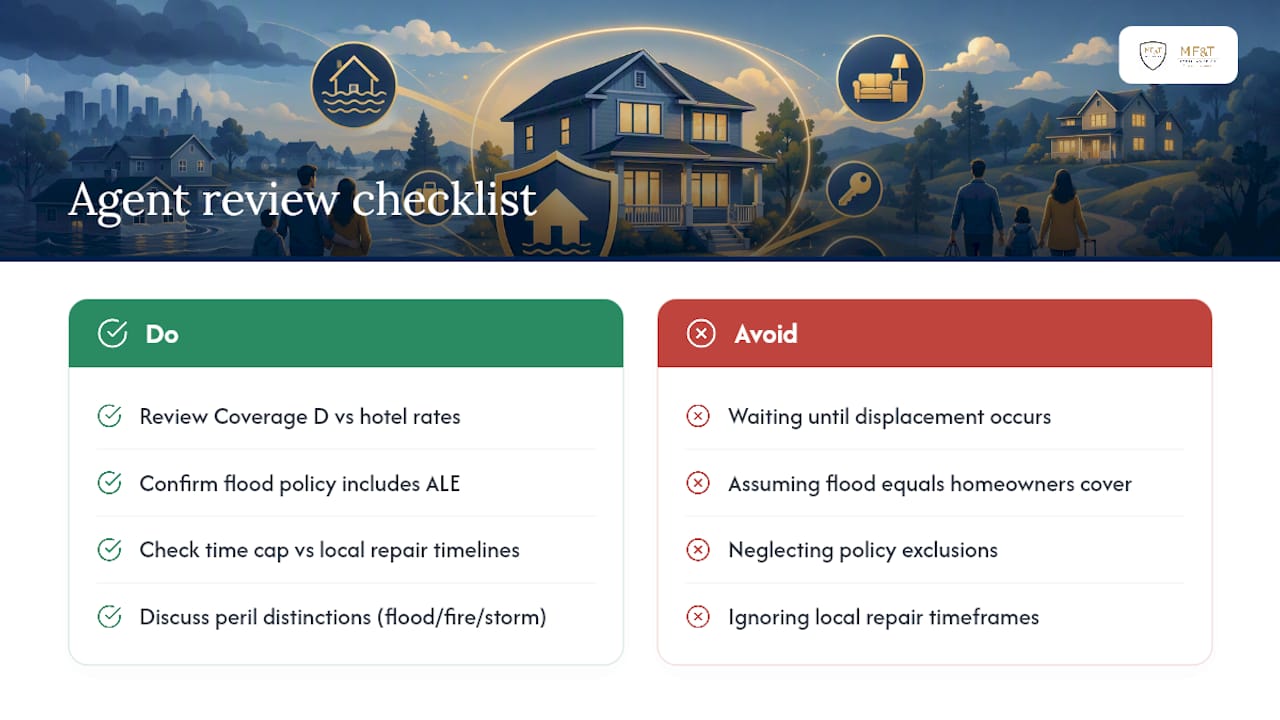
Fire displacement claims and water-damage claims show up constantly, and the pattern is consistent: people underestimate their loss of use needs until they're standing in a hotel lobby with a suitcase. The flood gap trips up even careful homeowners, because it seems logical that a flood policy would work like a standard homeowners policy. It doesn't.
An agent who knows your policy can flag the NFIP exclusion before a storm ever forms, not after. That conversation, checking your Coverage D limit against realistic hotel rates, confirming whether your flood policy includes ALE, catching a time cap that's too short for your area's repair timelines, is worth having long before you need to file anything. It's also worth reviewing how different perils get handled under home insurance so flood, fire, and storm distinctions aren't a surprise later.
— Mike
Get Your Loss of Use Coverage Reviewed
Most homeowners have never actually looked at their Coverage D number, and plenty of renters don't know their ALE allowance exists until they need it. An insurance agent can review your declarations page line by line, flag gaps like the NFIP flood exclusion before they become a crisis, and show you where your dwelling or personal property limit may leave you exposed.
A policy review takes one conversation. Share your current declarations page, and an agent will walk through your loss of use limit, check it against realistic local housing costs, and discuss whether an endorsement or a private flood policy makes sense for your risk. If repairs and renovations are part of your recovery picture, managing a project while staying operational is worth understanding too, since displacement timelines often hinge on contractor scheduling as much as insurance payouts. Start with a free insurance quote or browse the homeowners insurance page to see where your current coverage stands.
Sources
For flood-specific ALE exclusions and advance payment rules, the NFIP Claims Manual is the primary reference. For state-level guidance, see the Washington Office of the Insurance Commissioner.
This article is general information, not a substitute for advice from a qualified financial advisor. Consult a qualified financial professional about your own circumstances before acting on anything here.
- NFIP Claims Manual (June 2025)
- What Is Additional Living Expense (ALE) Insurance? — Investopedia
- Additional living expenses coverage | Office of the Insurance Commissioner (WA)
FAQ
What is covered in loss of use coverage?
It covers the extra costs of displacement, including temporary housing, the increase in your food spending, storage, pet boarding, laundry, and added transportation, all reimbursed against receipts.
What are the limits of loss of use?
Limits are typically set as a percentage of your dwelling or personal property coverage, often paired with a time cap of 12 to 24 months, whichever restriction is reached first.
What not to say to home insurance?
Avoid describing your relocation as voluntary or unrelated to the covered loss, and don't bundle unconnected expenses into your claim. Stick to documented, displacement-specific costs when talking to your adjuster.