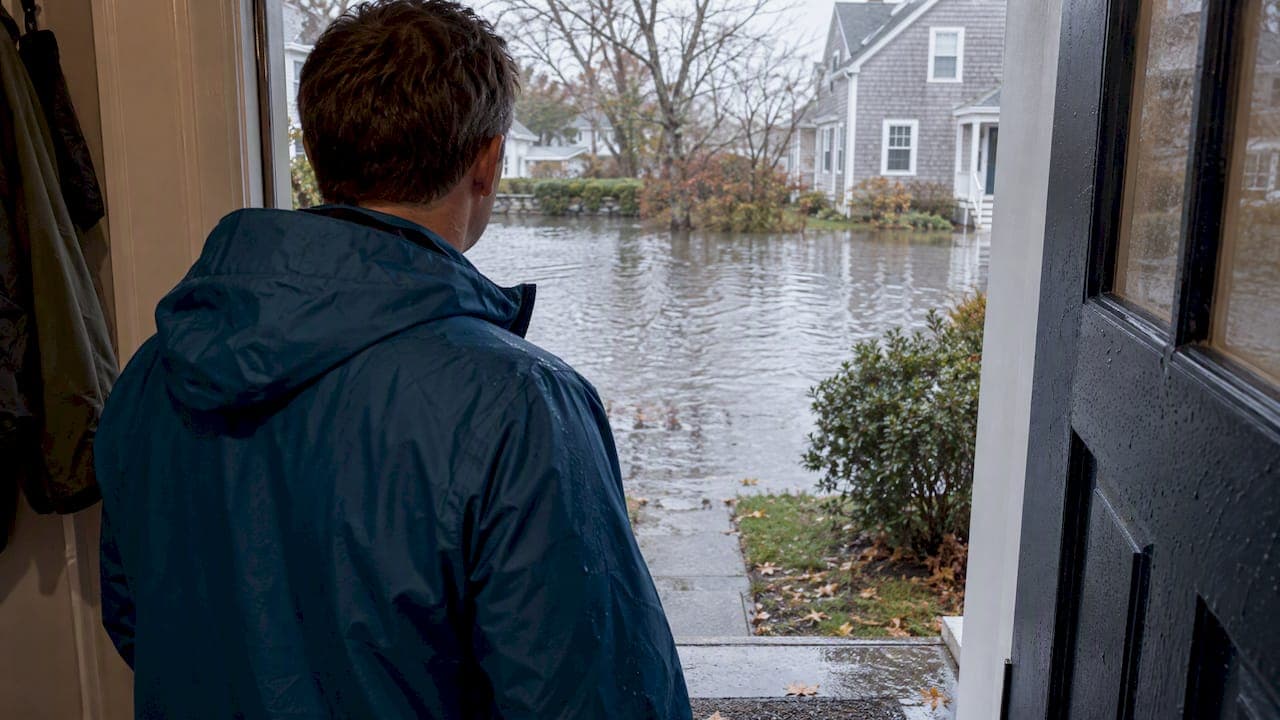
Flood damage is not covered by a standard homeowners policy, so you buy flood insurance separately. Most people get it through the National Flood Insurance Program (NFIP), and you can buy it whether or not you live in a high-risk zone. This guide covers what a policy pays for, what it leaves out, the limits, the waiting period, what it costs, and how to decide if you need it.
TL;DR
- Most homeowners insurance does not cover flood damage. Flood coverage is a separate policy.
- NFIP limits for a 1-4 family home are $250,000 for the building and $100,000 for contents.
- Plan ahead: a new NFIP policy typically has a 30-day waiting period, with a few exceptions.
- Flood risk is not limited to mapped high-risk zones. About one-third of NFIP claims from 2014 to 2024 came from low-to-moderate risk areas.
Table of Contents
- What counts as a flood, and why your home policy says no
- What flood insurance covers
- NFIP coverage limits at a glance
- Do you need flood insurance?
- The 30-day waiting period
- What flood insurance costs
- Our perspective: flood is the gap people find too late
- How to buy flood insurance, step by step
- Where we can help
- FAQ
- Sources
What counts as a flood, and why your home policy says no
Insurers define "flood" narrowly. In general it means one of these:
- Overflow of inland or tidal water, such as storm surge
- Runoff or buildup of surface water, such as a flash flood
- Mudflow
If water reaches your property that way, a standard homeowners policy will usually deny the claim. FEMA calls flood an excluded peril, meaning it is not covered unless you add a dedicated policy.
That does not mean every wet basement is a flood claim. A burst pipe, a failed water heater or a sudden roof leak is a different kind of loss, and your homeowners policy may respond to it. Sewer backup and seepage are often handled by optional endorsements or have their own limits. We break down the differences in our guide to types of water damage and what home coverage does about each, and the homeowners insurance FAQ answers related policy questions.
When a storm hits, the cause of the water decides which policy pays. Wind-driven rain that comes through a damaged roof is typically a homeowners matter. Water rising from the ground or a river is a flood matter.
What flood insurance covers
An NFIP policy has two parts, and you choose each one separately.
Building coverage protects the structure itself. That includes the foundation, electrical and plumbing systems, central air conditioning, furnace and water heater, and built-in appliances.
Contents coverage protects your belongings, such as furniture, clothing and electronics. It is optional, so you have to ask for it. Renters can buy contents coverage on its own, and so can condo owners for their unit.
FEMA's guidance is that flood policies cover direct physical loss by flood. That wording matters. Flood policies generally do not pay for things like temporary housing, lost income, or landscaping. If you want help with the cost of living elsewhere while your house is repaired, read about loss of use coverage and the gap it can fill after a flood.
Coverage that surprises people
Two details come up often in claims.
First, Increased Cost of Compliance coverage pays up to $30,000 toward elevating, relocating or demolishing a building that local officials declare substantially damaged. That declaration generally depends on repair costs reaching 50% or more of the building's pre-damage market value, not counting land. The standard policy does not otherwise pay for bringing a structure up to current building codes.
Second, the payout basis. NFIP policies generally pay actual cash value, which accounts for depreciation. You can qualify for replacement cost on the building if it is your principal residence and you carry coverage of at least 80% of its replacement cost, or the maximum the program allows. Insure for less and the payout can leave a real gap against repair bills. This is the "80% rule" people ask about.
NFIP coverage limits at a glance
Congress sets the NFIP limits. According to FEMA's published figures:
| Property type | Building limit | Contents limit |
|---|---|---|
| Residential, 1-4 units | $250,000 | $100,000 |
| Residential, 5+ units | $500,000 | $100,000 |
| Non-residential business | $500,000 | $500,000 |
The $250,000 cap is why people ask whether it is enough. In many parts of the country, rebuilding a home costs more than that. If your home's replacement cost is well above the cap, you have a gap that NFIP alone cannot close. Some private insurers sell flood coverage with higher limits, and an independent agent can tell you what is available where you live.
A small business owner should look at the business column too. Flood is generally excluded from commercial property policies in the same way it is from home policies. If you run a shop, an office or a rental building, we cover how the pieces fit in our guide to business income insurance, and our business insurance page lists the commercial lines we work with.

Do you need flood insurance?
There are two answers: whether you are required to carry it, and whether you should.
When it is required
If your home or business is in a high-risk flood area and your mortgage comes from a government-backed lender, you must carry flood insurance. FEMA states this directly. Your lender will tell you at closing, and many will require the policy before they fund the loan.
When it is smart even if nobody requires it
FEMA's advice is to consider a policy even outside high-risk zones. The numbers explain why:
- 99% of U.S. counties have had a flood event in the past 20 years.
- About one-third of NFIP claims from 2014 to 2024 came from areas rated low-to-moderate risk, per FEMA's FloodSmart site.
So "I am not in a flood zone" is a weaker reason to skip coverage than most people assume. A flood map is a snapshot, and local drainage, a heavy storm, a clogged storm drain or a nearby river can all matter more than the map color.
Ask yourself these questions:
- Is your home near a river, brook, coast, or low spot where water collects?
- Does your basement or first floor hold things that would be expensive to replace?
- Could you pay for major repairs out of pocket without borrowing?
- Have neighbors had water in their homes in past storms?
If you answer yes to any of these, get a quote and compare it with the risk. Renters should look at contents-only coverage, since a landlord's policy protects the building and not your belongings.
Why flood insurance beats waiting for disaster aid
FEMA points out that flood insurance payments do not have to be repaid, unlike many forms of federal disaster assistance, and you do not need to wait for a presidential disaster declaration to file a claim. Disaster aid, when it comes, is often a loan.
The 30-day waiting period
Most new NFIP policies take effect 30 days after purchase. Buying when the forecast turns bad is too late. The main exceptions, per FEMA:
- Coverage bought because a federally backed mortgage requires it can start at closing.
- A one-day wait can apply if you buy within a year after your community adopts a revised flood map.
Also know that you cannot raise coverage limits once a loss is already underway.
So the best time to shop is when the weather is calm, ideally a month or more before storm season in your area.
What flood insurance costs
NFIP premiums are priced under a method called Risk Rating 2.0, which looks at the individual property rather than relying only on broad flood maps. The U.S. Government Accountability Office reported that the median annual NFIP premium was $689 as of December 2022, and projected it to rise to $1,288 as policies move toward full-risk rates by 2037. Annual increases are capped, so rates rise gradually. GAO's analysis estimated the program's premium shortfall at about $27 billion until full-risk rates arrive.
Your own premium depends on things like your home's location, elevation, foundation type, replacement cost and the coverage you choose. Some Gulf Coast states, which hold 61% of NFIP policies, are seeing the largest increases.
If you are 62 or older in Florida and have or are considering a reverse mortgage, flood coverage can be a loan condition. This explainer on the life-of-loan flood rule for Florida reverse mortgages is a useful companion to the cost question.
To keep costs sensible:
- Ask for quotes with different deductibles.
- Decide on contents coverage deliberately rather than by default.
- Ask whether a lower-risk foundation, elevation certificate or mitigation work can change your rating.
- Compare the NFIP quote with a private flood quote, which can differ in price and limits.
Our perspective: flood is the gap people find too late
We are an independent agency in Arlington, MA, and we have spent more than 30 years helping families and contractors sort out coverage. Because we are independent, we can shop carriers for you rather than push one company's product.
Here is what we see most often. People assume their homeowners policy handles "water." Then a storm arrives and they learn the policy handles some water losses and excludes others. The surprise is rarely about price. It is about timing and wording.
Our advice is practical:
- Read your homeowners policy for water-related exclusions before you need it. Our guide to reading a homeowners policy shows where to look.
- Photograph and list your belongings now. A video walk-through of each room takes ten minutes and makes any claim easier.
- Check where your home's replacement cost sits against the $250,000 NFIP building cap.
- Do not wait for a lender to tell you. Decide based on your risk, your savings and your peace of mind.
Contractors and developers have a different wrinkle. A building under construction is not covered by a homeowners policy, and flood exposure on a job site is a real question to raise when you set up a policy. Our builders risk page explains how project coverage works, and builders risk vs. homeowners insurance shows why the two are not interchangeable.
— Mike
How to buy flood insurance, step by step
- Check your risk. Look up your address on FEMA's flood maps and talk with neighbors about past water.
- Confirm your community participates in the NFIP. Coverage is available to anyone in one of the roughly 22,600 participating communities.
- Gather the details. You will need your address, home value and rebuilding cost, foundation type and what you want covered.
- Get quotes. NFIP policies are sold through a network of insurance companies and an agent can request one for you.
- Choose building and contents limits. Check the 80% replacement cost threshold if you want replacement cost on the building.
- Note the start date. Mark the day coverage begins, 30 days out for most buyers.
- Review every year. Rates and your home's value change.
Where we can help
We do not sell policies on price alone. We start by reading your current coverage with you and showing where water losses fall in or out. Our home insurance team works with homeowners, condo owners and renters, and you can request a free quote to talk through your options with a licensed agent. There is no pressure, only a clear picture of what you have.
FAQ
Does homeowners insurance cover flood damage?
No, not in most cases. FEMA says standard homeowners policies do not cover flood, so you need a separate flood policy. Some non-flood water losses, such as a sudden pipe burst, may still be covered by your homeowners policy.
Can I buy flood insurance if I am not in a flood zone?
Yes. If your community participates in the NFIP, you can buy a policy regardless of your zone, and FEMA encourages it for people who live outside high-risk areas. Policies are often cheaper in lower-risk areas, though your rate depends on the individual property.
Why is NFIP coverage capped at $250,000?
Congress sets the program's limits, and for 1-4 family homes the building cap is $250,000. If your home would cost more to rebuild, you may need extra flood coverage from a private insurer. Ask an agent which options exist in your state.
How long until flood insurance starts?
For most new NFIP policies, there is a 30-day waiting period. Coverage required at closing by a federally backed lender can start immediately. Buy early so you are not caught between a forecast and an effective date.
Sources
- Flood Insurance | FEMA.gov
- Flood Insurance Basics | FloodSmart
- What Is My Flood Risk? | FloodSmart
- FEMA: NFIP coverage limits and facts
- FEMA: NFIP waiting period and exceptions
- NFIP Claims Handbook
- NFIP Claims Manual
- Recovering Financially After a Flood
- GAO-23-105977 highlights
- GAO-23-105977 report page