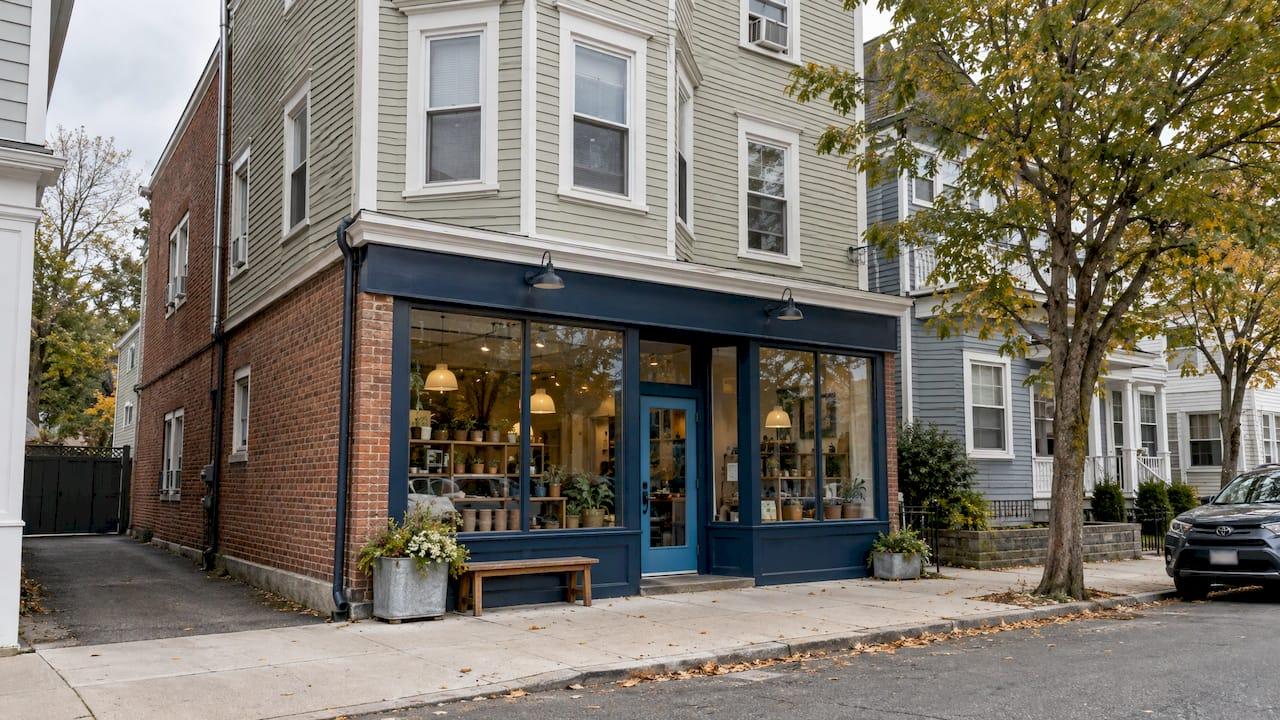
Mixed use property insurance protects a building that holds both homes and businesses, such as apartments above a storefront. A standard homeowners policy is built for personal living, so it usually cannot be the policy on that building. You typically need a commercial property policy, often paired with liability coverage, written around how the building is really used. This guide explains what that coverage includes, what drives the price, and how to get a clean quote.
TL;DR
- Homeowners policies are designed for personal residential risk. Business use and rented space are commonly excluded or limited, so a mixed-use building generally needs a commercial or package policy.
- The core pieces are building coverage, liability, and income protection if a covered loss empties your units.
- Recent figures put mixed-use property rates at roughly $0.40 to $0.58 per $100 of insured value. Building age, location, tenant stability, and loss history move that number.
- Vacancy, flood, earthquake, and tenant improvements are the gaps owners most often find too late. Check each one before you sign.
- An independent agent can shop several carriers for you, which matters because not every insurer wants this kind of building.
Table of Contents
- What mixed use property insurance is
- Why a homeowners policy usually won't work
- What mixed use property insurance typically covers
- How the policy is structured: three common routes
- What drives the cost
- Gaps to check before you sign
- Information to have ready when you apply
- A quick example
- Our perspective
- Get a mixed-use quote with a local independent agent
- FAQ
- Sources
What mixed use property insurance is
A mixed-use building has more than one kind of occupant. The classic example is a shop or office on the ground floor with apartments upstairs. Others include a medical suite with two rentals above, a small restaurant with a landlord's unit behind it, or a live-and-work space where the owner runs a business from part of the home.
Insurers look at that building as one risk with two personalities. The residential side brings overnight occupancy, cooking, and tenant turnover. The commercial side brings customers, deliveries, equipment, and sometimes higher fire or liability exposure, depending on the trade. Mixed use property insurance is the coverage written with both in view, so neither side is left out of the policy.
In practice, there is no single product called "the" mixed-use policy. Carriers assemble it from commercial property, general liability, and sometimes a business owner's policy or a habitational (apartment-style) form. Which structure fits depends on the building, and that is why the first conversation with an agent is about how the building is used.

Why a homeowners policy usually won't work
It is tempting to keep a homeowners policy on a building you live in, especially if you occupy one unit. The trouble is what homeowners forms are written to do.
The Maine Bureau of Insurance explains that most homeowners policies do not cover structures used for business or rented to others, though some permitted occupancies can be added by endorsement. That is a general consumer warning, and your own policy wording is what counts.
Courts treat the wording seriously. In a 2022 decision, the Eighth Circuit upheld a denial of coverage for an other-structure that was used for a substantial construction business, because the policy excluded structures used in whole or in part for business. The lesson is practical: coverage turns on the actual exclusions and on how the property is really used, not on what you call the building.
The same Maine guidance suggests asking whether customers visit, whether deliveries arrive, and whether business property is stored on site, then reviewing your limits with an insurance professional. Those are exactly the questions that decide whether a building sits in the homeowners world or the commercial one.
If you are only running a small home office with no tenants and no customer traffic, you may be fine with an endorsement. Once you have a retail tenant, a rented apartment, or a separate entrance for a business, plan on commercial coverage. You can review your current home policy first to see exactly what it says about business use and rentals.

What mixed use property insurance typically covers
The details change by carrier and form, but most mixed-use programs are built from the same four layers.
Building and property damage
Commercial property coverage pays to repair or rebuild the structure after a covered cause of loss such as fire, wind, water damage from a burst pipe, theft, or vandalism. It can also extend to your own business personal property, such as landlord-owned appliances in rental units, common-area furniture, and maintenance equipment. Ask whether the policy pays on a replacement-cost basis and how the insured value was set. A building insured below its true rebuild cost can leave you short at claim time.
Liability
Liability coverage responds when someone is hurt on your premises or you are blamed for damage to someone else's property. A customer slipping on a wet entry and a tenant's guest hurt on a broken stair are both examples of the claims it is meant for. In a mixed-use building the exposure is higher than in a single-use one because the public walks through the commercial space and residents live above it. Our business insurance page lists general liability and the related commercial lines we place.
Business income and rental income
If a covered loss makes units unusable, the rent stops but the mortgage and taxes do not. Business income or rental income coverage is designed to replace lost income during the repair period. A business owner's policy commonly bundles property, general liability, and business income coverage in a single package, which is why it is a frequent starting point for smaller buildings that qualify.
Optional and add-on coverage
Many owners add equipment breakdown, ordinance or law coverage (for the extra cost of rebuilding to current code), umbrella liability, and coverage for signs or glass. Which ones matter depends on your tenants and your building's age. A restaurant tenant changes the picture compared with an accountant's office.
How the policy is structured: three common routes
There is no one-size answer, so it helps to understand the routes underwriters use.
| Structure | Where it tends to fit | What to confirm |
|---|---|---|
| Business owner's policy (BOP) | Smaller buildings with standard, low-hazard occupancies | Whether your building size and residential share qualify under the carrier's rules |
| Commercial package policy | Larger or more varied buildings, several commercial tenants | How property, liability, and income coverage are each limited |
| Habitational or apartment-style form | Buildings where residential units dominate and the shop is small | How the commercial space and its tenant are treated |
Some carriers will not accept a building if the commercial share is too large, and others will not accept it if the apartments are too many. That is not a flaw in your building, it is the appetite of that particular insurer. This is the main reason to work with an independent agency: we compare carriers rather than answering for one.
Your tenants' own policies are a separate layer. Most commercial leases require the tenant to carry their own liability coverage and insure their contents, and residential tenants can carry renters insurance. Your policy covers your interest in the building, while theirs covers theirs. Reading the lease language on who insures what is part of getting this right. If a commercial tenant is building out the space, see our guide on who insures tenant improvements.
What drives the cost
Price depends on the building and on you. One 2026 industry estimate puts mixed-use premiums at about $0.40 to $0.58 per $100 of insured value. As a simple illustration, if that rate is applied annually, a building insured for $1,000,000 would land somewhere between $4,000 and $5,800 a year. Your own quote will differ, since carriers price each building individually.
The main factors:
- Age and condition. The same source notes that pre-1980 buildings can carry surcharges of 20 to 35 percent over post-2000 construction. Updated wiring, plumbing, roofing, and heating systems help.
- Construction, occupancy, protection, and exposure. Underwriters often use a framework called COPE to size up a commercial building, and higher-risk occupancies can carry higher costs. A bakery with fryers is a different risk from a tax preparer.
- Location. Fire protection, crime, and weather exposure all count. Coastal and flood-prone areas can add separate coverage needs.
- Occupancy stability. Long-term tenants usually look better than a building that turns over often.
- Loss history. Past claims on the building and on you as an owner shape the price.
- Deductibles and limits. A higher deductible can lower the premium, but only choose one you could pay comfortably after a loss.
The broader market is also moving. National Apartment Association reporting found that same-store multifamily property insurance costs rose from $502 per unit in 2021 to $777 per unit in 2024, a 55 percent increase. That is apartment data, not a mixed-use rate, but it shows why reviewing coverage and shopping the market each renewal is worthwhile. Insurance is one of several line items in an owner's budget, so a good plan accounts for it early. If you are weighing a purchase, financing structure matters too. This overview of SBA 504 multi-tenant property loans explains how lenders treat buildings with more than one occupant, and your lender will have its own insurance requirements to meet.
Gaps to check before you sign
A policy can look complete and still leave a hole. These are the points we suggest walking through line by line.
- Vacancy. Vacancy clauses can restrict coverage between tenants. If a storefront sits empty for weeks, ask how long it can be empty before coverage changes. Our guide to vacancy permit insurance explains what to do before a vacancy window closes.
- Flood and earthquake. These are added by location, so they are not assumed to be in the base policy. Ask directly whether they are included for your address.
- Cyber and pollution. The same source notes these are not included in a standard mixed-use program. If a tenant handles customer data or uses chemicals, discuss separate coverage.
- Business use by tenants. Confirm which tenant trades are acceptable to the carrier. A change of tenant can change your risk.
- Limits. Compare the insured value to a current estimate of rebuild cost, and check liability limits against the foot traffic you have.
- Your own living space. If you live in one unit, make sure the policy handles your personal belongings and liability in a way that fits, and consider a personal umbrella on top. See our auto and umbrella page for that line.
Information to have ready when you apply
A complete submission gets a faster, cleaner quote. Gather:
- The address, year built, construction type, and square footage of each use.
- Dates of major updates to the roof, electrical, plumbing, and heating.
- A list of each unit: who occupies it, for what business or residential purpose, and on what lease terms.
- Any sprinklers, alarms, or fire protection in place.
- Five years of loss history, if available.
- Your estimated rebuild value and your mortgage lender's insurance requirements.
- Details on any renovation planned. A major build-out may call for builders risk coverage during construction, which we cover on our builders risk page and in this look at what builders risk costs.
Being precise about use helps. Telling an underwriter exactly what happens in each space is better than a vague description, because the policy will be read against the real facts if you ever file a claim.
A quick example
Imagine a three-story building with a hair salon on the ground floor and two apartments above, owned by someone who lives in one of them. A homeowners policy is a poor match: there is a business on site and a unit rented to others. A workable setup might be a commercial property policy on the building, liability covering the salon's customers and the shared entry, rental income protection for the units, and a separate policy from the salon owner for their chairs, equipment, and their own liability. The owner would also look at an umbrella for added liability limits. Details depend on the carrier, but that is the shape of the conversation.
Our perspective
Most of the mixed-use owners we talk to are surprised by how much depends on one question: what actually happens in the building every day. A policy that fits on paper but not in practice is the one that disappoints at claim time.
We are an independent agency, so we are not tied to one carrier. That lets us shop a building with shops and apartments across insurers whose appetites differ, and then recommend coverage that matches your tenants and your goals. Our licensed agents work directly with you, and we focus on personalized recommendations rather than a one-size package.
Our advice is simple. Describe the building accurately, ask what is covered during vacancy and after a loss, and review the policy at every renewal. If you are renovating, ask us about builders risk early, since we offer same-day binding on that coverage.
Mike
Get a mixed-use quote with a local independent agent
We help homeowners, landlords, contractors, and small business owners across multiple states place home, auto, builders risk, and commercial coverage. For a building with both residents and businesses, we start with how it is used, then compare carriers for property, general liability, and related coverage.
When you are ready, start with our business insurance page, or contact us through mfandtna.com and tell us about your building.
FAQ
Can I use homeowners insurance for a building with a shop and an apartment?
Usually not. Homeowners forms are built for personal residential risk, and business use and rented space are commonly excluded or limited. A commercial property or package policy is the more typical route, and an agent can confirm what fits your building.
What does mixed use property insurance cost?
One 2026 estimate cites about $0.40 to $0.58 per $100 of insured value. Your price will depend on the building's age, location, tenants, claims history, deductible, and limits. A quote based on your exact details is the only reliable number.
Is a business owner's policy enough for a mixed-use building?
Sometimes, for smaller buildings with standard occupancies, since a BOP can combine property, liability, and business income. Carriers set their own size and occupancy rules, so larger or more complex buildings often need a commercial package. We check eligibility across carriers.
Do I need separate insurance if a tenant runs a business in my building?
Yes, the tenant should usually carry their own coverage for their contents and liability, as set by the lease. Your policy covers your interest in the building. Review the lease and ask for proof of the tenant's coverage.
Sources
- Insuring Your Home Business, Maine Bureau of Insurance
- Eighth Circuit opinion on business-use exclusion, 2022
- Business owner's policy overview, CMAA
- What Insurance Costs Should I Assume for CRE in 2026?
- Understanding Commercial Property Underwriting and COPE, Insurance Journal
- Premium Pulse: National Multifamily Insurance Cost
- Mixed Use Insurance Requirements, Advocate
- SBA 504 Multi-Tenant Property Loans: Rules and Structure