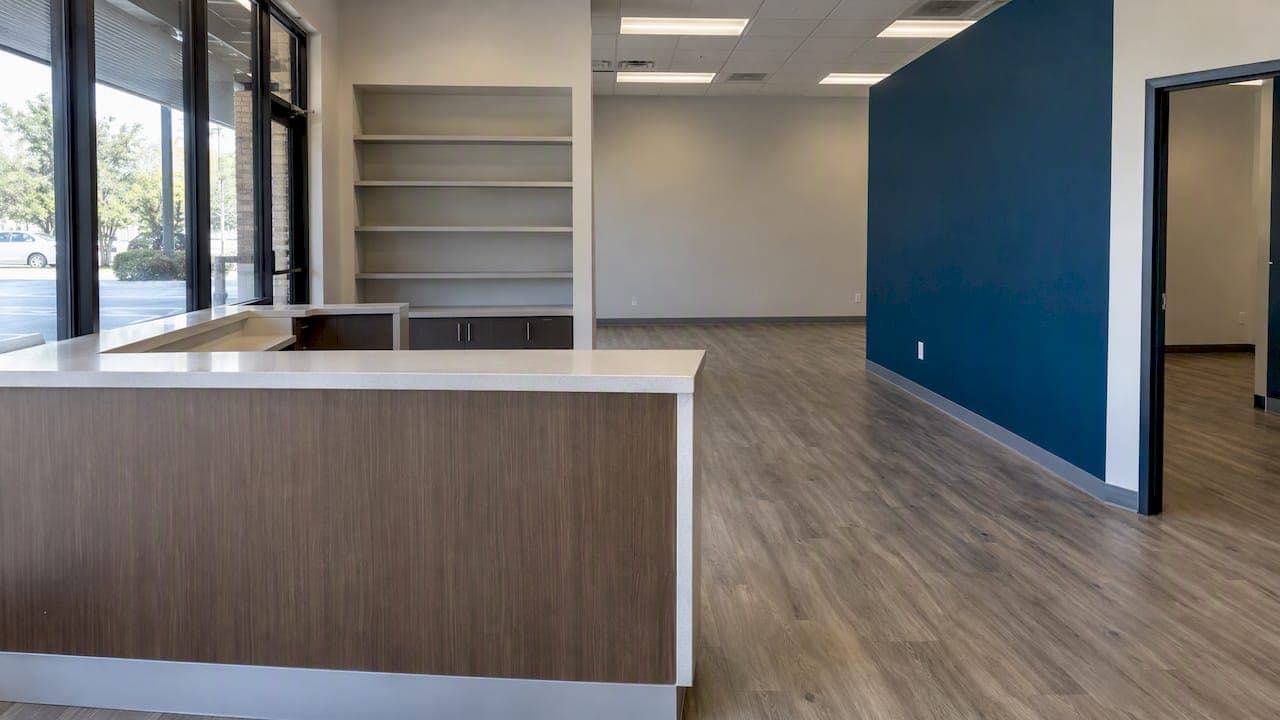
Tenant improvements coverage, which policies call improvements and betterments, protects the permanent upgrades made to a space you lease: walls, flooring, lighting, built-in counters. Who insures them depends mostly on your lease, not on a universal rule. Many tenants pay for a build-out and then learn after a fire or burst pipe that neither their policy nor the landlord's covers it.
This guide shows what counts as an improvement, how ownership and insurance responsibility fit together, how claims get paid, and what to check before you sign or start construction.
TL;DR
- Improvements and betterments are permanent changes made to a leased space. Your lease should say who owns them and who insures them.
- Landlords typically insure the building and its improvements, while tenants typically insure interior improvements, fixtures and equipment. Triple-net and ground leases often shift more to the tenant.
- You can pay for an improvement and still not own it. Your insurable interest is then your right to use it for the rest of the lease.
- Claim payment depends on whether repairs are made promptly, and your limit must include the value of your improvements.
- Match the lease to your policy before work begins, not after a loss.
Table of Contents
- What counts as a tenant improvement
- Who owns the improvements, and why it matters
- Who is responsible for insuring them
- What improvements and betterments coverage pays
- When the lease and the policy disagree
- A worked example
- Before work starts: a checklist
- Our perspective
- Get your lease and policy reviewed
- FAQ
- Sources
What counts as a tenant improvement
A tenant improvement (often shortened to TI) is a permanent change made to a leased space to fit the tenant's needs. Accounting guides list painting, partitions, customized light fixtures and flooring as typical examples.
In insurance, the same items go by "improvements and betterments." Think of anything that is attached to the building and was installed by or for you:
- Interior walls and partitions
- Flooring, ceilings and lighting
- Built-in reception desks, shelving or cabinetry
- Dedicated electrical, data or plumbing work for your operation
- Restaurant hoods, medical suite fit-outs, salon stations that are fixed in place
What does not count is just as important. Your movable equipment, inventory and furniture are business personal property. They sit in a different part of your policy. Walls, roof and structure belong to the building, which the landlord normally insures.
Who owns the improvements, and why it matters
Ownership drives coverage. The National Law Review's analysis says the lease should define who owns tenant improvements during the lease and at termination, and which party insures them. Attached improvements may become the landlord's property, or title may pass at lease end.
A common pattern: fixtures, alterations and additions made permanent to the building at the tenant's expense generally become the landlord's property. Even so, the tenant ordinarily remains responsible under the lease for repairing or replacing them after a loss.
That is the trap. You may owe the repair without owning the thing. If the lease says all improvements belong solely to the landlord, you may have trouble showing an ownership interest, which is one reason tenants get surprised at claim time.
Your insurable interest when you do not own it
After a fire, improvements you paid for may belong to the landlord. According to PropertyCasualty360, the tenant's insurable interest is then the lost right to use those improvements for the remaining lease term. A tenant with ten years left on a lease has a larger interest than one with ten months left.
Who is responsible for insuring them
There is no single default. The National Law Review states that the lease, not a universal rule, should specify which party insures the improvements, and both parties must confirm their policies cover the property and duties the lease assigns.
Here is how it commonly plays out, based on guidance from the National Retail Tenant Association:
| Lease type | Landlord usually insures | Tenant usually insures |
|---|---|---|
| Gross or modified gross | Building and building improvements | Interior improvements, fixtures, equipment, contents |
| Triple net (NNN) | Varies by lease | Improvements plus interior property, often the building too |
| Ground lease | Little or none | Casualty insurance on improvements and interior property |
The same association notes that the party required to maintain casualty insurance is typically the party required to restore the improvements, though a lease can split those duties differently. When the two are split, gaps appear: one party must rebuild while the other holds the money.
The initial build-out trap
Suppose the landlord installs the initial build-out before you move in. If your lease calls those items tenant improvements and makes you responsible for repairing or replacing them, you may bear those costs if your own policy does not cover them. Read the definition of "tenant improvements" in the lease closely. It can pull in work you never paid for.
What improvements and betterments coverage pays
In a commercial property policy, improvements and betterments are usually insured as part of your business personal property coverage. Three points shape the claim.
Your limit has to include them
IRMI's commentary says limits should include the value of the tenant's improvements and betterments to meet coinsurance requirements. If you build out $150,000 of upgrades but insure contents at a figure that ignores them, a coinsurance penalty can shrink a claim. Our guide to commercial property coinsurance walks through how that penalty works.
Repairs decide how you get paid
Per the same IRMI source, if you promptly repair improvements and betterments, the policy pays actual cash value, or replacement cost if that optional coverage applies. If repairs are not made within a reasonable time, payment is a proportion of the original cost. So a tenant who walks away from a damaged space may collect far less than one who rebuilds. For the difference between the two valuation methods, see replacement cost vs. ACV.

Some policies carve improvements out
There is a standard endorsement, Additional Property Not Covered (CP 14 20 11 91), that can remove tenant improvements and betterments from a tenant's policy when the landlord is responsible for insuring them. That is fine when the landlord truly does insure them. It is a problem when the lease and the policy disagree.
Flood is a special case
Flood is not part of a standard commercial property policy. Under the NFIP, commercial personal property policies provide up to 10% of contents coverage for improvements made to a building the policyholder occupies as a tenant. If your space is in a flood-prone area, ask about this separately.
When the lease and the policy disagree
Ambiguous or inconsistent provisions about responsibility for improvements can complicate claims. Parties should confirm that their policies align with the lease to avoid coverage gaps or claim denials. Each insurer may argue the other policy should pay.
After a catastrophic loss, it can also be hard to sort out what was core and shell, landlord-owned improvements or tenant-owned property. Photos, invoices and a written list of what you installed make that sorting far easier. If you want a deeper look at aligning lease terms with insurance, that guide covers how contract language and coverage must match to avoid denied claims.
A worked example
Let's say a physical therapy practice leases 2,400 square feet in a suburban strip center near Boston. The tenant spends money on treatment-room partitions, special flooring, a reception counter and upgraded lighting. The lease is a modified gross lease and says improvements become the landlord's property at lease end, but the tenant must repair damage to them.
A kitchen fire next door damages the space. Here is what happens:
- The landlord's building policy responds to the structure and its own interest.
- The tenant's interest is the improvements it paid for and must restore.
- If the tenant's policy includes improvements and betterments in its limit, it can pay to rebuild them.
- If the tenant had assumed the landlord insured everything, the repair bill is the tenant's problem under the lease.
The example is illustrative, not a prediction. Your lease and policy wording decide the actual outcome.
Before work starts: a checklist
When you enter a new lease or renewal, review the lease and the policies together to clarify ownership, replacement duties and coverage. IRMI adds that tenants should understand what improvements they have made, what the lease requires and what insurance tools exist.
- Find the definition. Does the lease define tenant improvements, and does it include landlord-installed work?
- Confirm ownership. Who owns the work during the term and at termination?
- Assign repair duty. Who must repair or replace after damage, and by when?
- Name the insurer. Which party insures the improvements, and does the lease require a minimum amount or certificate?
- Compare it to your policy. Is there an endorsement excluding improvements? Does your limit include their cost?
- Check valuation. Do you want replacement cost rather than actual cash value?
- Update the limit after construction. A new build-out should raise your coverage, not just your lease obligations.
- Keep records. Save contracts, invoices, permits and before-and-after photos.
If you are building out space, the construction phase carries its own risk. Our guide to builders risk coverage scope explains what covers the work while it is under way, and insurance requirements for commercial real estate covers what landlords and lenders commonly ask to see.
Our perspective
Most of the tenant improvement questions we hear start the same way: "My landlord has insurance, so I'm fine, right?" Usually the honest answer is "maybe, for the building." The landlord's policy protects the landlord's interest. It is not built around the $90,000 you spent on a build-out, and it rarely pays you directly.

Because we are an independent agency, we can shop more than one carrier for the same business. That matters here, since forms handle improvements and betterments differently, and some carry the exclusion endorsement mentioned above. We read your lease alongside the quote so the two line up, rather than quoting contents alone.
Our advice is simple. Send us the lease, or at least the insurance, repair and alterations clauses, before you finalize the build-out budget. It is far cheaper to adjust a limit or negotiate a clause in advance than to argue about it after a loss. If you are a contractor doing the build-out, a separate installation floater may be worth discussing too.
— Mike
Get your lease and policy reviewed
We help business owners across multiple states match commercial property insurance to the lease they actually signed, including improvements and betterments, business personal property and business income. Tell us about your space and your build-out, and we will request a quote and point out any gaps we see. For background first, read what commercial property insurance is.
FAQ
Is tenant improvements coverage the same as improvements and betterments?
Yes, in practice. "Tenant improvements" is the leasing term and "improvements and betterments" is the insurance term for the same permanent upgrades. Always check how your specific policy and lease define the words.
Does the landlord's insurance cover my build-out?
Not automatically. Landlords typically insure the building and its improvements, while tenants typically insure interior improvements, fixtures and equipment, but the lease controls. Ask for the insurance clause and compare it to your policy.
What if I paid for improvements that become the landlord's property?
You still have an insurable interest, generally your right to use them for the rest of the lease, and you may still owe repairs under the lease. That is why your policy should be set up to match those duties.
How much coverage should I carry for improvements?
Your limit should include the value of your improvements and betterments so you meet coinsurance requirements. A good starting point is your construction invoices, updated after any new work. An agent can help you decide between actual cash value and replacement cost.
Is flood damage to improvements covered?
Standard commercial property forms generally do not cover flood. NFIP commercial personal property policies can provide up to 10% of contents coverage for improvements in a space you occupy as a tenant, so ask about it if flood is a risk.
Sources
- NRTA: Preventing a Casualty From Becoming a Disaster
- National Law Review: Who is Responsible for Insurance of Tenant Improvements
- von Briesen: Who Pays Tenant Improvements Insurance?
- IRMI: Tenants' Improvements and Betterments
- PropertyCasualty360: Tenant Interest in Improvements and Betterments After Loss
- Adjusters International: Understanding Improvements and Betterments
- FloodSmart: The Ins and Outs of NFIP Commercial Coverage
- Investopedia: Leasehold Improvement
- Mastt: Tenant Improvements Guide