
An ACORD 25 certificate is the industry-standard, one-page proof of liability insurance that businesses hand over to landlords, general contractors, and clients. It shows the coverage that existed on the dates listed, but it never rewrites your policy. The certificate is a snapshot, not a contract, and it can't add rights the actual policy doesn't already grant.
TL;DR:
- Most disputes stem from misreading the certificate, especially confusing the Certificate Holder box with actual Additional Insured status.
- A properly signed ACORD 25 issued by an authorized producer confirms coverage, but an unsigned or incorrectly filled form is invalid.
- Certificates are only valid for the policy period shown and should be promptly renewed or replaced after cancellations or endorsements changes.
- Verifying carrier licensing with the NAIC number and ensuring endorsements match the certificate details are crucial for trustworthiness.
- Requesting complete information upfront and tracking certificate expirations can prevent delays and coverage gaps during projects.
Table of Contents
- What Is the ACORD 25 Certificate of Liability Insurance?
- How Do You Read an ACORD 25 Certificate Field by Field?
- How Do You Request and Obtain an ACORD 25 Certificate?
- What Are the Most Common ACORD 25 Mistakes and Red Flags?
- When Is an ACORD 25 Certificate Valid, and When Do You Need a New One?
- How MF&T North America Handles Certificate Requests
- Get Your ACORD 25 Certificate Handled Right the First Time
- Where to Verify ACORD 25 Form Language and Approvals
- Sources
- FAQ
What Is the ACORD 25 Certificate of Liability Insurance?
An ACORD 25 certificate of liability insurance summarizes an active policy so a third party can confirm coverage without reading the full policy. General contractors ask subcontractors for one before letting them on a job site. Landlords ask tenants for one before handing over keys. Venues, licensing boards, and lenders ask for the same thing before signing a contract.
The document comes from ACORD Corporation, the nonprofit standards body that has built the standardized forms the entire U.S. insurance industry uses, including the certificate series numbered ACORD 20 through 28.
A licensed producer, meaning your insurance agent, typically issues and signs the ACORD 25 on behalf of the insurer. That appointment matters: an insured business cannot legally issue its own certificate, and only someone the carrier has authorized can put a signature on the form that means anything.
- Landlords require it before releasing a lease
- General contractors require it before subcontractors start work
- Venues and vendors require it before granting site access
- Lenders sometimes require it as part of loan documentation, since documentation review is a standard part of underwriting
How Do You Read an ACORD 25 Certificate Field by Field?
Most disputes over an ACORD 25 certificate trace back to someone misreading a single box. Here's what each section actually tells you, and what to check before you accept the document as satisfactory.
Producer. This top-left block names the issuing agency and its contact information. Call the number listed if anything looks off. A producer that won't answer, or whose address doesn't match a real agency, is your first warning sign.
Insured. The named insured must match the contracting party's exact legal name, not a DBA or a shortened version. A mismatch here can void a certificate holder's ability to rely on the coverage at all.
Insurers and NAIC number. Each listed carrier gets an NAIC number, a unique federal identifier. You can verify that number against the carrier's actual filings to confirm the insurer is real and properly licensed.
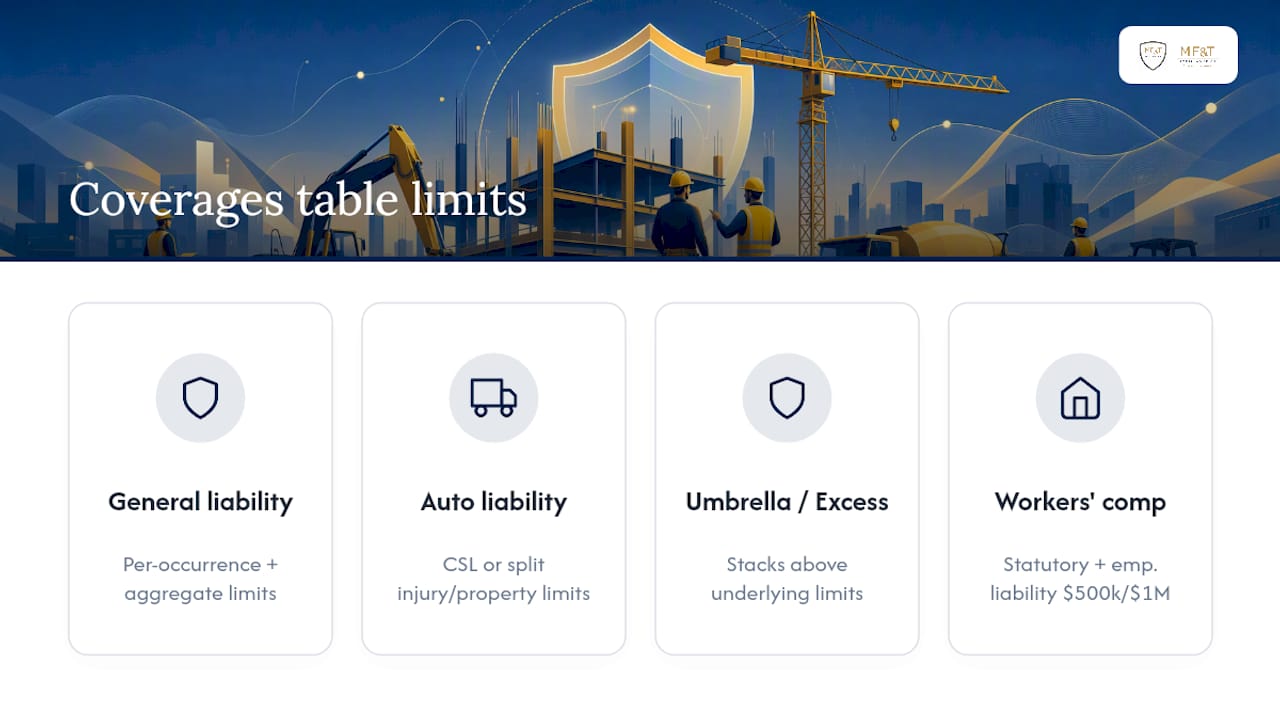
Coverages table. This is the heart of the form. General liability shows two limits: per-occurrence and aggregate. Auto liability may show a combined single limit (CSL) or split limits by injury and property damage. Umbrella or excess policies stack on top of the underlying limits. Workers' compensation carries statutory language plus separate employers' liability limits, usually shown as $500,000 or $1,000,000 per accident.
Description of Operations. This box is where Additional Insured status, Waiver of Subrogation, and Primary and Noncontributory wording get referenced, but referencing them here does nothing on its own. Those rights only exist if the carrier has issued the matching policy endorsement, commonly ISO form CG 20 10 or CG 20 37. Complex Additional Insured requirements often require attaching a supplemental ACORD 101 form for extra detail.
Certificate Holder. This section lists who receive the certificate. It grants that party a copy of the information, nothing more. Being named a certificate holder does not make you an insured party under the policy.
Cancellation. Older ACORD versions promised 30 days' notice before cancellation. Modern wording removed that guarantee entirely, and now defers to whatever the policy itself says about notice.
Signature. An authorized representative of the producer or insurer must sign. An unsigned ACORD 25 is not a valid certificate, regardless of how complete the rest of the form looks.
Pro Tip: Keep a running file of every certificate you receive from subcontractors or tenants, sorted by expiration date. A five-minute quarterly review catches lapses before they become a coverage gap during a claim.
How Do You Request and Obtain an ACORD 25 Certificate?
Getting a correct certificate fast comes down to giving your agent complete information the first time. Vague requests lead to back-and-forth emails and delayed job starts.
Send your producer these six lines:
- Certificate holder name and mailing address
- Required coverages and minimum limits (general liability, auto, umbrella, workers' comp)
- Whether Additional Insured status is needed, and on which policies
- Whether Waiver of Subrogation is required
- Whether Primary and Noncontributory wording is required
- Delivery email and the effective date needed
Most agencies deliver a standard ACORD 25 as a PDF by email within one business day, and many now issue certificates through automated COI platforms that let you request replacements without waiting on staff. A contractor-focused certificate checklist can help you confirm you're asking for the right limits before you even contact your agent.
Pro Tip: If you need Additional Insured status or a Waiver of Subrogation, ask about it before the contract is signed, not after. Some carriers charge an endorsement fee, and a few lines of business won't offer certain endorsements at all, so surprises here can delay a project start.
What Are the Most Common ACORD 25 Mistakes and Red Flags?
The single most expensive misunderstanding around an ACORD 25 certificate is confusing the Certificate Holder box with actual Additional Insured status. Being listed as a holder means you get a copy of the certificate. It does not mean the policy protects you if a claim comes in, and only a formal Additional Insured endorsement creates that protection.
Watch for these warning signs before you accept a certificate as satisfactory:
- Blank or obviously placeholder policy numbers
- No working phone number or address for the producer
- No signature, or a signature that doesn't match the producer block
- A demand for guaranteed 30-day cancellation notice without a supporting notice-of-cancellation endorsement
- An NAIC number that doesn't match the carrier named on the form
A certificate that shows Additional Insured or Waiver of Subrogation status without a matching endorsement on file with the carrier isn't just wrong. It exposes the certificate holder to a false sense of security and puts the issuing agency at real professional liability risk if the language doesn't hold up during a claim.
When Is an ACORD 25 Certificate Valid, and When Do You Need a New One?
An ACORD 25 certificate is valid only for the policy period shown in the effective and expiration date columns of the coverages table. Once a policy expires or gets canceled, the certificate describing it is no longer accurate, even if nobody has physically thrown it away.
Reissuance should happen immediately after any policy cancellation, a new Additional Insured endorsement, or a reduction in coverage limits. Property managers and general contractors who juggle dozens of subcontractor certificates typically track expiration dates in a spreadsheet or a dedicated COI management platform, then request renewals 30 days before each policy anniversary. That buffer avoids the scramble of an expired certificate holding up a project deadline.
How MF&T North America Handles Certificate Requests
Before issuing any ACORD 25, the agency confirms the carrier's declarations page, verifies the agency's appointment with that insurer, and checks whether the requested endorsement is actually available on the policy. For contractors, that often means walking through Additional Insured language line by line before it goes on paper.
Builders risk projects add another layer, since project-specific endorsements and certificate holders can change mid-build as new lenders or subcontractors join. Getting the coverage details right the first time saves everyone a round of frustrated phone calls later.
— Mike
Get Your ACORD 25 Certificate Handled Right the First Time
If you've read through the fields, the endorsements, and the red flags above, you already know how many small errors can turn a routine certificate request into a contract delay. The agency handles that legwork directly. As an independent agency, it shops coverage across multiple carriers instead of pushing one insurer's paperwork, and checks endorsement availability before quoting anything, so you're not caught off guard when a general contractor asks for Additional Insured status.
If you're a contractor or property developer who needs a certificate turned around fast, our builders risk insurance team specializes in same-day binding for single-project and reporting-form policies. Small business owners juggling general liability, workers' comp, or a Business Owner's Policy can start with our business insurance page to see what coverage fits. Before you reach out, have your certificate holder's exact legal name, the limits required, and whether Additional Insured or Waiver of Subrogation language is needed. That's the fastest way to get a correct ACORD 25 back in your inbox.
Where to Verify ACORD 25 Form Language and Approvals
- ACORD 25 (2025/12) form text approved by New York's DFS
- ACORD's official certificates FAQ and full forms list
- Section-by-section COI completion guide
Sources
- ACORD 25 (2025/12) — NYDFS certificates approved
- ACORD Certificates FAQ and forms list
- ACORD 25 Certificate of Insurance: Template and Guide
FAQ
How Do I Get an ACORD 25 Certificate?
Contact your insurance agent or broker directly and give them the certificate holder's name, address, required coverage limits, and any endorsement needs like Additional Insured status. Most agencies issue the certificate as a PDF within one business day once they have complete information.
What Is an ACORD 25 Certificate?
An ACORD 25 is the standard one-page Certificate of Liability Insurance used across the U.S. to prove a business carries active coverage. It lists the insurer, policy limits, and effective dates, but the form itself states it does not amend or extend any policy.
What Is the Difference Between ACORD 25 and ACORD 28?
ACORD 25 is the general Certificate of Liability Insurance, covering general liability, auto, umbrella, and workers' compensation. ACORD 28 is the Evidence of Commercial Property Insurance, used specifically to show property coverage details like building limits and named insureds for lenders or landlords on real estate.
Is an ACORD Certificate the Same as a COI?
Yes. "COI" is simply the common shorthand for Certificate of Insurance, and when people say ACORD 25 they almost always mean the standardized COI form that ACORD publishes. The terms are used interchangeably in contracts, leases, and vendor agreements.
Does an ACORD 25 Certificate Make Me an Additional Insured?
No. Being listed on a certificate, even in the Description of Operations box, does not grant Additional Insured rights. Only a formal carrier endorsement, typically ISO form CG 20 10 or CG 20 37, creates that status on the underlying policy.