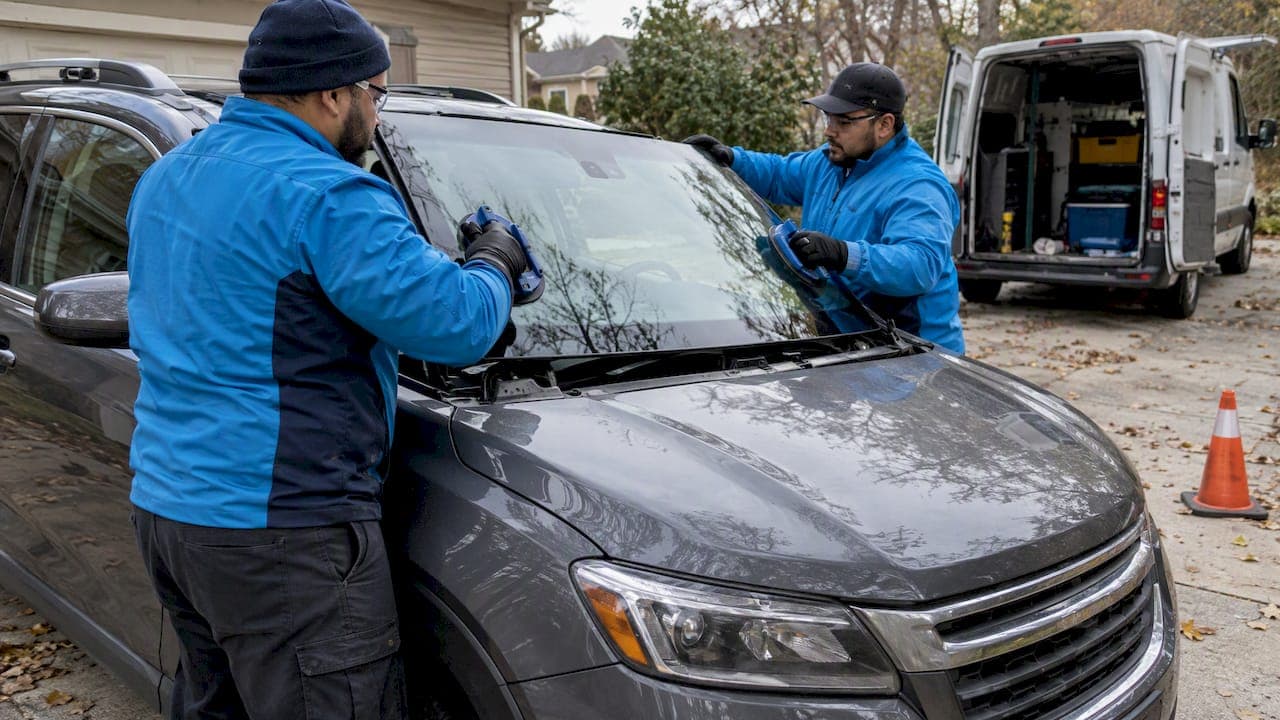
Yes, windshield damage is usually covered, typically through your comprehensive coverage, while collision applies if you caused a crash and liability does not pay for your own glass at all. Whether you should actually file a claim depends on the math: compare your repair or replacement cost to your deductible, then check your declarations page for a glass endorsement or state waiver. State laws and your claims history can shift that calculation.
TL;DR:
- Filing a windshield claim is most cost-effective if the repair estimate exceeds your comprehensive deductible, especially in states without zero-deductible laws.
- Glass endorsements or full glass coverage can eliminate or reduce out-of-pocket costs, but checking your policy for specific language and active waivers is crucial.
- Damage caused by debris, hail, or vandalism typically falls under comprehensive coverage, while collision covers damage from at-fault accidents, affecting your claim decision.
- Smaller chips under a quarter are repairable without full replacement, whereas cracks longer than six inches usually require a new windshield, especially near edges or in the driver’s line of sight.
- Filing a glass claim generally has a small impact on insurance rates unless you have multiple recent claims, making it wise to consult your insurer or agent beforehand.
Table of Contents
- Coverage explained: comprehensive vs. collision vs. glass endorsements
- When to use insurance vs. pay out of pocket: deductible math and claims history
- State rules and deductible waivers: where the law changes the math
- Will filing affect my insurance rates? Typical insurer treatment of glass claims
- How to file a windshield claim: a practical checklist
- Cost expectations: repair vs replacement and why modern vehicles cost more
- Agent guidance from MF&T North America: what to ask and how an independent agent helps
- Repair vs. replacement rules: chip size and crack length
- Types of windshield damage covered by insurance
- Time frame for windshield replacement under insurance claims
- Common exclusions or limitations in windshield coverage
- A practical take on windshield claims
- Get your policy reviewed for glass coverage gaps
- Sources
- FAQ
Coverage explained: comprehensive vs. collision vs. glass endorsements
Comprehensive coverage, sometimes called "other-than-collision" coverage, pays for damage from things you did not cause behind the wheel: a rock kicked up on the highway, hail, a falling branch, vandalism. If a tree limb cracks your windshield in a storm, that is a comprehensive claim. Collision coverage steps in when you cause the damage yourself, like backing into a pole or a fender-bender that shatters the glass. Liability coverage never pays for your own vehicle's damage, glass included, because it exists to cover the other driver's losses when you are at fault.
Many insurers also offer glass-specific endorsements, sometimes marketed as "full glass coverage," which waive or reduce the deductible specifically for windshield and window claims. According to the NAIC's consumer guidance, coverage details depend heavily on the coverage type you carry, and your declarations page and any endorsement language determine exactly how a deductible applies to a glass loss.
Before assuming anything about your coverage, pull out your policy documents and check for these:
- A line item labeled "glass coverage" or "glass endorsement" separate from standard comprehensive.
- Language stating your comprehensive deductible does or does not apply to windshield claims.
- Any mention of "full glass" or "zero-deductible glass," which usually means no out-of-pocket cost for a covered break.
You can dig deeper into how comprehensive coverage works generally in this comprehensive auto coverage guide.
When to use insurance vs. pay out of pocket: deductible math and claims history
The decision almost always comes down to arithmetic. Get a written estimate first, then compare it to your comprehensive deductible before you decide anything.
- Call a glass shop or use your insurer's network to get a real repair or replacement estimate.
- Compare that number to your comprehensive deductible listed on your declarations page.
- If your deductible is equal to or higher than the estimate, paying out of pocket usually makes more sense.
- If your deductible is low relative to the cost, filing a claim can save you real money.
- Factor in your recent claims history: multiple claims in a short window can affect underwriting at renewal, even though a single glass claim usually has minimal impact on its own.
Safelite's consumer guidance on windshield claims walks through this same stepwise process: get the estimate, check it against the deductible, then weigh in your claims history and any state-specific waivers before deciding.
Pro Tip: Keep a simple running list of your claims for the past three years. If you already have two, ask your agent how a third might affect your renewal before you file.
A small rock chip might cost $80 to repair. If your deductible is $500, filing makes no sense, you would pay the shop directly and skip the paperwork. A full replacement running $450 against a $250 deductible flips that logic, and filing likely saves you money.

State rules and deductible waivers: where the law changes the math
Some states change this math entirely. According to ValuePenguin's research on windshield coverage, a handful of states require insurers to offer, or in some cases mandate, zero-deductible windshield replacement under comprehensive policies. Where that applies, filing a glass claim can cost you nothing out of pocket, which removes the deductible math from the equation entirely.
Because these rules vary and change over time, never assume your state works a certain way based on something you read online or heard from a friend. Instead:
- Check your state's Department of Insurance website for current glass coverage rules.
- Ask your agent directly whether a waiver applies to your policy and whether it covers only the front windshield or side and rear glass too.
- Confirm the waiver is active on your current policy term, since insurers can adjust offerings at renewal.
Will filing affect my insurance rates? Typical insurer treatment of glass claims
Most insurers treat a comprehensive glass claim differently than an at-fault collision, largely because you did not cause the loss and it does not reflect your driving. Comprehensive claims, including windshield replacements, generally carry a smaller impact on renewal pricing than at-fault collision claims, based on how the Insurance Information Institute tracks auto claim trends. That distinction matters when you are deciding whether to file.
That said, no insurer treats every claim identically. What actually moves your rate depends on your carrier's underwriting rules, your state's rating regulations, how many claims you have filed recently, and whether the loss was ruled at-fault. A single glass claim rarely triggers a rate increase on its own. If you have filed other claims in the past year or two, call your agent before submitting a new one so you understand how it might combine with your existing history at renewal. You can read more about how these coverage types interact in this collision versus comprehensive breakdown.
How to file a windshield claim: a practical checklist
Filing cleanly starts before you ever call your insurer. Document everything and get answers up front so nothing surprises you mid-repair.
- Photograph the damage clearly, note the date, time, and how it happened.
- Get a written estimate from a glass shop before authorizing any work.
- Ask your insurer whether you can choose your own shop or whether they require a network provider.
- Ask specifically about OEM-equivalent glass and whether ADAS camera or sensor calibration is included in the estimate.
- If another driver caused the damage, file against their liability coverage instead of your own policy.
- If the at-fault driver is uninsured, check whether your policy includes uninsured motorist property damage coverage.
Pro Tip: Always get the calibration question answered in writing before the shop starts work. ADAS recalibration can add real cost, and you want to know upfront whether it is covered.
Following this order protects you from a common headache: authorizing a replacement, then discovering afterward that calibration or OEM glass was not included in what your insurer agreed to pay.
Cost expectations: repair vs replacement and why modern vehicles cost more
Small chip repairs typically run on the lower end, while full replacements cost significantly more once you factor in today's vehicle technology.
- Chip repairs commonly run in a modest range, often well under $250 depending on size and location.
- Full replacements commonly run from a few hundred dollars up past $1,000, depending on your vehicle and whether ADAS calibration is required.
- Vehicles with forward-facing cameras or lane-assist sensors mounted near the windshield generally cost more to service because those systems need recalibration after replacement.
- OEM glass, matched to the manufacturer's original specifications, typically costs more than aftermarket alternatives.
Comprehensive claim severity has risen industry-wide, with the average comprehensive claim increasing from $1,679 in 2015 to $2,306 in 2024, according to the Insurance Information Institute. That broader trend helps explain why windshield estimates you get today often run higher than older figures you might find in an outdated article.
Agent guidance from MF&T North America: what to ask and how an independent agent helps
An independent agent can compare glass endorsement options across carriers, which matters because coverage terms for windshield claims vary between insurers.
Before your next renewal, bring these questions to your agent:
- Does my declarations page show a glass endorsement, and does my deductible apply to windshield replacement specifically?
- Will you shop other carriers to see if a lower glass deductible or a full-glass endorsement is available at a similar premium?
- Does my current policy distinguish between front windshield coverage and side or rear glass?
Pro Tip: Bring your current declarations page to the conversation. An agent can spot a missing glass endorsement in minutes once they see the actual policy language.
An independent agency can review your existing policy language and shop carriers for glass endorsement or deductible-buyback options that fit your situation, rather than being limited to one insurer's offerings.
Repair vs. replacement rules: chip size and crack length
Most insurers and glass shops follow similar rules of thumb for deciding whether a chip can be repaired or the whole windshield needs replacing. A chip smaller than a quarter, roughly the size of a dollar coin, is usually a good candidate for repair, especially if it sits outside the driver's direct line of sight. Cracks longer than about six inches typically require full replacement rather than repair, since the structural integrity of the glass is compromised beyond what resin injection can fix.

Location matters as much as size. Damage near the edge of the windshield weakens the glass more than a chip in the center, because edge damage is more likely to spread under normal driving stress like temperature swings or road vibration. Damage directly in the driver's sightline is often replaced rather than repaired even when small, since a filled chip can leave a faint distortion that affects visibility.
Multiple chips or cracks, even small ones, often push a shop toward recommending replacement rather than several individual repairs. Repairing multiple spots on one windshield does not always restore full structural strength, and a glass technician will usually tell you honestly when repair is no longer the practical choice. If you are unsure which category your damage falls into, get an in-person assessment before assuming either way. A shop can typically make that call in a few minutes.
Types of windshield damage covered by insurance
Comprehensive coverage typically pays for windshield damage from causes outside your control as a driver. Common covered scenarios include a rock or road debris kicked up by another vehicle, hail damage during a storm, a tree branch falling during high winds, and vandalism such as a break-in or intentional damage. Extreme temperature cracking, where a sudden shift from hot to cold causes glass to crack, is also generally treated as a comprehensive loss since it is not the result of a collision.
Damage from an at-fault accident, where you hit another vehicle or a fixed object, falls under collision coverage instead of comprehensive, assuming you carry that coverage. If another driver hits you and is found at fault, their liability coverage should pay for your windshield, which means you may not need to touch your own policy at all.
What is generally not covered, regardless of coverage type, is damage from ordinary wear and pre-existing cracks that simply spread over time without a specific triggering event. Insurers look at the cause of the damage first, and that cause is what determines which part of your policy, if any, applies.
Time frame for windshield replacement under insurance claims
Most windshield claims move faster than other types of auto claims because the damage is straightforward to verify and the repair itself is quick. Many insurers offer mobile glass service, meaning a technician comes to your home or workplace rather than requiring a shop visit. A standard replacement often takes a few hours from start to finish once the appointment begins, though vehicles requiring ADAS calibration can take longer since the camera and sensor systems need to be recalibrated and tested after the new glass is installed.
The claim approval itself is usually quick for a straightforward comprehensive loss, since there is little dispute over what happened. Filing online or through your insurer's app can speed things along further, and many insurers have streamlined glass claims specifically because they are low-complexity compared to a multi-vehicle accident claim. If your vehicle needs a specific windshield due to embedded antennas, heating elements, or camera mounts, expect a slightly longer wait for the correct part to arrive, particularly for less common vehicle models.
Common exclusions or limitations in windshield coverage
Not every windshield issue is automatically covered, and knowing the limits ahead of time saves you a surprise denial. Damage from normal wear, like a windshield that gradually clouds or pits over years of highway driving, generally is not covered under comprehensive coverage because it is not tied to a specific covered event. Pre-existing damage that you failed to disclose or that predates your policy's start date is typically excluded as well.
If you lack comprehensive coverage altogether, your policy simply will not pay for windshield damage regardless of cause, since liability-only policies never cover your own vehicle. Some policies also cap glass claims at a certain dollar amount or limit how many glass claims you can file within a policy period, so check your declarations page for any such limits.
Aftermarket accessories, like a windshield with an added tint that violates state law, can also complicate a claim if the insurer determines the modification contributed to the damage or affected the repair cost. Reading your endorsement language, as the NAIC's consumer materials recommend, is the clearest way to know exactly what your specific policy excludes before you need to file.
A practical take on windshield claims
Safety comes first: if a crack blocks your view or spreads quickly, follow the streak-free method for UK owners to keep your car glass clear, and get it fixed before worrying about paperwork. Beyond that, the decision is just math. Run your deductible against the repair estimate, check whether your state or policy waives that deductible for glass, and call your agent if anything is unclear. That one phone call usually resolves more confusion than an hour of searching online.
— Mike
Get your policy reviewed for glass coverage gaps
If you are not sure whether your policy includes a glass endorsement or where your deductible actually lands on a windshield claim, that is exactly the kind of gap an independent agent catches by reading your declarations page line by line.
As an independent agency, MF&T North America can:
- Review your current auto policy's glass coverage and deductible language.
- Shop multiple carriers to compare glass endorsement or deductible-buyback options.
- Explain in plain terms how a state waiver or endorsement might apply to your specific vehicle.
If you are due for a policy check or just want a second opinion before your next renewal, request a review through MF&T North America's auto insurance page and get a straight answer from a licensed agent.
This article is general information, not a substitute for advice from a qualified financial advisor. Consult a qualified financial professional about your own circumstances before acting on anything here.
Sources
- What Does Auto Insurance Cover? — NAIC
- Facts + statistics: Auto insurance — III
- Should you use insurance for windshield replacement? — Safelite
- Windshield replacement with car insurance: what's covered and what's not — ValuePenguin
FAQ
Is it worth going through insurance for windshield replacement?
It depends on your deductible compared to the repair or replacement cost. If your deductible is lower than the estimate, filing usually saves you money, but if it is equal to or higher than the cost, paying out of pocket often makes more sense according to Safelite's guidance.
What does $1,000 deductible with full glass mean?
It means your standard comprehensive deductible is $1,000, but your policy includes a separate glass endorsement that waives or reduces that deductible specifically for windshield and window claims. Always confirm this on your declarations page since the term "full glass" is not standardized across insurers.
What insurance coverage do I need for windshield replacement?
You typically need comprehensive coverage, since it pays for glass damage from causes like debris, weather, or vandalism, while collision only applies if you caused the damage yourself. The NAIC notes that lenders often require both coverages, which usually means windshield damage is covered one way or the other.
Will my insurance rates go up if I replace my windshield?
A single comprehensive glass claim usually has a minimal effect on your rate, since it is treated differently than an at-fault collision. However, multiple recent claims of any kind can influence your renewal pricing, so it is worth checking with your agent if you have filed more than one claim recently.