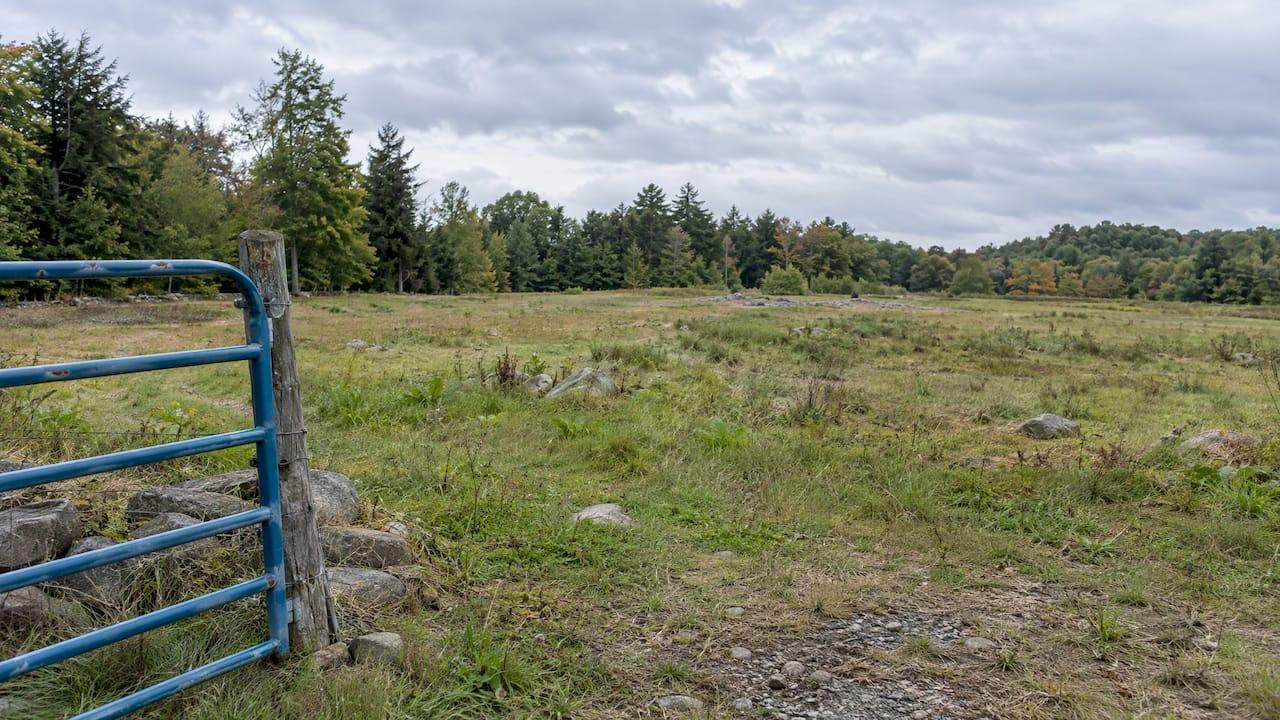
Vacant land liability insurance pays for injury and property damage claims, plus legal defense, when someone gets hurt on your empty parcel and holds you responsible. No federal law requires it, but your lender, a tenant or your own risk tolerance may. Your homeowners policy may cover some land, but only under specific conditions. Here is how to sort out which situation is yours.
TL;DR
- Vacant land liability coverage protects you against third-party bodily injury and property damage claims, including defense costs. It does not insure buildings or structures.
- No federal law requires it, and most states have no blanket rule. Lenders, leases and local ordinances can still require proof of coverage.
- A homeowners policy may extend liability to a parcel, but not if the land is farmed or used for business, and you should confirm that in writing.
- Published estimates for a standalone policy are often a few hundred dollars a year, but your price depends on acreage, location, use and limits.
- Tell your agent about hunting, camping, leasing, ponds, old wells or any plan to build before you buy a policy.
Table of Contents
- What vacant land liability insurance covers
- Why an empty lot still carries risk
- Do you need insurance for vacant land?
- Does your homeowners policy cover vacant land?
- What is usually excluded
- What vacant land liability insurance costs
- When the land stops being vacant
- How to insure vacant land: a short checklist
- Our perspective
- Talk to a licensed agent about your land
- FAQ
- Sources
What vacant land liability insurance covers
Think of it as the liability half of a homeowners policy, applied to a lot with nothing on it. If a visitor is injured on your land and sues, the policy is designed to pay defense costs, settlements and judgments, up to your limit.
Typical coverage includes:
- Bodily injury to someone who is hurt on the parcel, including medical bills a court says you owe.
- Property damage to someone else's belongings, such as a vehicle damaged by a fallen tree or by debris from your land.
- Legal defense, which matters even when the claim is weak. Defending a lawsuit costs money whether or not you are found at fault.
Published guides say most policies offer limits between $100,000 and $1,000,000 per occurrence, and that the price gap between the lower and higher limits is usually modest. Ask your agent to quote more than one limit so you can see the difference for your parcel.
What it generally does not do is insure physical things. Raw land has no building to repair, and a liability policy does not pay to restore your own ground. Once you put up a shed, a cabin or a house, you have moved into a different kind of policy.
Why an empty lot still carries risk
Many owners assume that land nobody uses cannot hurt anyone. In practice, people wander onto open parcels to hike, hunt, ride off-road vehicles or cut through. University extension guidance lists cliffs, ponds, old wells and falling trees or debris among the common hazards that lead to injuries.

Trespassers can still sue. The same extension source explains that recreational use statutes give some protection but not guaranteed immunity. These laws vary by state, so you cannot assume yours covers your situation.
New York is one example. An attorney's overview of that state's rules notes that its recreational use statute limits liability for listed activities, but not where the owner willfully fails to warn of a danger, where permission was granted for a fee, or in certain cases involving child trespassers. The same article still calls insurance prudent for vacant land owners. Whatever your state, a statute can reduce your exposure without removing the cost of defending a claim.
Hazards worth walking your land for
- Open or hidden wells, sinkholes, mine shafts or deep ditches
- Ponds, creeks and steep drop-offs, especially near a road or path
- Dead or leaning trees near boundaries, trails or neighbors
- Dumped debris, old foundations or abandoned equipment
- Unlocked gates that invite vehicles onto the property
Fixing or fencing the worst of these lowers the chance of a claim. It also gives you a better story when you talk to an underwriter.
Do you need insurance for vacant land?
Legally, usually not. One landowner guide says no federal law requires it and most states have no blanket requirement, though some local ordinances do. The practical answer is often yes, for these reasons:
- A lender requires it. Lenders financing a land purchase may require minimum liability coverage as a loan condition.
- Someone else will use the land. Hunters, farmers, event hosts or a lessee will likely ask for proof of coverage before signing.
- The land is held in an LLC or trust. A separate policy may be needed when the owner is an entity, or when you want a specific limit or the parcel carries elevated risk.
- You have something to lose. If a claim exceeded your coverage, your savings, your home equity and future income could be exposed.
If you are financing the purchase, it helps to know the lender's rules early. This guide to loans on unimproved vacant land explains what financing for raw land typically looks like, so you can line up insurance proof before closing.
Does your homeowners policy cover vacant land?
Sometimes. Policies written on standard forms often extend personal liability to additional land you own, provided it is not farmland or used for business. Even then, the coverage is liability only. It excludes structures and damage to the land itself, and insurers often modify the wording.
A common mistake is assuming the policy follows you anywhere. One land-sales professional says new buyers often think their homeowners policy covers a parcel in another county or state, when it is a separate liability exposure. The same source says a personal umbrella policy helps only if vacant land is explicitly included in its language.
Before you rely on your current policy, ask your agent these questions and get the answers in writing:
- Does my personal liability coverage apply to this specific parcel?
- Does it still apply if I hunt, camp, farm or lease the land?
- Does the coverage have its own limit, or does it share my main limit?
- If I have an umbrella, is vacant land named in it?
If your answers are unclear, we can review your home insurance and personal umbrella options side by side and tell you where a parcel would or would not be protected.
What is usually excluded
Exclusions are where owners get surprised. Read these before you buy.
| Situation | What to expect |
|---|---|
| Undisclosed commercial use (paid campground, shooting range, commercial farming) | Typically voids or limits coverage unless disclosed and written into the policy |
| Pollution or soil contamination | Generally excluded from standard liability policies, so a separate environmental policy may be needed |
| Buildings and structures | Not covered by a land liability policy, which is liability only |
| Damage to the land itself | Not covered by liability-only coverage |
| Farmland or business-use land under a homeowners policy | Usually outside the extension of personal liability |
The fix is simple: describe how you use the land, truthfully and completely, when you ask for a quote. A policy written for the actual use is far more useful than a cheaper one that falls apart at claim time.
What vacant land liability insurance costs
Vacant land is one of the cheaper types of coverage to carry because there is little to damage and few visitors. One landowner guide reports most owners pay roughly $150 to $500 per year for a $1 million liability policy, and that some carriers price by the acre with a minimum premium. Treat that as a ballpark, not a quote. We do not publish prices, because they depend on the carrier and your details.
Factors that move the premium:
- Acreage and location. Larger parcels and areas with more claims activity can cost more.
- Limits. A higher per-occurrence limit raises the price, often by less than people expect.
- Use. Hunting, recreation, grazing or leasing change the risk picture.
- Hazards. Ponds, wells, cliffs or heavy tree cover may draw questions.
- Ownership. Land in an LLC or trust may need different paperwork.
- Plans to build. Construction changes which policy you need.
Some carriers can add an extra parcel to existing liability coverage for a modest amount, which may beat a standalone policy. An independent agent can compare both routes.
When the land stops being vacant
Coverage should follow your plans. If you intend to build, you will need a builders risk policy for the project, then a homeowners or landlord policy once the structure is finished. Builders risk can be written for a single project or as a term or reporting-form policy for ongoing work. If you plan to run a business on the land, such as a nursery, a storage lot or a landscaping yard, look at business insurance, including general liability.
If you own a house that sits empty rather than an empty lot, the rules are different. See our guide on vacant home insurance and the 30 to 60 day window, and our note on vacancy permit insurance.
How to insure vacant land: a short checklist
- Write down what you own and how you use it. Parcel size, county, access, neighbors, and any activity such as hunting, camping, grazing or leasing.
- Walk the property. Note ponds, wells, steep areas and dead trees. Fence, mark or remove what you can.
- Check your state's recreational use statute. Treat it as a partial defense, not a substitute for coverage.
- Ask what your homeowners and umbrella policies say about the parcel. Get the answer in writing.
- Ask your lender, lessee or entity's attorney what proof they need. Certificates of insurance are common.
- Compare quotes at more than one limit. Look at the price difference, not just the lowest number.
- Update the policy when use changes. A lease, a new cabin or a construction start can all change what you need.
Our perspective
Most people come to us after buying land and realizing they never asked who is responsible if a stranger gets hurt on it. It is an easy thing to overlook, and an easy thing to fix.
We are an independent agency, so we are not tied to one carrier. That lets us shop your parcel across carriers and match the policy to how you actually use the land, whether that is a weekend lot, a family tract or a site you plan to build on.
Our advice is to start with a conversation, not a form. Tell us what you own, what you plan to do with it, and who else might be on it. We will tell you whether your current policies stretch to cover it, and where a standalone policy makes sense. For builders, we specialize in builders risk and can often bind coverage the same day.
Mike
Talk to a licensed agent about your land
MF&T North America is an independent agency in Arlington, MA with over 30 years of experience, serving homeowners, families, contractors and property developers across multiple states. We can review the coverage you already have, shop carriers for land liability, and line up builders risk when you are ready to build.
Start with our home insurance page or contact us through our site to ask for a quote.
FAQ
How much is liability insurance for vacant land?
Published guides often cite a few hundred dollars a year for a $1 million limit, with some carriers pricing per acre and applying a minimum premium. Your price depends on location, acreage, use and limits. An agent can quote it against your actual parcel.
Does Progressive offer vacant land insurance?
Carrier appetite changes by state and by parcel, so the reliable way to find out is to ask. As an independent agency, we compare multiple carriers for you instead of checking one company at a time.
Do I need insurance for vacant land I plan to build on later?
Until construction starts, you face the same liability exposure as any landowner, and a lender may require proof of coverage. When you begin building, you will want builders risk coverage for the project, then a standard home policy afterward.
Does my homeowners policy cover a lot I own elsewhere?
Possibly, if the land is not farmed or used for business and your policy's wording extends to it. Do not assume. Ask your agent to confirm in writing, and ask whether an umbrella policy names vacant land.
What if my state has a recreational use law?
These statutes can limit what an injured visitor can recover for certain activities, but they do not guarantee immunity from lawsuits. Fees, known hazards and child trespassers can change the outcome, so insurance still helps pay for your defense.
Sources
- Liability Insurance for Vacant Land: Complete Buyer's Guide
- Reduce your risk: Landowner liability, MU Extension
- Liability and insurance considerations for an owner of vacant land
- Do I Need Insurance on Vacant Land?
- Vacant Land Insurance: What You Need, What It Costs, and When to Skip It
- Vacant Land Insurance: What Every Landowner Needs to Know in 2026
- Can I Get a Loan on Unimproved Vacant Land?