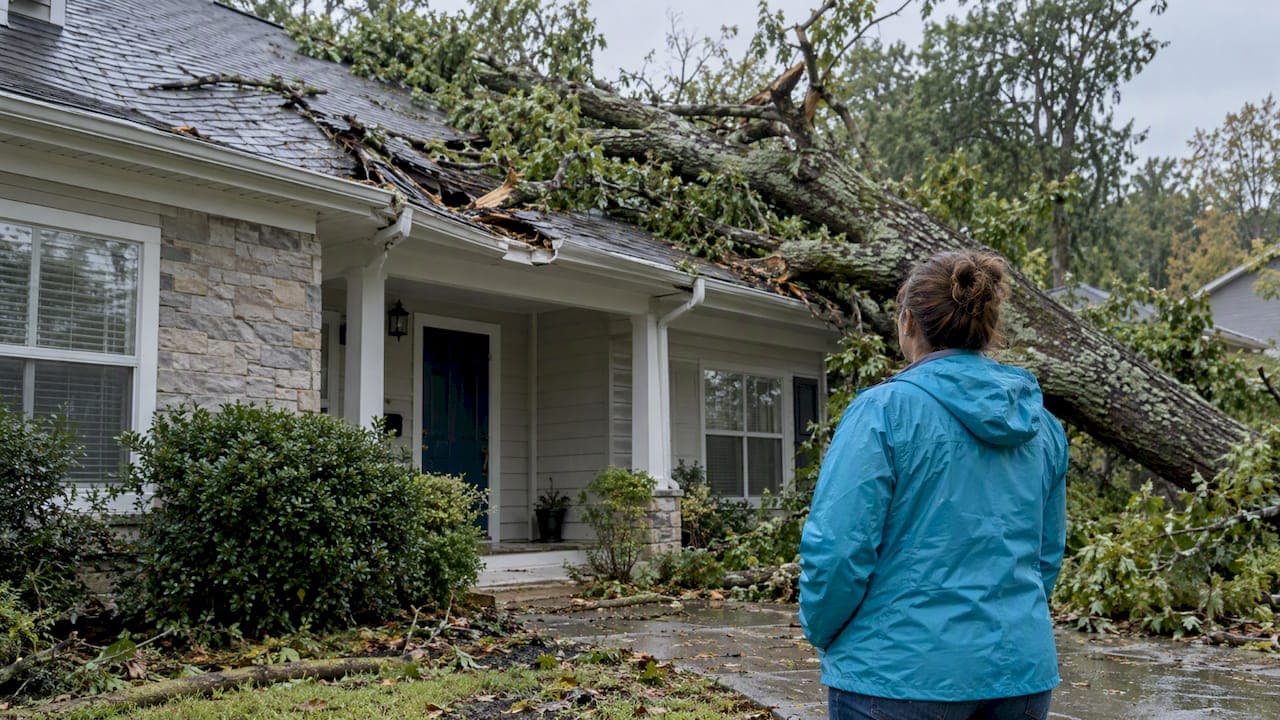
If a tree falls on your house, your standard homeowners policy will generally cover the structural damage, but your first job is safety, not paperwork. Check for injuries and hazards like downed power lines, then document everything with photos before anyone starts cleanup. If the repair cost looks like it will beat your deductible, call your insurer right away so the claims clock starts ticking.
TL;DR:
- If your damage estimate exceeds your deductible, filing a claim is usually worth it to cover structural repairs and possible loss-of-use expenses.
- Removal of fallen trees from your property is generally covered only if it directly causes damage to insured structures, with allowances often limited to around $500 to $1,000.
- When a neighbor’s tree falls, your insurer pays first and may recover costs through subrogation, but you still need to document everything and understand that reimbursement of your deductible can take time.
- Quick action, including safety checks and thorough documentation, is more critical than waiting to decide whether to file a claim or seek repairs immediately.
- Always verify your specific policy limits for tree removal and coverage for storm-related damages before rushing into contractor arrangements or contractor-selected claims processes.
Table of Contents
- What to do first: safety and documentation steps
- What your policy covers and how to file a claim
- If the tree came from a neighbor's yard
- Should you file a claim or pay out of pocket?
- Getting the tree removed safely
- Watch out for storm-chasing contractors
- Why a quick decision matters more than a perfect one
- Where MF&T North America fits in after storm damage
- Resources for homeowners researching tree damage claims
- Sources
- FAQ
What to do first: safety and documentation steps
Before you worry about claims, make sure your family and home are actually safe. Downed trees often bring live power lines, gas leaks, or cracked foundations with them, and those risks come before any cleanup.
- Check everyone for injuries and move away from the damaged area if the structure looks unstable.
- Look for downed power lines or the smell of gas, and call 911 or your utility company immediately if you spot either.
- If the roof, walls, or windows look compromised, wait for a building inspector or first responder before going back inside.
- Photograph and video the damage from multiple angles, including close-ups and wide shots, with your phone's date stamp turned on.
- Make a quick inventory of any damaged belongings, and leave debris in place if it's not blocking an exit or creating a new hazard.
- Cover exposed roof sections with tarps and board up broken windows, keeping every receipt for materials and labor.
The National Association of Insurance Commissioners advises homeowners to prioritize safety first, confirm there are no electrical or gas hazards, then document the damage with photos and video before making any decisions about repairs or claims.
Pro Tip: Take a short video walking through each damaged room out loud, naming what you see. It's faster than labeling photos later and gives your adjuster useful context.

What your policy covers and how to file a claim
When a tree falls because of wind, lightning, or hail and lands on your house, garage, or another insured structure, that's typically a covered peril under a standard homeowners insurance policy. The Insurance Information Institute notes that most policies pay for the structural damage itself, plus a limited allowance, commonly in the $500 to $1,000 range, to remove the tree that caused the damage. If a tree simply falls in your yard without hitting anything insured, removal usually isn't covered.
Typical coverage includes:
- Repairs to your home's structure, from roof and siding to framing and windows.
- Replacement of damaged personal belongings inside the home, subject to your policy's limits.
- A capped allowance for removing the tree that caused the damage, not general yard cleanup.
- Additional living expenses, often called loss-of-use coverage, if the home becomes temporarily unlivable.
Once you've confirmed coverage likely applies, work through the claim in order:
- Gather your photos, videos, and a written inventory of damaged items.
- Contact your agent or insurer with your policy number and a summary of what happened.
- Schedule an adjuster visit and ask what documentation they'll need on-site.
- Get at least one written estimate from a licensed contractor for comparison.
- Keep every receipt from temporary repairs and any additional living costs.
Ask your agent about your specific policy limits for tree removal and loss-of-use, since these numbers vary by insurer and by state. If you're unsure what your current policy includes, our guide to storm and weather coverage breaks down what's typically included for wind, fire, and tree damage.
If the tree came from a neighbor's yard
When the tree that fell on your house actually grew on your neighbor's property, your own insurer still handles the repairs first. After major storms, insurers commonly use what the Triple-I calls a no-fault approach, focused on getting homes repaired quickly rather than assigning blame tree by tree.
Behind the scenes, your insurer may pursue subrogation, which means trying to recover costs from your neighbor's insurance company.
- Your insurer pays for your repairs first, so your home gets fixed without waiting on a liability investigation.
- If subrogation succeeds, you may get your deductible reimbursed, though this process can take weeks or months.
- A neighbor is more likely to be held liable if they knew the tree was dead or diseased and ignored it, rather than if it fell during a storm with no warning signs.
- Avoid confronting your neighbor directly. Let both insurers investigate and keep a written record of any conversations you do have.
Should you file a claim or pay out of pocket?
Not every fallen tree is worth a claim. If the damage is minor and close to your deductible, it's worth running the numbers before you call your insurer.
- Get at least one contractor estimate so you're comparing real numbers against your deductible, not guesses.
- If the estimate is only slightly above your deductible, weigh the modest savings from filing against the possibility of a premium increase at renewal.
- Remember that visible damage can hide bigger problems. Cracked flashing or a stressed roof structure can lead to water intrusion that costs far more to fix later, so when you're unsure, document everything and file anyway.
- Track any temporary living expenses, like a hotel stay or restaurant meals, in case you end up filing a loss-of-use claim.
The NAIC's guidance on homeowners claims points to comparing your repair cost against your deductible, plus the long-term premium impact, as a standard way to decide whether filing makes sense for smaller damage.
Getting the tree removed safely
Most policies that cover the structural damage will also pay to remove the tree that caused it, usually within that same $500 to $1,000 allowance mentioned earlier. That number depends on your specific policy, so confirm it with your agent before assuming what's covered.
- If the tree only fell in your yard without touching your home, removal is usually not covered unless it blocks your driveway or an accessibility route and your policy specifically allows for that.
- Large trees that need a crane or heavy equipment should go to a licensed tree removal company, not a handyman with a chainsaw.
- Get written bids from more than one removal company before agreeing to anything, especially right after a storm when prices can spike.
- Save every receipt and invoice for removal costs you pay out of pocket, and submit them with your claim paperwork.
Watch out for storm-chasing contractors
Right after a storm, you'll likely see contractors going door to door offering fast repairs. Some are legitimate, but plenty aren't, and the NAIC's post-storm guidance specifically warns homeowners about assignment-of-benefits agreements, where signing over your claim rights can hand control of the entire process to a contractor you just met.
- Never sign an assignment-of-benefits document without reading it carefully. It can shift control of your claim, and your payout, to the contractor.
- Be wary of anyone demanding full payment upfront, pressuring you to sign on the spot, or refusing to provide a written estimate.
- Verify a contractor's license and insurance before hiring, and get a detailed written scope of work.
- Loop in your insurer before committing to a contractor so your repair plan lines up with what your claim will actually cover.
Pro Tip: Ask any contractor for their license number and look it up yourself with your state's licensing board before you sign anything.
Why a quick decision matters more than a perfect one

Homeowners often freeze up after a tree falls, trying to figure out the "right" move before doing anything. In practice, the order matters less than the speed: get people safe, get photos, and get your insurer on the phone, even if you haven't decided whether to file a full claim yet.
The bigger mistake I see isn't filing too early. It's waiting days to even call an agent because someone assumes the damage "probably isn't covered" or "isn't bad enough to bother with." Those assumptions cost homeowners real money, especially when hidden water damage shows up weeks later and the documentation window has already passed.
— Mike
Where MF&T North America fits in after storm damage
With extensive experience helping homeowners across multiple states, an independent insurance agency can walk you through what your policy covers before a tree ever falls, not just after. Such agencies can compare tree removal limits, loss-of-use coverage, and personal articles floaters across insurers to find the coverage that matches your property.
If you're unsure whether your current policy would leave you exposed after storm damage, review your coverage with a licensed agent. You can start with our homeowners insurance page to see your options or request a policy review today.
Resources for homeowners researching tree damage claims
- The NAIC's homeowners claims guidance covers safety priorities, documentation, and deductible decisions in plain language.
- The NAIC's storm guidance details assignment-of-benefits risks and post-storm contractor caution.
- MF&T North America's homeowners insurance FAQ answers common policy questions for current and prospective policyholders.
This article is general information, not a substitute for advice from a qualified financial advisor. Consult a qualified financial professional about your own circumstances before acting on anything here.
Sources
FAQ
Who's responsible if a tree falls on your house?
Responsibility usually depends on where the tree grew and whether anyone knew it was hazardous beforehand. If it fell from your own property, your homeowners policy typically handles the claim regardless of fault, and if it came from a neighbor's yard, your insurer still covers your repairs first and may pursue reimbursement later.
Does homeowners insurance cover a tree falling on my house?
Yes, most standard homeowners policies cover structural damage when a tree falls on an insured building due to wind, lightning, or hail, according to the Insurance Information Institute. Removal of the tree itself is typically covered too, usually up to a set allowance in that same policy.
When should I file a claim after a tree falls on my house?
File when your repair estimate is likely to exceed your deductible, or when there's a chance of hidden structural or water damage that a contractor estimate alone might not catch. The NAIC recommends comparing your contractor's estimate to your deductible before deciding, since small claims near the deductible threshold don't always make financial sense.
Will I get my deductible back if my neighbor's tree caused the damage?
You may get your deductible reimbursed if your insurer successfully pursues subrogation against your neighbor's insurance company, but this isn't guaranteed and can take time. According to Triple-I, insurers often handle storm claims on a no-fault basis first, which means subrogation and any deductible refund typically happen after your repairs are already underway.