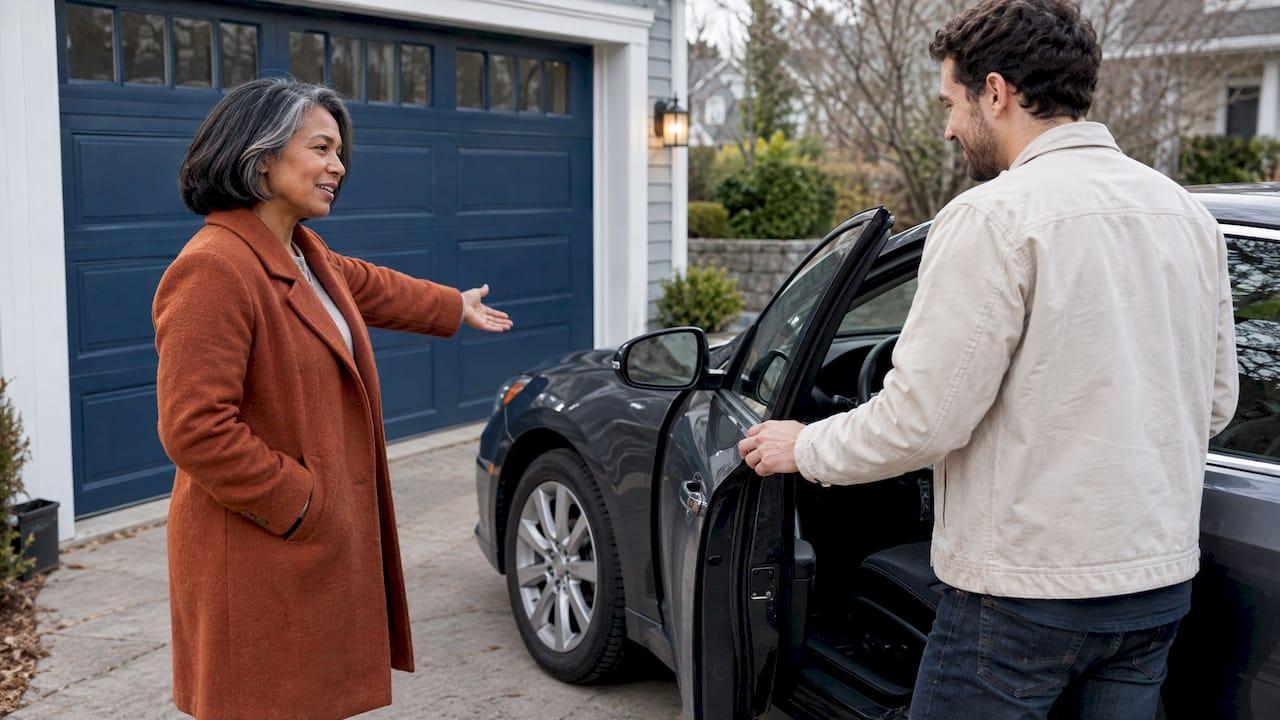
Permissive use means that when you give someone permission to drive your car, your auto policy can extend to them, because in many cases auto insurance follows the vehicle rather than the person behind the wheel. How far that protection goes depends on your state, your policy's limits and exclusions, and whether the driver lives in your home. A licensed independent agent can read your policy with you and tell you exactly where your gaps are before a friend, a teenager or an employee ever picks up the keys. That is what our agents at MF&T North America do.
TL;DR
- Permissive use covers a licensed driver who borrows your car with your consent and does not live in your household. Your policy usually responds first.
- Some policies "step down" a borrower's liability limits to the state minimum. If damages exceed that, you can be personally responsible.
- People who live in your home and are licensed generally need to be listed on the policy, even if they rarely drive.
- Personal policies usually do not cover work use, and personal use of a company vehicle is normally a commercial auto question.
- Ask your agent about step-down wording, excluded drivers and hired and non-owned auto before you lend a vehicle.
Table of Contents
- What permissive use actually means
- Whose insurance pays first when a borrower crashes
- Household members are not permissive drivers
- Where permissive coverage stops
- Personal use of a company vehicle
- Before you lend your car: a short routine
- Our view: coverage should be decided before the keys change hands
- Get your coverage checked
- FAQ
- Sources
What permissive use actually means
A permissive driver is someone who has your permission to drive your car and who is not listed on your policy by name. The Maryland Insurance Administration describes this person as someone who does not live in your household but drives with your consent. A neighbor who moves your car, a friend who borrows it for an afternoon and a relative visiting from out of town are typical examples.
The reasoning behind it is simple. Most auto policies attach to the vehicle you insure. If the driver is licensed and has your permission, that driver generally has the same coverage available under your policy that you do. That includes liability, which pays for injuries and property damage you cause to others, and usually collision and comprehensive on your own car, subject to your deductible.
Permission can be express, where you say yes, or implied, where it is understood from past behavior. Utah's insurance code, for example, requires an owner's liability policy to cover anyone using the vehicle with express or implied permission of the named insured. Other states word this differently, which is why the details matter.
Whose insurance pays first when a borrower crashes
If someone causes a crash in your car, your policy is normally the first in line. The Texas Department of Insurance explains that when you cause an accident in a borrowed car, the owner's insurance pays the claim first. The driver's own policy pays only if the owner has no insurance or not enough to cover the damages and injuries.
Here is what that means for you in practice:
- The claim goes on your policy, not the borrower's.
- Your deductible applies to damage to your car.
- A paid claim can affect your renewal, even though you were not driving.
That last point is why a quick "sure, take the car" deserves a second thought. You are lending your coverage along with your keys.
A worked example
Say your neighbor borrows your sedan to pick up groceries and rear-ends another car, causing $60,000 in injuries and repairs. Your liability limit is $100,000 per accident. Under a standard permissive-use arrangement, your policy responds up to that limit, and you may see a surcharge at renewal.
Now change one detail: your policy contains a step-down provision that limits a permissive driver's liability coverage to the state's required minimum. The Maryland Insurance Administration notes that policies there may include this kind of provision. If the state minimum is far below $60,000, the remainder can fall on the car's owner. The same crash, the same car, a very different bill. Some states restrict this practice: Utah's code, for instance, bars stepping down coverage because a permissive user is at fault.

Household members are not permissive drivers
Permissive use is for occasional outsiders. It is not a substitute for listing the people who live with you. Insurers generally require licensed residents of your home to be named on the policy, even if they do not regularly drive. If you leave one off, the insurer may limit or deny coverage, or reduce liability to the state minimums.
This is the question behind many searches about teenagers. A new driver in your house, a college student home for the summer, an adult child who moved back: all of them usually belong on the policy. Maryland's consumer guide says family members are generally covered when they are listed as drivers, using the car with your consent and not excluded by the policy terms.
Some states also protect families in specific situations. Minnesota's reference data explains that policies cannot exclude a person who lacks a reasonable belief they are entitled to drive, except for the named insured or family members, so a teenager who takes a parent's car without express permission is still protected. That is a Minnesota rule, though, and it should not be assumed elsewhere.
Excluded drivers
Some households choose to exclude a driver, often to lower the premium. This is a serious step. Utah's code, for example, allows a household resident to be excluded only if that person independently meets the security requirement and both sides consent in writing. If an excluded driver gets behind the wheel, coverage for that driving may not apply. Never lend your car to someone named as excluded on your policy.
Where permissive coverage stops
Permission is not a blank check. Several situations can leave a borrower, and you, exposed.
The driver goes beyond the permission you gave
Courts look at the scope of what you allowed. In a Maryland case, an employee took his employer's vehicle for a personal emergency unrelated to work, and the court held that the use exceeded the permission granted. Lending a car for an errand is not the same as lending it for a road trip, and a policy's wording can turn on that difference.
Work use
Personal policies are built for personal use. The Washington State Office of the Insurance Commissioner explains that a personal policy generally covers things like giving a friend or family member a ride and unpaid volunteer work, but most personal policies do not cover losses that occur while performing job duties. If a friend borrows your car to make deliveries for pay, assume the personal policy may not respond.
Cars you could use regularly
The Texas guide adds that most policies do not cover accidents in a car you could use regularly, such as a company-owned car. That is the doorway into the next issue.
Liability that follows the driver
Not every policy treats liability the same way. Ohio's insurance guide says some policies provide liability coverage only if the named insured is driving, and that sometimes liability follows the driver and sometimes the vehicle. Two policies in the same state can behave differently, so the wording of yours matters more than any general rule.
Personal use of a company vehicle
This is where contractors, developers and small business owners most often get caught. An employee who takes the company truck home, runs a personal errand or lends it to a relative is using a business asset, and the business's commercial auto policy is the one in play.
The Insurance Information Institute states that employees' own personal auto policies will not cover their use of a company car unless it was specifically borrowed as a temporary replacement for their own unavailable car. It also notes that if you or your employees drive company-owned vehicles, your business likely needs commercial auto insurance.
The reverse situation matters just as much. If an employee uses their own car for your business, the commercial policy does not automatically stretch to cover it. In a California case, a court held that the state's permissive-user rule applies only to vehicles the named insured owns or leases, so a commercial policy did not cover an employee driving his own personal car. An Arizona appeals court reached a similar result for a truck the employee owned, because the employer had no authority to give permission to use it. Those are older rulings from two states, but the lesson travels: coverage depends on who owns the vehicle.
That gap is what hired and non-owned auto coverage addresses. The standard business auto form includes a "nonowned autos only" symbol for autos you do not own, lease, hire or borrow that are used in your business. If your crew uses personal vehicles to reach job sites or pick up materials, our guide to documents for hired and non-owned auto shows what to put in place. Businesses weighing whether to own, lease or borrow vehicles can also read about company vehicle leasing for small businesses to see how the choice shapes the coverage they need.

If you drive for a rideshare or delivery app, personal coverage questions get more specific still. Our piece on rideshare insurance gaps lists the questions to put to an agent.
Before you lend your car: a short routine
- Read how your policy treats permissive drivers. Look for step-down or permissive-user wording. The Maryland Insurance Administration advises reading the policy or asking your insurer, agent or broker, because a reduced limit can leave the owner personally responsible for damages above the available coverage.
- Confirm the driver is licensed and not named as excluded on your policy.
- List everyone who lives with you. If a licensed resident is missing, add them rather than relying on permission.
- Set clear limits on the use. Say what the car is for, how long and where. Scope of permission can matter after a claim.
- Check your liability limits. Higher limits, or a personal umbrella policy, give a borrowed-car crash more room before it reaches your savings.
- Keep work and personal use separate. Business tasks belong on a business policy.
Renting a car raises its own questions. The Texas guide recommends asking your agent whether you need the rental agency's liability policy and damage waiver, since your own policy may already cover personal-use rentals but could exclude work use.
Our view: coverage should be decided before the keys change hands
Most of the permissive-use claims people dread were avoidable with a ten-minute conversation. As an independent agency, we are not tied to one carrier, so we can compare how different policies word permissive-use coverage, step-down provisions and excluded drivers, and recommend the fit for your household or your business.
For families, that usually means making sure every licensed resident is on the policy and that liability limits match what you could lose. A personal umbrella is worth discussing too. For contractors and developers, it means asking who drives what: company trucks, employee-owned cars, rented equipment haulers. Each one points to a different commercial auto, hired and non-owned, or general liability answer.
Our licensed agents work directly with you, and that matters here because the right answer lives in your policy's wording and your state's rules, not in a general article. Bring us the policy you have, and we will walk through who is covered, who is not, and what to change.
Mike
Get your coverage checked
Whether you lend your car to a relative now and then or run a fleet of work trucks, we can map your drivers and vehicles against your policy. We write auto insurance for cars and motorcycles, including personal umbrella coverage, and business insurance that includes commercial auto, general liability and business owner's policies. Our agents serve individuals, families and businesses in multiple states.
Contractors and property developers can also talk to us about builders risk insurance, including single-project and term policies, with same-day binding as a specialty. If your question is about the house itself, our home insurance page covers homeowners, condo, renters and valuable belongings.
FAQ
Does my insurance cover other drivers?
Usually, yes, if they are licensed, have your permission and are not excluded on your policy. Your coverage generally follows the car. The exact limits a borrower gets can differ by state and by policy wording, so ask your agent about step-down provisions.
Who pays if someone else is driving my car and crashes?
The car owner's insurance generally pays first. The Texas Department of Insurance explains that the driver's own policy pays only if the owner has no insurance or not enough to cover the damages. Expect the claim to be recorded on your policy.
Do I need to add an occasional driver to my policy?
A friend who borrows your car once in a while is typically a permissive driver. A licensed person who lives in your home is different: insurers generally want them listed, even if they rarely drive. If a driver uses your car regularly, talk with your agent about adding them.
Does my personal policy cover personal use of a company vehicle?
Generally no. Employees' personal policies do not usually cover a company car, so the employer's commercial auto policy is the one that matters. If you own the business, ask us how personal use by employees is handled on your commercial auto coverage.
Sources
- Maryland Insurance Administration: Resident and Permissive Drivers
- Maryland Insurance Administration: A Consumer Guide to Auto Insurance
- Texas Department of Insurance: Auto insurance guide
- Ohio Department of Insurance: Automobile Insurance Guide
- Minnesota Department of Commerce: Personal Automobile Reference Data
- Washington Office of the Insurance Commissioner: A consumer's guide to auto insurance
- Utah Code Title 31A, Chapter 22, Part 3: Motor Vehicle Insurance
- Insurance Information Institute: Business Vehicle Insurance
- Business Auto Coverage Form CA 00 01
- Vargas v. Athena Assurance Company (California Court of Appeal, 2001)
- Ogden v. United States Fidelity & Guaranty Co. (Arizona Court of Appeals, 1996)
- Fisher v. United States Fidelity & Guaranty Co. (Maryland Court of Special Appeals, 1991)
- Company vehicle leasing for small businesses