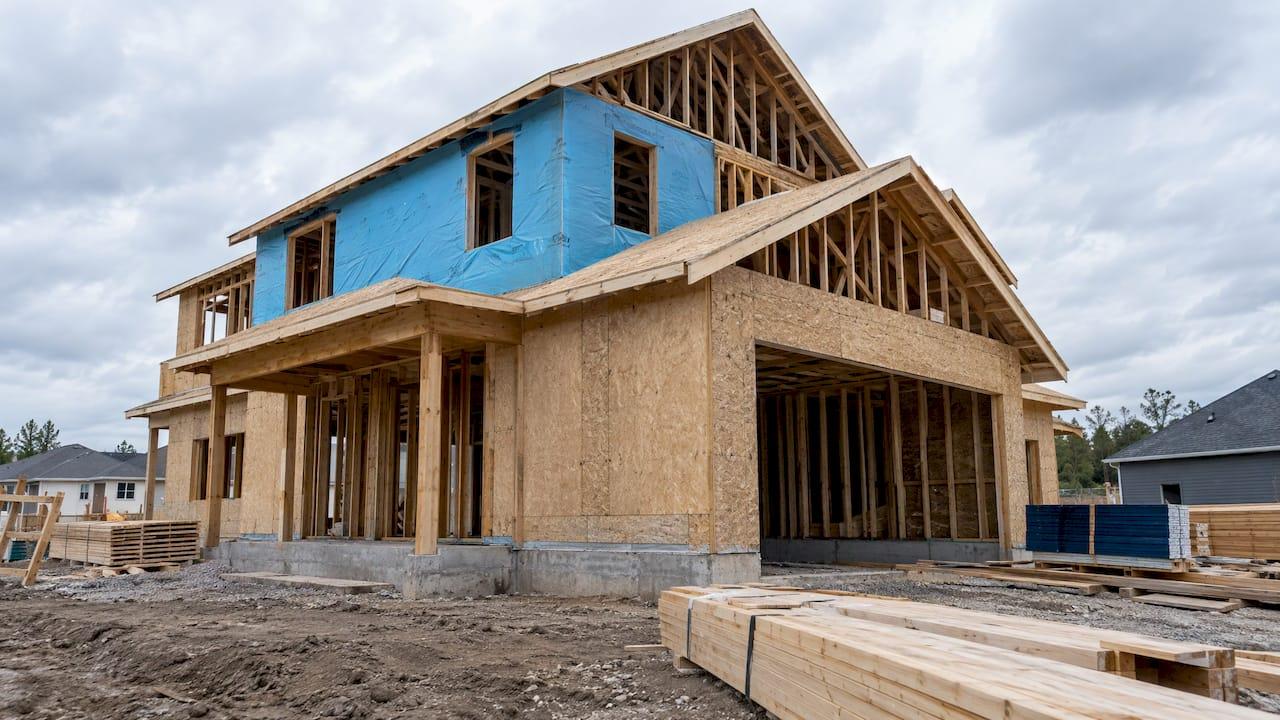
A new home needs two different kinds of insurance at two different stages. While it is being built, it needs a builders risk policy. Once it is finished and you are moving in, it needs a standard homeowners policy. The trick is lining the two up so there is no gap, and that is what this guide walks you through.
TL;DR
- During construction, you need builders risk coverage. Either your contractor carries it or you do, and your construction contract should say which.
- At completion, you switch to a homeowners policy. Plan it before your closing or move-in date, because your lender will require it.
- Newly built homes are often cheaper to insure. One 2025 analysis found premiums 35% lower than for a 20-year-old home.
- Insure the home for the full cost to rebuild, not for what you paid or what it would sell for.
- An independent agent can shop several carriers for both stages at once.
Table of Contents
- The two stages of insuring a new build
- Builders risk: coverage while the house goes up
- Homeowners insurance for the finished home
- When to start the homeowners policy
- What insurers ask for on a new home
- Why new homes can cost less to insure
- Insure for rebuild cost, not purchase price
- Common mistakes to avoid
- Our perspective on insuring a new build
- Get both stages handled in one place
- FAQ
- Sources
The two stages of insuring a new build
Most people searching for insurance on a new construction home assume one policy does everything. It does not. Think of it as a handoff.
Stage 1: construction. The house is unfinished, often empty, and surrounded by materials, tools and subcontractors. That is a very different risk from a lived-in home. A standard homeowners policy may not provide the protection needed for an unfinished or vacant structure, according to HDA Insurance's guidance on owner-builders. Builders risk fills that role.
Stage 2: occupancy. Once the work is done and the home is habitable, a homeowners policy takes over. It covers the house, your belongings, your liability and your living costs if a covered loss forces you out.
The handoff date matters. If builders risk ends on the day the builder finishes and your homeowners policy starts a week later, the house sits uninsured in between. That is the gap to avoid.
Builders risk: coverage while the house goes up
Builders risk insurance covers the structure from the start of construction until a stated time after it is completed. The Florida regulator's Homeowners' Insurance Toolkit says these policies generally cover perils such as theft, vandalism, fire or lightning, windstorm or hail, debris removal, and backup of sewers or drains.
Two details are easy to miss:
- Liability may be separate. The same toolkit notes that most builders risk policies provide property damage coverage only. Protection for injuries on the construction site may need a separate liability policy.
- Who buys it is negotiable. If you hire a contractor, you can require them to obtain builders risk as part of the construction contract. The toolkit also advises making sure your own legal liability is covered.
Who should carry the policy?
It depends on how you are building.
| Your situation | Who usually arranges builders risk | What to confirm |
|---|---|---|
| Buying from a production builder | The builder, as part of the build | Completion date and when their coverage ends |
| Hiring a general contractor on your own lot | Either you or the contractor, per the contract | Who is named as insured, and that your interest is protected |
| Acting as your own general contractor (owner-builder) | You | Coverage start date, liability, and what happens if the build runs late |
| Major renovation or gut rehab | Usually you | Whether your existing homeowners policy limits coverage during the work |
If you are an owner-builder, hiring a general contractor on your land, or taking on a substantial renovation, you generally need your own coverage during construction, per the HDA guidance above. Our renovation builders risk guide for owners goes deeper on that scenario.
Single-project versus term policies
A homeowner building one house typically wants a single-project policy written for that build. Contractors and developers who build repeatedly may prefer a term or reporting-form policy that covers multiple projects over a period. We write both through our builders risk insurance service.
Homeowners insurance for the finished home
When the house is complete, you need a homeowners policy. The NAIC's Consumer's Guide to Home Insurance describes six main areas in a standard policy:
- Dwelling: damage to the house and attached structures, including fixtures such as plumbing, electrical wiring, heating and permanently installed air-conditioning.
- Other structures: fences, tool sheds, freestanding garages and guest cottages.
- Personal property: furniture, electronics, appliances and clothing, even when off-site.
- Loss of use: additional living expenses while your home is repaired.
- Personal liability: financial loss if you are sued and found legally responsible.
- Medical payments: medical bills for people hurt on your property or by your pets.
Flood damage is not covered by these policies, and earthquake coverage may be a separate policy or an endorsement, according to the same guide. If your new build sits in a flood zone, ask about a separate flood policy early, since your lender may require it.
A few other items matter specifically in a new home:
- Condo or townhome new builds: a condo unit usually needs an HO-6 policy rather than a full homeowners form.
- Renting it out before you move in: tell your agent. Occupancy changes how a policy is written.
- Valuable belongings: new homes often come with new jewelry, art, electronics and furniture. Scheduling high-value items can be worth discussing.
When to start the homeowners policy
Start shopping 30 to 60 days before your expected completion or closing date. That is our practical advice, not a rule, but it gives you time to compare carriers and fix paperwork problems before the deadline.
Here is why timing matters. Most mortgage lenders require insurance for as long as you have a mortgage and ask to be listed as the mortgagee on the policy, per the NAIC guide. If coverage lapses, the lender will likely insure the home itself at a much higher premium, with coverage limited to damage to the structure only.
A simple timeline:
- Before construction starts: confirm in writing who is buying builders risk and what its end date is.
- Midway through the build: ask your agent to start gathering homeowners quotes.
- Two to four weeks before completion: choose a carrier, pick limits and deductible, and give your lender's details.
- Completion or closing day: the homeowners policy takes effect the day builders risk ends, or earlier.
If the build runs late, ask your builders risk carrier about extending the term. Do not assume it renews itself.
What insurers ask for on a new home
Expect your agent and carrier to ask for details about the house itself. Exact requirements vary by carrier and state, so treat this as a working checklist:
- The address and the year built
- Square footage, number of stories and foundation type
- Roof type and materials, plus any wind or hail features
- Construction type, such as wood frame, masonry or steel
- Plumbing, electrical, heating and cooling systems, and their ages
- Safety features such as smoke detectors, sprinklers or alarm systems
- Your lender's name and loan number
- Proof the home is complete or nearly complete, as the carrier requests, such as a certificate of occupancy from your local building department
Having your builder's spec sheet and plans handy speeds this up. A good agent will tell you which items your chosen carrier needs, so you are not chasing paperwork at the last minute.
Why new homes can cost less to insure
Good news for buyers: newer homes tend to cost less. An Insurify analysis for Realtor.com found that in 2025 the average annual premium for a newly built home was 35% lower than for a 20-year-old home, a saving of $1,002 a year. Compared with a 40-year-old property it was 38% lower, a saving of $1,120.
Per-square-foot figures tell a similar story. Chicago Agent Magazine, citing a John Burns report, says homes built in 2020 or later cost 10% to 15% less to insure per square foot than homes built between 1980 and 2010. In markets including San Francisco, Boston and Philadelphia, the gap can reach 20% to 50%.
Why the difference? New homes have modern wiring, plumbing and roofing, and they are built to current codes. The same report notes that new homes can get certain mitigation credits automatically under current building codes, while older homes may qualify only after retrofitting. Our post on why older homes carry higher premiums covers the other side of that comparison.
These are averages. Your own premium depends on location, rebuild cost, roof, deductible, claims history and the carrier you choose.

Storm-resistant construction and discounts
If you are building in a hurricane or high-wind region, how you build can lower your wind premium. Alabama law, for example, requires insurers to provide a discount or rate reduction for new properties built to resist catastrophic wind and certified to the 2006 IRC or FORTIFIED standards, on policies with wind coverage.
Alabama is not alone. According to Smart Home America's FORTIFIED FAQ, states with enacted FORTIFIED incentive legislation include Alabama, Louisiana, Mississippi, Georgia, Oklahoma and North Carolina. Homes with a FORTIFIED designation there qualify for mandated discounts of 20% to 55% off the wind portion of the premium. If you are planning a build in one of those states, talk to your builder about the designation before the plans are final, since it is easier to build to the standard than to add it later.
Insure for rebuild cost, not purchase price
This is the most common mistake we see in new construction: setting dwelling coverage at the purchase price. The NAIC says dwelling coverage should equal the full replacement cost of the home, not its market value. Replacement cost means the cost to rebuild using materials of similar kind and quality.
The gap can be large. Your purchase price includes the land, which does not burn down, and it reflects market conditions rather than labor and material costs. The NAIC also warns that if coverage falls below 80% of full replacement cost, the insurer may reduce what it pays on a claim.
Ask your agent to run a replacement cost estimate based on your home's actual features: custom cabinetry, higher ceilings, premium flooring and finished basements all add rebuild cost. Your builder's final cost breakdown is a useful starting point.
Common mistakes to avoid
- Assuming the builder's insurance covers you after closing. Builders risk ends at or shortly after completion. Your homeowners policy must be ready.
- Skipping liability on the build site. Builders risk often covers property damage only, so confirm where site liability sits.
- Leaving the house empty without telling anyone. A finished but unoccupied home can be treated differently from an occupied one. Tell your agent your move-in plans.
- Forgetting add-ons. Sewer backup, scheduled valuables and umbrella liability are all optional coverages worth a conversation, per the NAIC's homeowners insurance overview.
- Comparing quotes with different limits. A cheaper quote with a lower dwelling limit or a higher deductible is not the same product.
Our perspective on insuring a new build
New construction is one of the places where an independent agent earns their keep. You are dealing with two policies, a lender, a builder and a deadline, and each one can trip up the others.
At MF&T North America we have more than 30 years of experience helping families and builders across multiple states. Because we are independent, we shop carriers for you rather than pushing one company's product. For builders risk we specialize in same-day binding, so a project does not sit uninsured while paperwork moves.
Our advice is simple. Settle who carries builders risk before the first shovel goes in. Start homeowners quotes while the walls are still going up. And set your dwelling limit on rebuild cost. Do those three things and the handoff is smooth.
Mike
Get both stages handled in one place
We help homeowners and contractors insure a build from the first day of construction through move-in. Our builders risk insurance covers single projects as well as term and reporting-form needs. When the house is done, our home insurance options include homeowners, condo (HO-6), renters and valuable belongings coverage.
Tell us your build address, expected completion date and lender, and we will compare carriers for you with no pressure. Request a quote through mfandtna.com.
FAQ
Are new construction homes cheaper to insure?
Often, yes. An Insurify analysis for Realtor.com found 2025 premiums for newly built homes were 35% lower than for 20-year-old homes. Your own price still depends on location, rebuild cost, roof and carrier.
Do I need builders risk if I am buying from a builder?
Usually the builder arranges it, since they own the project until closing. Ask in writing who carries the policy and when it ends. You still need your own homeowners policy ready for the day you take ownership.
Does a standard homeowners policy cover a house under construction?
Not reliably. A standard homeowners policy may not provide the protection needed for an unfinished or vacant structure. If you are building on your own land or hiring a general contractor, arrange builders risk and talk to your agent about site liability.
When should I buy homeowners insurance for a new build?
Start quotes a month or two before completion or closing, and have the policy in force by the day coverage must begin. Lenders generally require it, and a lapse can lead them to buy a costlier, more limited policy on your behalf.
How much dwelling coverage should I choose?
Choose the full cost to rebuild the home with similar materials and quality, not the purchase price. The NAIC notes that coverage below 80% of replacement cost can reduce claim payments.
Sources
- Insurance for New Construction Homes Costs Up to 38% Less (Realtor.com)
- New construction could mean lower insurance costs (Chicago Agent Magazine)
- A Consumer's Guide to Home Insurance (NAIC)
- Homeowners' Insurance Toolkit (Florida)
- Homeowners insurance (NAIC)
- Alabama Code § 27-31D-1
- FORTIFIED Construction FAQs (Smart Home America)