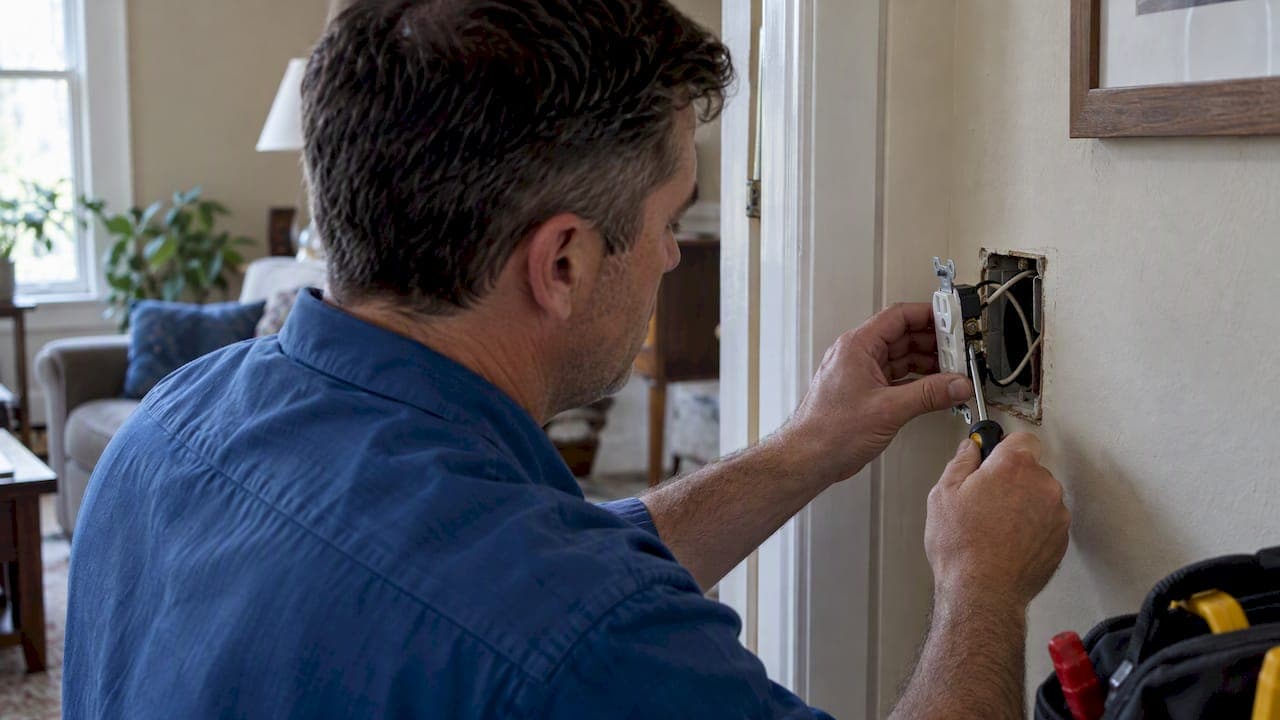
Yes, you can usually insure a home with aluminum wiring, but most carriers attach conditions. The deciding factor is documentation: a licensed electrician's proof that every connection was repaired using a method insurers trust, such as COPALUM or AlumiConn pigtailing, or that the branch circuits were fully replaced with copper. Before you shop for coverage, disclose the wiring and schedule an electrical inspection so you know exactly where you stand.
TL;DR:
- CPSC recognizes full copper circuit replacement, COPALUM crimp pigtailing, and AlumiConn set screw pigtailing as permanent repairs; twist style connectors do not qualify.
- Have a licensed electrician name the method and confirm every aluminum wire connection to a device was treated; a sample repair may not satisfy underwriting.
- Before paying for repairs, obtain written confirmation that the carrier accepts your method and list the records required to bind or renew coverage.
- Disclose aluminum wiring upfront; undocumented circuits, overheating signs, prior fire claims, or an FPE Stab Lok panel can trigger exclusions, declines, or nonrenewal.
- Pigtailing often takes a few days, while full copper replacement takes longer and costs more because electricians must open walls and rerun circuits.
Table of Contents
- How insurers view aluminum wiring
- CPSC-approved repairs and why insurers trust them
- How to document repairs so insurers accept them
- What remediation costs and how long it takes
- Red flags that can lead to decline or nonrenewal
- What to ask your insurer or agent
- Our take on aluminum wiring and insurance
- How we help homeowners with aluminum wiring get covered
- FAQ
- Sources
How insurers view aluminum wiring
Underwriters worry less about the wire itself and more about what happens where it meets a device. Aluminum expands and contracts more than copper under heat cycles, and at outlets, switches, and panel terminations, that movement can loosen connections, cause oxidation, and lead to overheating. That failure point, not the wiring in the walls, is what drives most underwriting decisions.
When an application or inspection reveals aluminum branch-circuit wiring, carriers typically respond in one of several ways:
- Bind the policy with conditions, such as a higher premium or a required follow-up inspection.
- Add an exclusion for electrical-fire losses tied to the wiring.
- Require remediation before binding or renewing coverage.
- Decline the application outright or nonrenew an existing policy.
Four-point inspections, common on older homes and frequently required at purchase or renewal, routinely flag aluminum wiring. So do general electrical safety inspections ordered by an agent during underwriting. Once flagged, the file typically sits until the homeowner supplies proof of repair or replacement. Real-world accounts from homeowners navigating this process show how often the outcome hinges on paperwork rather than on the wiring itself, with coverage decisions driven largely by documentation an electrician provides at the time of application.
CPSC-approved repairs and why insurers trust them
The Consumer Product Safety Commission recognizes three permanent repair methods for aluminum branch-circuit wiring, and insurers tend to accept only these:
- Complete replacement of aluminum branch circuits with copper wiring.
- COPALUM crimp pigtailing, which joins a short copper lead to the aluminum wire at every connection point.
- AlumiConn set-screw pigtailing, a connector-based alternative used when COPALUM isn't practical.
According to CPSC Publication 516, COPALUM is considered a permanent repair based on decades of field use, and AlumiConn serves as the accepted alternative when a COPALUM-certified installer isn't available locally. Twist-on wire connectors, even ones marked CO/ALR, are not treated as permanent fixes under this guidance.
Homes wired with aluminum before 1972 show a significantly higher rate of outlet connection failures than copper-wired homes of the same era, according to CPSC's research supporting Publication 516. That history is exactly why insurers ask for the repair method by name rather than accepting a vague "wiring was addressed" statement. An electrician's documentation needs to specify COPALUM or AlumiConn, confirm every aluminum-to-device connection was handled, and leave nothing implied.

How to document repairs so insurers accept them
Getting coverage bound or renewed comes down to paperwork as much as the electrical work itself. Here's what to assemble:
- A signed scope of work from a licensed electrician naming the exact method used, COPALUM or AlumiConn, and confirming every aluminum-to-device connection in the home was remediated, not just a sample.
- Itemized receipts and a completion certificate that match the scope of work and show the date the repair was finished.
- Results from any four-point or electrical safety inspection ordered during the quote process, submitted directly to the underwriter rather than held back.
- Written confirmation from the insurer, obtained before you pay for any work, stating which repair method they'll accept for binding or renewal.
Pro Tip: Ask your agent to request that written confirmation in an email or letter, not a phone call, so you have something to reference if underwriting questions come up later.
Carriers differ on exactly how they word acceptance, so matching your electrician's paperwork to the insurer's stated requirements saves time and avoids a second round of underwriting review.
What remediation costs and how long it takes
Costs vary with house size and, more specifically, the number of terminations an electrician has to address. A home with aluminum wiring at a dozen outlets costs less to pigtail than one with wiring run to every room, multiple switches, and a subpanel. Full copper replacement runs considerably higher than pigtailing because it involves opening walls and rerunning circuits rather than repairing connections in place.
A typical timeline looks like this:
- Initial electrical inspection to confirm the wiring type and count the connections involved.
- A written quote from the electrician specifying the repair method.
- A remediation window, often a few days for pigtailing, longer for a full rewire.
- Insurer underwriting time after documentation is submitted, which can lag if paperwork is incomplete.
Get bids from more than one electrician, and have your agent confirm in writing which method the carrier will accept before any work starts. Paying for a repair the insurer won't recognize wastes both time and money.
Red flags that can lead to decline or nonrenewal
A few issues come up again and again during underwriting review. FPE Stab-Lok panels are a known hazard that some carriers reject on their own, independent of any aluminum wiring remediation. Beyond the panel, insurers watch for:
- Unremediated single-strand aluminum branch circuits with no electrician documentation on file.
- Visible signs of overheating, such as discolored outlets or switch plates.
- A prior electrical-fire claim at the property.
- Failure to disclose aluminum wiring on the application, which can lead to a denied claim later even if the wiring itself never caused a problem.
Disclosing the wiring upfront, even before remediation, puts you in a stronger position than having an inspector find it later.
What to ask your insurer or agent
Get specific answers in writing before you spend money on repairs or assume you're covered. Useful questions include:
- "Do you accept COPALUM or AlumiConn pigtailing as evidence of a permanent repair?"
- "Do you require a full copper rewire instead?"
- "Will you add an electrical-fire exclusion if I don't remediate?"
- "Please confirm in writing exactly which documentation you need to bind or renew this policy."
Store the carrier's written response alongside your electrician's paperwork so both sides match if questions come up at renewal. If you're mid-dispute over a claim tied to wiring issues, a documentation checklist built for insurance disputes can help you organize evidence. An independent agent who works with multiple carriers can shop your situation and come back with the clearest underwriting terms rather than leaving you to interpret one insurer's answer alone.
Our take on aluminum wiring and insurance
We've seen homeowners spend money on electrical work before confirming a carrier would actually accept it, and that order of operations causes most of the frustration around aluminum wiring. With over 30 years of experience helping individuals and families secure customized coverage, we've learned that the paperwork sequence matters as much as the repair itself.
Our practical workflow is to inspect first, get the electrician's scope naming the CPSC method, then request written underwriting acceptance from carriers before anyone pays for anything. We've written about this same sequence for knob and tube wiring, where the documentation challenge looks nearly identical.
— Mike
How we help homeowners with aluminum wiring get covered
We request written confirmation of accepted repair methods before remediation begins. As an independent agency, we're not tied to one insurer's rulebook, which means more room to find terms that fit your home.
- Gather your electrician's documentation and any inspection results you already have.
- Reach out for a homeowners insurance quote and we'll help you figure out what each carrier will require.
Ready to find out where you stand? Request a free quote and we'll walk you through it.
This article is general information, not a substitute for advice from a qualified financial advisor. Consult a qualified financial professional about your own circumstances before acting on anything here.
FAQ
Do electricians use aluminum wire today?
Licensed electricians rarely install aluminum branch-circuit wiring in homes today; copper is the standard for most residential circuits. Aluminum still appears in some larger-gauge applications, like service entrance cables, where it's installed with connectors rated for that use.
What is not covered under homeowners insurance?
Standard homeowners policies typically exclude damage from flooding, earth movement, and routine wear and neglect, and many insurers add specific exclusions for homes with undocumented electrical hazards like aluminum wiring. Coverage gaps vary by carrier and policy, so it helps to review common coverage gaps before you assume you're protected.
Which electrical panels are considered uninsurable?
FPE Stab-Lok panels are widely flagged by insurers as a hazard that can lead to decline, separate from any aluminum wiring issue in the same home. Some carriers treat other outdated panel brands similarly, so a panel inspection is worth requesting alongside any wiring review.
What is the only approved repair to an aluminum wire termination?
CPSC guidance recognizes three permanent repair options for aluminum wire terminations: full copper replacement, COPALUM crimp pigtailing, or AlumiConn set-screw pigtailing, detailed in CPSC Publication 516. Twist-on connectors, even those marked CO/ALR, are not treated as a permanent fix by this guidance.
Sources
- CPSC Publication 516 - Repairing Aluminum Wiring
- Home Insurance Wiring Question : r/TorontoRealEstate