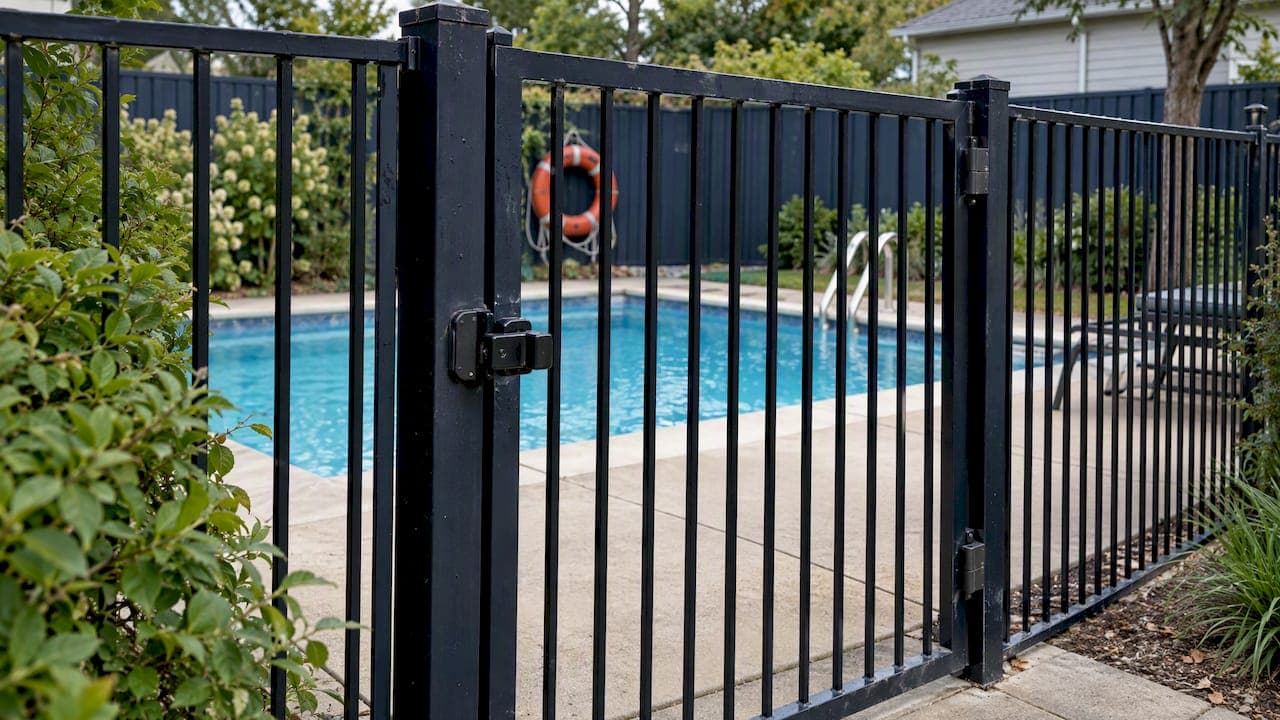
If someone is hurt in your pool, you can be held legally responsible, and your homeowners policy is usually the first line of defense. That protection has limits, conditions and exclusions. The best approach is to tell your insurer about the pool, build the barriers it expects, and look hard at whether your liability limit is high enough. This guide walks through each step in plain terms.
TL;DR
- A pool raises your liability risk. Insurance regulators call it an "attractive nuisance," especially for children.
- Homeowners liability coverage can pay when a guest is injured and sues, but only if the insurer knows about the pool and you follow its safety conditions.
- Fences, self-closing and self-latching gates, covers and alarms often matter to both your insurer and your town.
- One state insurance department suggests considering at least $300,000 or $500,000 of liability coverage, and an umbrella policy can add protection above that.
- Check your local rules, then ask your agent to review your policy before the pool opens.
Table of Contents
- When you can be held liable for a pool injury
- Does homeowners insurance cover pool injuries?
- What can affect your pool coverage
- Pool fence insurance requirements
- How much liability coverage should a pool owner consider?
- Steps that lower your pool risk
- What we see: our perspective on pool coverage
- Get a pool-ready coverage review
- Common mistakes to avoid
- FAQ
- Sources
When you can be held liable for a pool injury
In general terms, a property owner can be held responsible when an injury happens because of negligence on their part. For a pool, that might mean a gate that does not latch, a missing fence, a broken ladder, a slippery deck or a guest left unsupervised. Courts and juries look at what a reasonable owner would have done to prevent the harm.
Pools get extra attention for a simple reason. The South Carolina Department of Insurance notes that the insurance industry considers a pool an "attractive nuisance" that increases liability risk. The idea is that a pool can draw children who do not understand the danger, including neighbors' kids who wander into your yard without being invited.
That is why liability exposure is not limited to your own family's guests. Think through who might realistically end up near your water:
- Friends and relatives at a summer cookout
- Your children's friends, who may arrive without a parent
- Neighborhood children who cut through your yard
- Contractors, pool service workers and delivery drivers
- Short-term guests, if you rent out part of your property
Liability rules differ from state to state, and a lawyer in your state is the right person for a legal question about a specific incident. What every owner can control is the preparation: the barriers, the supervision and the insurance behind them.
Does homeowners insurance cover pool injuries?
Usually, a standard homeowners policy includes two coverages that matter after a pool accident. The California Department of Insurance explains that personal liability coverage applies when you or a household resident is legally responsible for injuring someone else, while medical payments to others coverage pays reasonable medical expenses for people accidentally hurt on the property. Exclusions and the exact policy wording control what is actually paid.
The Texas Department of Insurance describes the same idea in everyday language: liability coverage pays when someone outside your household is hurt, including legal fees if that person sues you.
Personal liability versus medical payments
These two coverages work differently, and mixing them up is common.
| Coverage | What it is for | Typical situation |
|---|---|---|
| Personal liability | Your legal responsibility for injuring someone else, including defense costs if you are sued | A guest slips on the pool deck, is seriously hurt and files a claim |
| Medical payments to others | Reasonable medical bills for someone accidentally hurt on your property, regardless of fault | A visitor cuts a foot on a chipped step and needs stitches |
One more point: the California Department of Insurance states that medical payments coverage does not apply to your own injuries or to injuries of people who live in your household, and it is not a substitute for health insurance. If you or your child is hurt in your own pool, your health coverage is the place to start.
What can affect your pool coverage
Having a homeowners policy does not automatically mean every pool claim is paid. The National Association of Insurance Commissioners (NAIC) warns that some insurers may refuse to insure a property with a pool or exclude liability for pool-related injuries. An insurer may also deny coverage or cancel a policy if the owner fails to follow its safety guidelines or does not disclose the pool.
Three habits protect you:
- Disclose the pool. The Texas Department of Insurance advises telling your insurer about a swimming pool because it is a high-risk feature. Do this when you buy a home that has one and when you build one.
- Ask what the policy requires. The NAIC recommends discussing coverage, fencing, self-closing or self-latching gates, covers, alarms and other safety requirements with your insurer, and notes that adding a pool increases risk and may increase your insurance charge.
- Keep your agent current. Be honest about backyard features, and tell your agent when you remove one, such as filling in a pool, so you are not paying for risk you no longer have.
New owners often skip these conversations because they assume the old policy carries over. Our guide on homeowners insurance mistakes new buyers should fix covers that gap and others.
Pool fence insurance requirements
There is no single national rule that says what your fence must look like. There are three layers to check, and they can differ.

Your insurer. The Texas Department of Insurance says that many insurers and city ordinances require pools to be enclosed by a fence and locking gate. Your carrier may set its own standard on height, gate hardware, covers or alarms, and it can be stricter than the law.
Your town and state. Building codes for residential pools are set by state and local authorities. The U.S. Consumer Product Safety Commission (CPSC) publishes safety barrier guidelines, but they are guidelines, not federal mandates, so owners should check with their local building department for the mandatory requirements. The South Carolina Department of Insurance likewise says that residential pool standards vary by town and that homeowners should contact their municipality and review applicable building codes.
Federal guidance. The CDC and the CPSC recommend that residential pool fences be at least four feet high with self-closing, self-latching gates. Treat that as a floor to build toward, not a substitute for your local code.
A simple fence checklist
Before you call your agent or building department, walk the property with this list:
- Is the fence at least four feet high, per the CPSC guidance?
- Does it fully enclose the pool, or does the house form one side?
- Does the gate close and latch by itself every time?
- Are there door alarms on any door that opens toward the pool?
- Is the cover in good working order?
- Have you checked your town's permit and inspection rules?
The CDC reports that four-sided isolation fencing, which separates the pool area from the house and yard, reduces a child's drowning risk by 83% compared with three-sided fencing along the property line. If your pool fence uses the back wall of the house as one side, that is worth a second look.
How much liability coverage should a pool owner consider?
Most homeowners policies come with a base liability limit, and that limit may not match what a serious pool injury can cost. Medical bills, lost income and legal defense can add up quickly in a single claim.
The South Carolina Department of Insurance suggests that homeowners with a pool consider at least $300,000 or $500,000 of liability coverage, and says an umbrella policy can provide additional protection above the homeowners limit. The NAIC describes an umbrella liability policy as optional insurance that sits over and above the limits of a standard policy, giving extra protection against major claims and lawsuits.
Here is a practical way to think about your limit:
- List what you own. Savings, home equity and future earnings are what a judgment could reach.
- Count the exposure. A pool, a trampoline, a dog and teenage drivers each add risk. We cover the trampoline side in our explanation of trampoline liability.
- Raise the homeowners limit first. It is often a modest step.
- Add an umbrella above it. One policy can sit over your home and your cars. Our piece on whether $1 million of umbrella coverage is enough helps you size it.
Premiums depend on your carrier, state, property and claims history, so there is no honest one-size price. A quote is the only way to see the real cost of each limit side by side.
Steps that lower your pool risk
Good habits make accidents less likely and make your policy easier to defend. They are also what insurers and safety agencies ask for.
Supervision comes first
The CPSC underscores that fences and alarms are essential but are not a substitute for continuous, focused adult supervision. The CDC adds that responsible adults should stay within an arm's length of children, avoid distractions such as phones and avoid alcohol while supervising.
A "water watcher" system works well at parties: one adult, no phone, no drink, for a set shift, then a handoff.
Barriers and alarms
- Install a four-sided fence with a self-closing, self-latching gate.
- Put alarms on doors that lead to the pool, as the CPSC recommends.
- Keep the pool cover in good working order, and use it whenever the pool is not in use.
- Move chairs, planters and toys away from the fence so children cannot use them to climb over.
A short, practical read on private pool safety also walks through everyday habits that keep young swimmers safer around residential pools.
Emergency equipment and training
Safety experts recommend keeping ring buoys, reaching poles and a first aid kit near the pool, and making sure family members know basic water rescue and CPR, according to the South Carolina Department of Insurance. Post emergency numbers by the gate and keep a phone within reach of the pool area but out of the supervisor's hands during a swim.
Document what you did
Photograph the fence, gate latch, alarms and cover after installation. Keep permits and inspection records with your policy documents. If you ever have a claim, that paper trail shows you took reasonable care.
What we see: our perspective on pool coverage
Pool owners usually ask us one question: "Am I covered?" The better question is "Covered for what, and up to how much?" A pool changes the risk picture of a home, and the right policy should change with it.
As an independent agency, we are not tied to one carrier. That lets us shop a pool-owning household across several insurers, compare how each treats pools, fences and liability limits, and recommend coverage built around your property instead of a one-size form.
Our advice is simple. Tell the carrier about the pool up front. Build the barriers your town and insurer expect. Review your liability limit, and ask us how an umbrella policy could sit above your home and auto coverage. A licensed agent can walk you through all of it without pressure, and we would rather answer the awkward questions now than after a claim.
Mike
Get a pool-ready coverage review
We are an independent agency based in Arlington, MA, with more than 30 years of experience helping families and businesses with home, auto and commercial insurance across multiple states. If you have a pool, or are buying a home that has one, we can review how your home insurance handles liability, fencing conditions and limits, and compare carriers for you.

If you want more protection above your homeowners limit, ask us about a personal umbrella policy through our auto and umbrella page. You can also start with a quote request.
Common mistakes to avoid
- Assuming the pool is automatically included. Confirm it is listed and disclosed.
- Ignoring the insurer's safety conditions. The NAIC notes that failing to follow them can lead to denial or cancellation.
- Relying on the base limit. Many households with pools should look at higher limits or an umbrella.
- Trusting the fence alone. Supervision is still the main protection for children.
- Forgetting to update the policy. Adding or removing a pool, deck or slide is a call to your agent.
- Skipping local rules. Your town may require permits, inspections or specific barriers beyond federal guidance.
FAQ
Does homeowners insurance cover a swimming pool injury to a guest?
Often, yes. Personal liability coverage can respond when you are legally responsible for injuring someone, and medical payments to others can cover reasonable medical bills for a guest hurt on your property. Exclusions and policy wording decide the outcome, so confirm with your agent that your pool is disclosed and covered.
Does my insurer require a pool fence?
Many do. The Texas Department of Insurance says many insurers and city ordinances require a fence and locking gate around a pool. Your carrier's requirements can differ from your town's code, so ask both what they expect.
How high should a pool fence be?
The CDC and the CPSC recommend at least four feet high, with self-closing and self-latching gates. Your state or town may require more, and your insurer may set its own standard, so check local building rules before you build.
Is homeowners liability enough if I have a pool?
It depends on your base limit and your assets. One state insurance department suggests considering at least $300,000 or $500,000 of homeowners liability coverage and notes that an umbrella policy can add protection above it. An agent can quote the options side by side.
What happens if I don't tell my insurer about my pool?
The NAIC says an insurer may deny coverage or cancel your policy if you fail to inform it about a pool or follow its safety guidelines. Disclosing the pool when you buy or build is the safest approach.
Sources
- Residential Insurance: Homeowners and Renters, California Department of Insurance
- Residential insurance brochure, California Department of Insurance
- Homeowners insurance FAQ, Texas Department of Insurance
- Does homeowners insurance cover swimming pools? Texas Department of Insurance
- Summer safety: are you insured for summer fun? NAIC
- Protecting your home: coverage for pools, hot tubs and backyard toys, NAIC
- Safety Barrier Guidelines for Residential Pools, CPSC
- Risk Factors for Drowning, CDC
- Summer Swim Safety, CDC
- Private pool safety guide