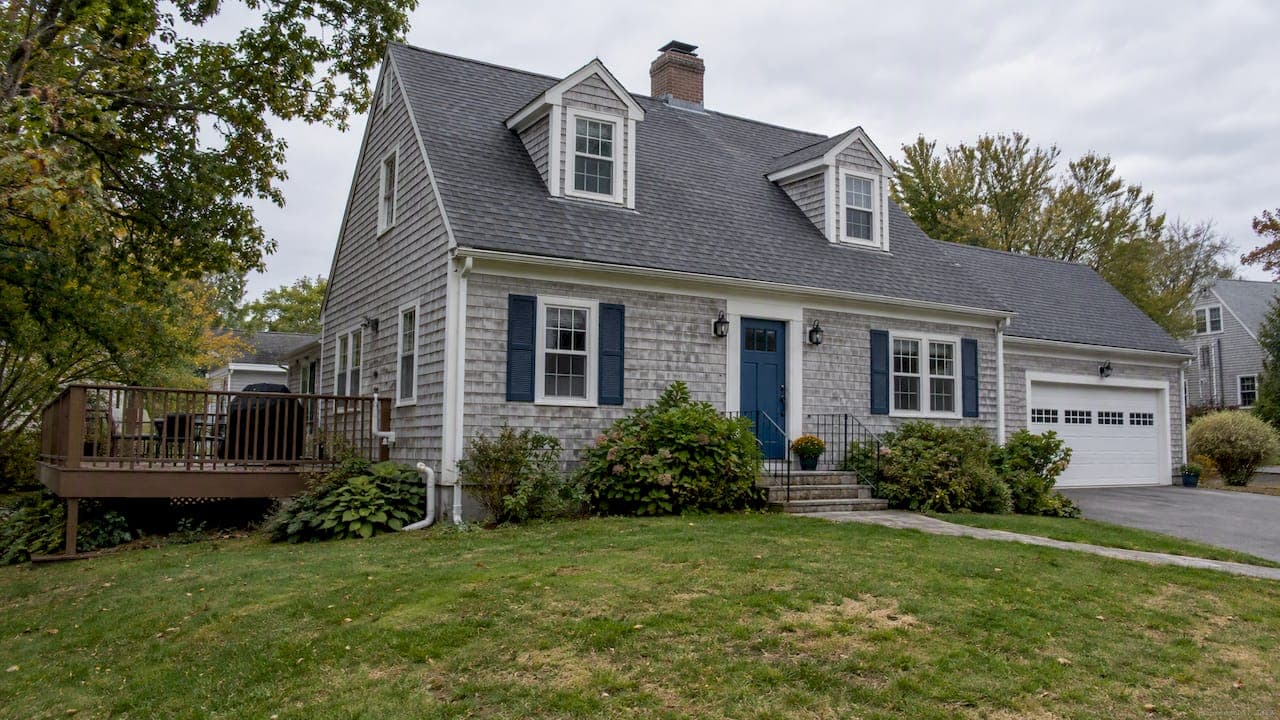
Your dwelling coverage limit is the most your homeowners policy will pay to repair or rebuild the structure of your house. The right number is what it would cost to rebuild your home at today's local labor and material prices. It is not what you paid, what you still owe, or what the house would sell for. This guide shows you how to estimate that number, what else on your policy depends on it, and when to raise it.
TL;DR
- Set your dwelling limit to the full cost of rebuilding, not your home's market value or mortgage balance.
- Land is not rebuilt after a fire, so leave its value out of the math.
- Other structures, personal property and loss of use limits usually follow from the dwelling limit, so a low limit quietly shrinks them too.
- Review the limit every year and after any renovation. Ask your agent about extended replacement cost and building code (Ordinance or Law) coverage.
- Flood is a separate policy with its own caps, so your dwelling limit does not change what flood insurance pays.
Table of Contents
- What a dwelling coverage limit actually is
- Replacement cost is not market value
- How to calculate your dwelling coverage
- The 80% rule and why underinsuring costs more than it saves
- What else moves when your dwelling limit moves
- Is there a maximum dwelling coverage?
- Add-ons that protect a limit that is not enough
- How and when to adjust your limit
- Our perspective: treat the limit as a yearly check-up
- Get your limit checked with an independent agent
- FAQ
- Sources
What a dwelling coverage limit actually is
Dwelling coverage, often labeled Coverage A on your declarations page, pays for damage to the physical structure of your home from covered events such as fire, wind or hail. That means the roof, walls, floors, built-in appliances and attached structures like a deck or garage, as NerdWallet describes it.
The limit is the cap. If a covered loss costs more than the limit to repair or rebuild, you pay the difference. The NAIC consumer guide to homeowners insurance says your coverage should equal the full replacement cost of your home.
If you want to see where this number sits on a policy, our guide on how to read a homeowners insurance policy walks through the declarations page line by line.
Replacement cost is not market value
This is the mistake we see most often. Market value is what a buyer would pay for your home, and it includes the land and the demand in your neighborhood. Replacement cost is what a builder would charge to put the house back, using similar materials, at current prices. The NAIC and state regulators both flag confusing the two as a leading cause of underinsurance.
The gap can be large in either direction. Massachusetts' consumer guidance gives an example: a home that sells for $300,000 might cost $600,000 to replace. A house in a hot school district can also sell for far more than it costs to rebuild, which would leave you paying premium for coverage you could never collect.
| Market value | Replacement cost | |
|---|---|---|
| What it measures | What a buyer would pay | What it costs to rebuild |
| Includes land | Yes | No |
| Driven by | Location, demand, interest rates | Local labor, materials, home features |
| Use it to set your dwelling limit? | No | Yes |
Your mortgage balance is not the right yardstick either. Lenders usually require coverage, but in Massachusetts a lender cannot require you to insure for more than the replacement cost. Meeting the lender's minimum does not mean you are fully covered.
For a deeper look at how claims are paid on a replacement cost basis versus depreciated value, see our article on replacement cost vs. ACV.
How to calculate your dwelling coverage
You do not need to be a contractor to get a solid estimate. Work through these steps.
- Start with square footage. Use finished living space, plus the attached garage, porch or deck as separate line items.
- Apply a local cost per square foot. Ask a local builder or your agent for a current range for your area and quality level. Costs vary a lot between, say, a Boston suburb and a rural town.
- Adjust for features. Custom cabinetry, stone counters, radiant heat, a complex roofline, plaster walls or hardwood throughout all push the rebuild cost above a basic estimate.
- Note the age and construction type. Older homes often have materials and craftsmanship that are expensive to match. Our piece on insuring older homes covers why premiums run higher and how agents help.
- Run an insurer replacement cost estimate. Carriers use software that factors in your zip code and home details. Treat it as a starting point, then compare it against your own figure.
- Leave out the land. The Maryland Insurance Administration advises that land value should never be part of your coverage calculation.
A worked example
Suppose your home has 2,000 square feet of living space and a local builder tells you that quality construction runs about $300 per square foot. That is $600,000 for the main structure. Add $40,000 for an attached two-car garage and $15,000 for a deck, and your estimate is $655,000. That is the number to discuss with your agent, even if the home would sell for more or less. The $300 figure is only an illustration, so use a quote from a builder in your own area.

What the premium looks like
Higher limits cost more, but not in a straight line, because your location, roof, claims history and deductible all matter. NerdWallet reports that the average annual cost with $400,000 in dwelling coverage is $2,490. Your own quote may differ widely. If price is the concern, there are better places to save than the dwelling limit, and we cover them in how to lower your homeowners insurance premium.
The 80% rule and why underinsuring costs more than it saves
Many policies reward you for insuring to full value and penalize you if you fall short. The NAIC explains that if you insure for less than 80% of replacement value, the insurer may reduce payment on partial losses. Aim for 100%.
Here is how that can play out, using round numbers. Say your home would cost $500,000 to rebuild, but you carry $350,000, which is 70%. A kitchen fire causes $50,000 in damage. Because you are under the threshold, the claim could be reduced rather than paid in full, and the exact method depends on your policy wording. Savings of a few hundred dollars a year on premium could turn into thousands of dollars out of pocket. Ask your agent how your specific policy handles a partial loss.
What else moves when your dwelling limit moves
Dwelling coverage is the anchor for several other limits. According to the NAIC, other structures coverage is typically 10% of the dwelling limit, and personal property is often 50%, though you can often adjust these ratios.
| Dwelling limit | Other structures (about 10%) | Personal property (about 50%) |
|---|---|---|
| $300,000 | $30,000 | $150,000 |
| $400,000 | $40,000 | $200,000 |
| $600,000 | $60,000 | $300,000 |
So underinsuring the house also shrinks the fence, shed and detached garage coverage, and the money available to replace furniture and clothing. Liability and medical payments limits are different: they are set independently, and you can usually choose them separately. If you own high-value jewelry, art or collectibles, standard personal property limits often cap what a single category pays, so ask about scheduling those items under valuable belongings coverage.
More on how the pieces fit together is in our types of homeowners insurance coverage guide.
Is there a maximum dwelling coverage?
There is no single legal maximum for a standard homeowners policy. Each carrier sets its own underwriting limits based on the home's value, age, location and features. Very large or unusual homes may need a specialty carrier or a higher-value program, and your agent can tell you which carriers will write your home at the limit you need.
Flood is the exception where hard federal caps exist. A homeowners policy generally does not cover flood, and the National Flood Insurance Program is a separate policy. According to FEMA, building coverage for one-to-four family homes is capped at $250,000 and contents at $100,000. For residential buildings with five or more units and for businesses, the building limit is $500,000. If your rebuild cost is higher than the NFIP cap, ask about excess flood options.

Add-ons that protect a limit that is not enough
Even a careful estimate can miss. A hurricane, wildfire or regional building boom can push labor and material prices up fast after a loss. Three options help.
Extended replacement cost
This endorsement raises your payout above the stated dwelling limit by an additional percentage. Policygenius explains that it can add 10% to 50% to account for unexpected construction and labor cost increases. The percentage and the conditions vary by carrier, and some require you to insure at 100% of the estimated replacement cost to qualify.
Building code (Ordinance or Law) coverage
Standard policies typically do not pay the added cost of bringing an older home up to current codes during repairs. The Maryland Insurance Administration's post-disaster claims guide notes that without this specific coverage you can be personally responsible for those extra expenses. If your house predates modern electrical, energy or egress requirements, this one matters.
Custom and high-end homes
Online calculators can understate the cost to rebuild a custom home. NerdWallet recommends that owners of properties with high-end architectural features talk with an agent about extended or guaranteed replacement cost. Owners of luxury properties sometimes look at specialist programs too, such as the ones discussed in this overview of luxury home insurance for high-value estates, though it covers a European market, so US coverage details will differ.
How and when to adjust your limit
You do not have to wait for renewal to change a limit. Call your agent when any of these happen:
- You renovate. A new kitchen, finished basement, addition or upgraded roof raises rebuild cost. A renovation budget guide can help you see how quickly project totals grow, and your dwelling limit should rise with them.
- Construction costs jump. Material and labor prices can change on their own schedule. NerdWallet's guidance is to review the limit annually.
- You finish or convert space. Turning an attic or garage into living space changes what has to be rebuilt.
- You build a detached structure. A new garage, studio or barn affects your other structures limit.
- Your renewal notice shows a big change. Some policies adjust limits automatically with an inflation factor. Check whether yours does, and whether it keeps pace with local costs.
When you ask for an increase, expect the carrier to want some detail about the work done. Photos, receipts and a contractor's description of materials make the request go faster.
Our perspective: treat the limit as a yearly check-up
We are an independent agency in Arlington, Massachusetts, with more than 30 years of experience, and the same pattern shows up when we sit down with homeowners. People spend a lot of time on the deductible and the premium, and almost none on the dwelling limit, even though it decides whether a major loss gets paid in full.
Our advice is simple. Because we are independent, we can compare carriers for you rather than being tied to one company's estimate. We would rather you ask three questions each year: has anything been added to the house, do the numbers still reflect local rebuild costs, and are the add-ons that matter to your home, such as extended replacement cost and building code coverage, actually on the policy? None of this takes long, and it is far cheaper than discovering a gap after a claim.
Our work with contractors and developers on builders risk coverage has also shown us how fast construction costs can move. That is why we do not treat a dwelling limit as set it and forget it.
— Mike
Get your limit checked with an independent agent
If you are not sure your current limit would rebuild your home, we can review it with you. We shop multiple carriers, explain your options in plain terms and recommend coverage built around your house, not a generic template. Start on our home insurance page, or see how we help with affordable coverage quotes. Building or renovating? Our builders risk coverage protects a project while it is under construction, before your homeowners policy takes over.
FAQ
What is the dwelling coverage limit?
It is the maximum your homeowners policy pays to repair or rebuild your home's structure after a covered loss. It appears as Coverage A on your declarations page. If the damage costs more than the limit, you cover the difference yourself unless you have an endorsement that extends it.
How much dwelling coverage do I need?
Enough to rebuild your home completely at current local labor and material prices. That figure is typically different from your home's market value or your mortgage balance, and it excludes land. A local builder's estimate or an insurer replacement cost estimate, reviewed by your agent, is the best starting point.
Is dwelling coverage the same as the cost to replace my home's contents?
No. Dwelling coverage pays for the structure. Personal property coverage pays for belongings, and it is often set at about 50% of the dwelling limit. Raising your dwelling limit usually raises the contents limit too, unless you change the ratio.
Does my dwelling limit cover flood damage?
Generally no. Most homeowners policies exclude flood, which is covered by a separate flood policy. For one-to-four family homes, NFIP building coverage is capped at $250,000, so check whether that is enough for your home.
How often should I change my dwelling coverage limit?
Review it at least once a year and any time you renovate or add space. Construction costs can rise independently of the wider economy, so a limit that was right at purchase may no longer rebuild your home.
Sources
- A Consumer's Guide to Home Insurance (NAIC)
- Understanding Home Insurance (Mass.gov)
- How Much Homeowners Insurance Do You Need? (NerdWallet)
- Maryland Insurance Administration
- Post-Disaster Claims Guide (Maryland Insurance Administration)
- Protect Your Property: Flood Insurance (FEMA)
- What Is Extended Replacement Cost in Home Insurance? (Policygenius)