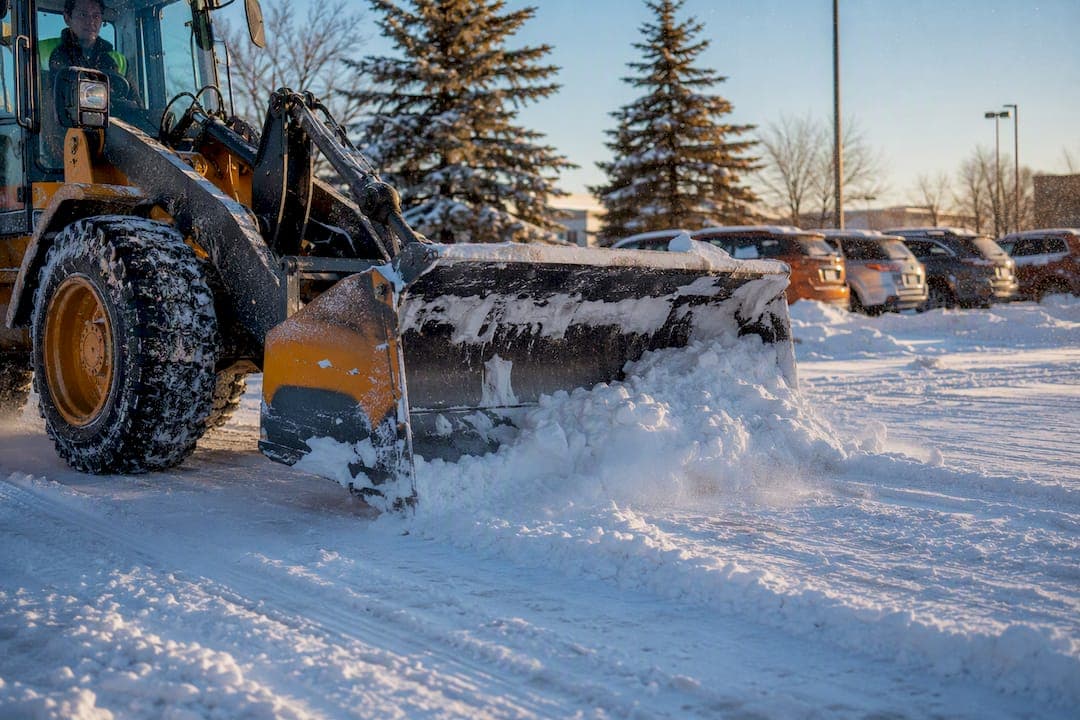
The minimum contract-ready bundle is commercial auto insurance, general liability with a snow-plow operations endorsement, workers' compensation once you have employees, and an equipment floater for your plows and spreaders. Add umbrella coverage once municipal or commercial contracts push required limits past $1 million. That is the baseline every serious snow-removal contractor should walk into an agent's office asking for. Skipping any one piece leaves a hole that shows up exactly when you cannot afford it.
Before you sign anything, check these three things:
- Look at your certificate of insurance and confirm the snow-plow endorsement is actually named on it, not just implied.
- Verify your commercial auto policy lists the replacement value of attached equipment, not just the truck.
- Ask whether workers' comp is required in your state based on employee count, since rules vary widely.
An agency like M F and T North America can bundle these policies together and check that the right endorsements are actually attached, which matters more than most contractors realize until a claim gets denied.
Key Takeaways
Contract-ready snow plow insurance requires commercial auto, CGL with a named snow-plow endorsement, workers' comp where applicable, and an equipment floater working together as one package.
| Point | Details |
|---|---|
| Confirm the endorsement by name | Check for ISO CG 22 92 or equivalents like BP 14 16 or SL 30 00 on the declarations page itself. |
| Insure equipment at replacement cost | Add plows and spreaders to an inland marine floater instead of relying on the truck's auto value. |
| Compare quotes on equal terms | Match limits, endorsement wording, and deductibles before comparing price across carriers. |
| Use safety tech to lower premiums | GPS tracking and dash cams can earn underwriting discounts and speed up claims. |
| Work with a bundling specialist | M F and T North America places multi-policy snow-plow packages and verifies endorsements across states. |
Table of Contents
- What Does Snow Plow Insurance Actually Cover?
- What Is the Snow Plow Operations Endorsement?
- How Much Does Snow Plow Insurance Cost?
- How Do You Buy Snow Plow Insurance the Right Way?
- What Reduces Snow Plow Claims and Premiums?
- What Most Contractors Get Wrong About Snow Plow Insurance
- Get a Snow Plow Insurance Quote Built for Your Fleet
- Sources
What Does Snow Plow Insurance Actually Cover?
Snow plow insurance is not one policy. It is a package of coverages, each solving a different exposure a plow contractor faces every winter, and understanding what each one does is the difference between a policy that pays and one that leaves you writing a check yourself.
Here is how the pieces fit together:
- Commercial auto insurance covers liability and physical damage for your trucks, but the number that trips people up is the insured value on the plow and spreader attachments. If your policy only values the truck, a smashed plow blade or a fried spreader motor comes out of your pocket.
- General liability with a snow-plow operations endorsement fixes a gap most contractors never see coming. Standard general liability policies often exclude vehicle-related claims from completed-operations coverage, meaning a slip-and-fall that happens after your crew leaves the lot could get denied outright without the endorsement.
- Workers' compensation becomes mandatory in most states once you cross a certain employee threshold, and payroll size directly affects the premium.
- Inland marine or equipment floater coverage pays replacement cost on plows, hydraulics, and spreaders regardless of which truck they're mounted on that week.
- Umbrella coverage kicks in when a contract demands higher limits than your base policies provide, though it's worth knowing that many umbrella carriers carve out exclusions specific to winter operations.
Snow removal insurance packages typically combine CGL with a snow-plow endorsement, commercial auto, workers' comp, and equipment floaters because none of those four policies alone covers the full spread of risk a plowing operation runs during a single storm event.
Pro Tip: If you're still running a landscaping general liability policy into winter without adding the plow endorsement, you may have zero coverage for snow-related claims the moment the leaves fall and the plow blade goes on.
What Is the Snow Plow Operations Endorsement?
The endorsement you need is commonly written as ISO CG 22 92, though you'll also see it issued under form numbers like BP 14 16, CB-1416, J7220, or SL 30 00 depending on your carrier. All of them do the same job: they carve snow-plow vehicles back into your completed-operations coverage, which a standard commercial general liability policy typically excludes for vehicle-caused claims.
That distinction matters because CGL vehicle exclusions often strip out protection for anything a vehicle causes after the job is technically finished. A property owner slips on ice you missed an hour after your truck left, and without the endorsement, that claim can get denied entirely.
Before accepting any policy, insist on these checks:
- Confirm the endorsement's form number appears on the declarations page itself, not just mentioned in an email from your agent.
- Request "additional insured with completed operations," not just "additional insured" alone, since the latter often only covers ongoing work.
- Ask what limits the property owner or municipality requires in the contract, and confirm your policy meets or exceeds them.
- Get a written copy of the endorsement, not only a certificate of insurance.
A certificate of insurance is a summary document, not proof of coverage. Property managers and municipalities increasingly require the endorsement language itself to spell out completed operations, because a COI alone can be issued even when the underlying policy excludes the exact claim you'd file.
How Much Does Snow Plow Insurance Cost?
Premiums for snow-plow contractors swing widely by state, fleet size, and claims history, but smaller operations commonly land between $400 and $2,000 per year for basic coverage, with larger fleets and higher-litigation states pushing well past that range.
Statistic Callout: Commercial snowplow insurance premiums vary widely across markets and operators, though your actual quote depends far more on local factors than any national figure.
Five things move that number up or down more than anything else:
- Location drives cost more than most contractors expect, since litigation climate and traffic density between states create real spread in base rates.
- Fleet size and vehicle value raise premiums proportionally, especially when plows and spreaders get insured at replacement cost.
- Claims history on both auto and liability sides tells an underwriter how much risk you actually carry versus how much risk you claim to carry.
- Employee records, including driving history and turnover, factor into workers' comp and auto liability pricing alike.
- Safety technology, like GPS tracking and dash cams, often earns direct discounts because insurers can see reduced loss exposure in the data.
Bundling into a business owner's policy, paying annually instead of monthly, and raising your deductible are the fastest levers to pull if a quote comes back higher than expected. Just weigh the tradeoff: a higher deductible lowers your premium but raises your out-of-pocket cost the moment you file a claim, so run the math against your actual claims frequency before choosing it purely for the lower sticker price.
How Do You Buy Snow Plow Insurance the Right Way?
Getting quotes that actually compare apples to apples takes more prep than most contractors expect, and skipping the prep is exactly how you end up comparing two policies that look similar on price but differ enormously in what they'll actually pay out.
Gather these documents before you call an agent:
- VINs and serial numbers for every truck, plow, and spreader, along with current replacement values.
- Payroll records and employee counts for workers' compensation rating.
- Loss runs from your prior insurer covering at least the last three years.
- Sample contract language from a municipality or property manager you plan to bid.
- A list of any subcontracted drivers and whether they supply their own trucks.
When you sit down with an agent, ask pointed questions rather than accepting a generic quote:
- Does this policy include the snow-plow operations endorsement by name, and which form number is it?
- Does the additional insured wording include completed operations or only ongoing operations?
- Is attached equipment covered at replacement cost, or actual cash value?
- What happens if I use hired or non-owned drivers during a heavy storm?
Compare quotes only when the limits, endorsement wording, and deductibles match exactly. A cheaper quote missing the completed-operations language isn't actually cheaper. It's a different, riskier product. Contractors running new or growing operations should also ask about specialized snow-and-ice management programs, which sometimes accept new ventures other carriers won't touch and offer scheduled inland marine coverage built specifically for plow equipment.
If you subcontract drivers who bring their own trucks, hired and non-owned auto coverage protects your business, but it will not cover damage to the subcontractor's own vehicle. Require proof of their commercial auto policy and spell out indemnity obligations in a written subcontractor agreement before the first storm.

What Reduces Snow Plow Claims and Premiums?
Operational discipline does more for your insurance costs than most contractors give it credit for, and the controls that reduce claims tend to be the same ones insurers reward with discounts.
Start with people, then add technology:
- Run a documented driver training program covering storm response, backing procedures, and fatigue management during long shifts.
- Screen new hires for driving records before they're ever behind the wheel of a plow truck.
- Install GPS fleet tracking and hardwired dash cams, both of which insurers increasingly treat as underwriting positives that can lower premiums and speed up claims resolution.
- Keep pre- and post-job photos, salt application logs, and time-stamped route records for every storm event.
- Use written subcontractor agreements with insurance requirements spelled out whenever you bring on drivers who supply their own trucks.
Good recordkeeping does double duty. It protects you in a dispute over whether a job was done properly, and it gives your insurer the documentation they want at renewal time to justify a lower rate.
What Most Contractors Get Wrong About Snow Plow Insurance
The biggest mistake I see isn't a missing policy. It's a policy that looks complete on paper but falls apart the moment a real claim hits, usually because nobody checked whether the snow-plow endorsement actually made it onto the declarations page. Contractors trust the certificate of insurance because it looks official, but a COI is a summary, not a guarantee, and property managers who accept it without demanding the endorsement language are setting themselves up for a fight later.
Conventional advice tells contractors to shop for the cheapest quote. That's backward. The right sequence is to lock in identical endorsement wording and limits across every quote first, then compare price. A $600 difference in premium means nothing if one policy excludes completed operations and the other doesn't.
If you take one thing from this guide, make it this: read your declarations page before the first storm, not after the first claim. Ask for the form number by name. If your agent can't tell you whether it's CG 22 92 or an equivalent, that's your answer about whether to switch agents.
— Mike
Get a Snow Plow Insurance Quote Built for Your Fleet
M F and T North America has spent over 30 years placing commercial coverage for contractors across multiple states, and snow-plow operations bring a specific set of gaps that generic quote sites tend to miss entirely. Rather than juggling separate applications for auto, general liability, workers' comp, and equipment coverage, you work with one agency that bundles the package and personally checks that the snow-plow endorsement is named on your declarations page, not just implied in a summary document.
That verification step is where most contractors get burned, and it's exactly where an independent agency earns its fee. M F and T North America also helps you document contract language for municipal and commercial property clients so the additional insured wording matches what the job actually requires. If you're ready to compare real numbers for commercial auto, liability, and equipment coverage, request a customized quote and get a bundle built around your fleet size and contract obligations, not a generic template.
Sources
- MoneyGeek — Best Cheap Snowplow Insurance
- LegalClarity — Snow removal insurance coverage every contractor needs
- Truckinginsurance