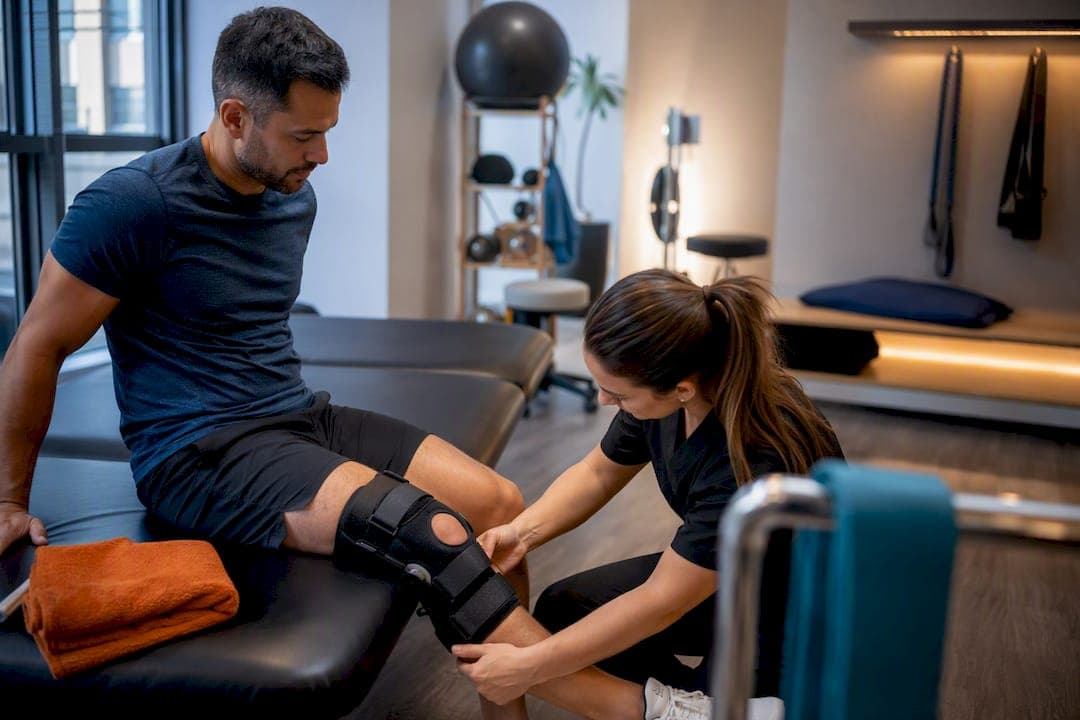
Massachusetts is a no-fault state, which means your own insurer pays your injury costs after a crash regardless of who caused it. That coverage is called Personal Injury Protection, or PIP, and it's required on every auto policy issued in the state. PIP pays up to $8,000 per person for medical bills, lost wages, and replacement services. Vehicle damage works differently and gets sorted out through fault-based liability coverage instead.
TL;DR:
- PIP coverage in Massachusetts pays up to $8,000 per person for medical expenses, lost wages, and replacement services, with costs incurred within two years of the accident.
- Medical benefits from PIP can be supplemented by health insurance after $2,000 in payouts, potentially making health coverage the primary payer.
- A personal injury claim can be filed outside no-fault rules if expenses meet or exceed $2,000 or if the injury involves a serious condition such as a fracture or disfigurement.
- Vehicle damage is handled separately through liability coverage, collision, and comprehensive insurance, which are optional but often required for financed vehicles.
- Filing a PIP claim requires prompt medical attention, documentation, and submission within specific deadlines, with at-fault accidents affecting premiums only if damages exceed $1,000.
Table of Contents
- What Does No-Fault Insurance Mean in Massachusetts?
- What Does PIP Actually Pay For in Massachusetts?
- When Can You Sue After a Massachusetts Car Accident?
- What Other Coverage Do You Need Beyond PIP?
- How Do You File a PIP Claim in Massachusetts?
- How Do Accidents Affect Your Massachusetts Premiums?
- MF&T North America's Take on Navigating Massachusetts No-Fault Rules
- Get Your Massachusetts Auto Policy Reviewed by MF&T North America
- Primary Sources for Massachusetts No-Fault Rules
- Sources
What Does No-Fault Insurance Mean in Massachusetts?
The rule comes straight from M.G.L. c. 90, § 34M, which requires every Massachusetts auto liability policy to include Personal Injury Protection. That statute is the backbone of the state's no-fault system, and it exists so injured drivers get medical bills paid quickly instead of waiting months for a fault determination and a settlement check.
PIP isn't limited to the person named on the policy. Coverage extends to:
- The policyholder driving their own car
- Anyone the policyholder permits to drive the vehicle
- Household members of the policyholder
- Passengers riding in the insured vehicle
- Pedestrians or bicyclists struck by the insured vehicle
There are real gaps worth knowing about before you assume you're covered. Motorcycles are generally excluded from standard auto PIP, so riders need to verify separate injury coverage rather than assume their car policy extends to a bike. If you're shopping for minimum liability coverage in Massachusetts, motorcycle coverage is worth a direct conversation with your agent rather than a guess.
Private health insurance also enters the picture in a specific way. PIP is the first payer for medical bills, but once a claimant has received $2,000 in PIP medical benefits, health insurance can become the primary payer for injury treatment if the injured person carries their own health coverage. That coordination detail catches a lot of people off guard after a crash, and it's one reason claim paperwork can feel more complicated than the simple "your insurer pays" pitch suggests.
What Does PIP Actually Pay For in Massachusetts?
PIP caps out at $8,000 per person, per accident, and that figure is a combined limit across every category PIP covers, not a separate $8,000 bucket for each type of expense.
Pro Tip: Ask your agent about a PIP deductible or a health-insurance coordination endorsement when you buy your policy. Choosing the right option upfront can lower your premium if you already have solid health coverage, but get the tradeoffs explained before you sign anything.
Within that $8,000 ceiling, PIP pays for:
- Reasonable and necessary medical expenses connected to the accident
- Up to 75% of lost wages for someone unable to work because of their injuries
- Replacement services, such as paying someone to handle household tasks the injured person can no longer do
Medical expenses generally need to be incurred within two years of the accident to qualify for PIP reimbursement, so don't let old bills sit in a drawer. And because the $8,000 limit disappears faster than most people expect, especially with an ER visit and a few weeks of physical therapy, it's worth tracking your remaining balance rather than assuming the coverage will stretch indefinitely.
When Can You Sue After a Massachusetts Car Accident?
No-fault coverage doesn't erase your right to sue. It just raises the bar for when a lawsuit against the at-fault driver is allowed, and Massachusetts sets that bar using two separate tests.
The first is a dollar threshold: reasonable medical expenses of at least $2,000, even if PIP paid for less than that amount. The second is a serious-injury test that applies regardless of medical bill totals. You can step outside no-fault if the injury involves:
- A fracture of a bone
- Permanent and serious disfigurement
- Substantial loss of hearing or sight
- Death
Meeting either threshold opens the door to a claim against the at-fault driver for damages PIP never covers, most notably pain and suffering. That distinction matters because a straightforward soft-tissue injury with modest medical bills usually stays inside the no-fault system, while a broken wrist or a facial scar from an airbag typically clears the threshold and allows a full negligence claim. If you're gathering documentation to support a claim like this, a medical record review service can help organize the paperwork an attorney or insurer will want to see.
What Other Coverage Do You Need Beyond PIP?
PIP handles injuries. It does not touch a dented bumper or a cracked windshield, so vehicle damage runs through an entirely different set of coverages.
Massachusetts requires every driver to carry:
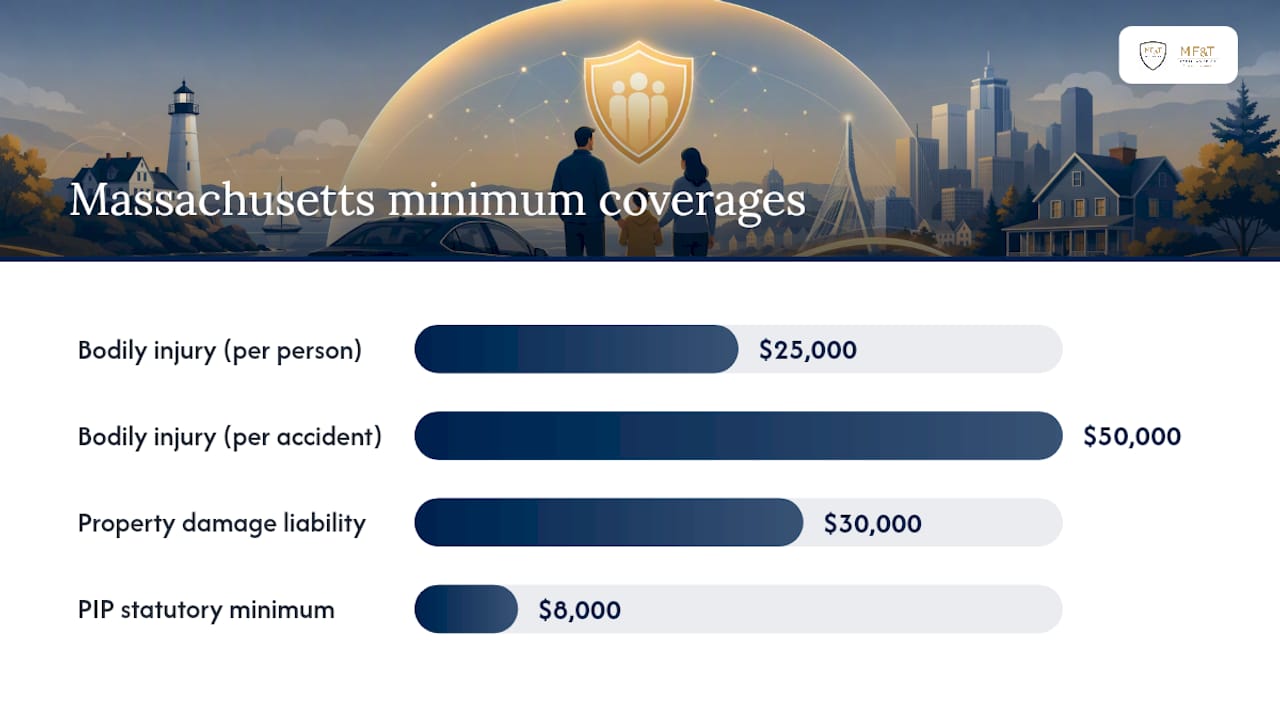
- Bodily injury liability of at least $25,000 per person and $50,000 per accident
- Property damage liability of at least $30,000
- Uninsured motorist coverage matching your bodily injury limits
- PIP at the $8,000 statutory minimum
Those numbers are the legal floor, not a recommendation. Property damage liability pays for damage you cause to someone else's vehicle or property, but it does nothing for your own car after a crash you caused. That's where collision and comprehensive come in. Both are optional under state law, though your lender or leasing company will almost certainly require them if you're financing the vehicle. Underinsured motorist coverage rounds things out, stepping in when the other driver's liability limits aren't enough to cover what you're owed. Drivers weighing these add-ons often find it useful to walk through what comprehensive coverage actually protects before deciding what to drop or keep.
How Do You File a PIP Claim in Massachusetts?
Filing a PIP claim isn't complicated, but the order of operations matters. Here's the sequence that keeps a claim moving:
- Get medical care immediately, even if injuries seem minor at first.
- Report the accident to your insurer as soon as possible.
- Document everything: photos, medical records, receipts for out-of-pocket costs, and pay stubs if you're claiming lost wages.
- Submit bills and records to your insurer promptly rather than batching them up.
- Keep copies of every submission and correspondence.
The statute gives insurers firm deadlines to work with. Once a physician notifies the insurer that a claimant is disabled, the insurer must begin payments within 10 days. If benefits go unpaid for more than 30 days after that, the claimant gains contractual remedies, including the ability to sue for the unpaid amount plus costs and attorney's fees.
Pro Tip: Save every receipt, even small ones. Replacement-services claims (paying a neighbor to mow your lawn while you recover) get denied more often than medical claims simply because people don't keep proof.
Most PIP claims should be filed within a reasonable deadline after the accident, and tort suits generally must comply with the state's statute of limitations.
How Do Accidents Affect Your Massachusetts Premiums?
Not every fender bender shows up on your driving record in a way that raises your rates. Insurers report at-fault accidents to the Merit Rating Board only when the payout exceeds $1,000, and a reported at-fault accident can influence your premium for up to six years under insurer merit rating plans.
A pure PIP claim for your own injuries typically won't trigger a surcharge on its own, since PIP payouts to you aren't the same as an at-fault liability payout to someone else. What moves your rate is fault for damage or injury to another party above that $1,000 line. Keeping minor claims small and paying out of pocket when it makes financial sense is one of the few levers you actually control here.
MF&T North America's Take on Navigating Massachusetts No-Fault Rules
Experienced insurance agents often see that people assume the $8,000 PIP minimum is enough. It rarely is once an ER visit and a few weeks of missed work enter the picture. An independent agent's real value is comparing how different carriers price UM/UIM and collision limits side by side, then flagging where your policy falls short before an accident forces the question.
Call an agent when you're choosing limits or reviewing a renewal. Call an attorney once you've crossed the tort threshold and a carrier is disputing fault or damages. Those are different jobs, and confusing them wastes time when you're already dealing with a claim.
— Mike
Get Your Massachusetts Auto Policy Reviewed by MF&T North America
Reading the statute tells you what Massachusetts requires. It doesn't tell you whether your specific policy actually protects you if a $2,000 medical bill turns into a $9,000 one. An independent insurance agent can help compare your PIP, collision, comprehensive, and UM/UIM limits against what similar Massachusetts drivers are carrying, and tell you plainly where you may be underinsured.
A policy review takes a phone call, not a research project. If you're due for renewal or you've never actually had someone walk through your declarations page line by line, request a free Massachusetts insurance quote and policy review and find out where your current coverage stands before you need it.
Primary Sources for Massachusetts No-Fault Rules
For the statutory text and official guidance behind this article, see M.G.L. c. 90, § 34M, Mass.gov's Auto Insurance 101 and 102, and the Nolo legal explainer on Massachusetts car insurance requirements.
This article is general information, not a substitute for advice from a qualified financial advisor. Consult a qualified financial professional about your own circumstances before acting on anything here.
Sources
- Mass
- M.G.L. c. 90, § 34M — Personal injury protection benefits
- Massachusetts Car Insurance Requirements: Minimum Coverage, No-Fault Rules & Your Rights | Nolo