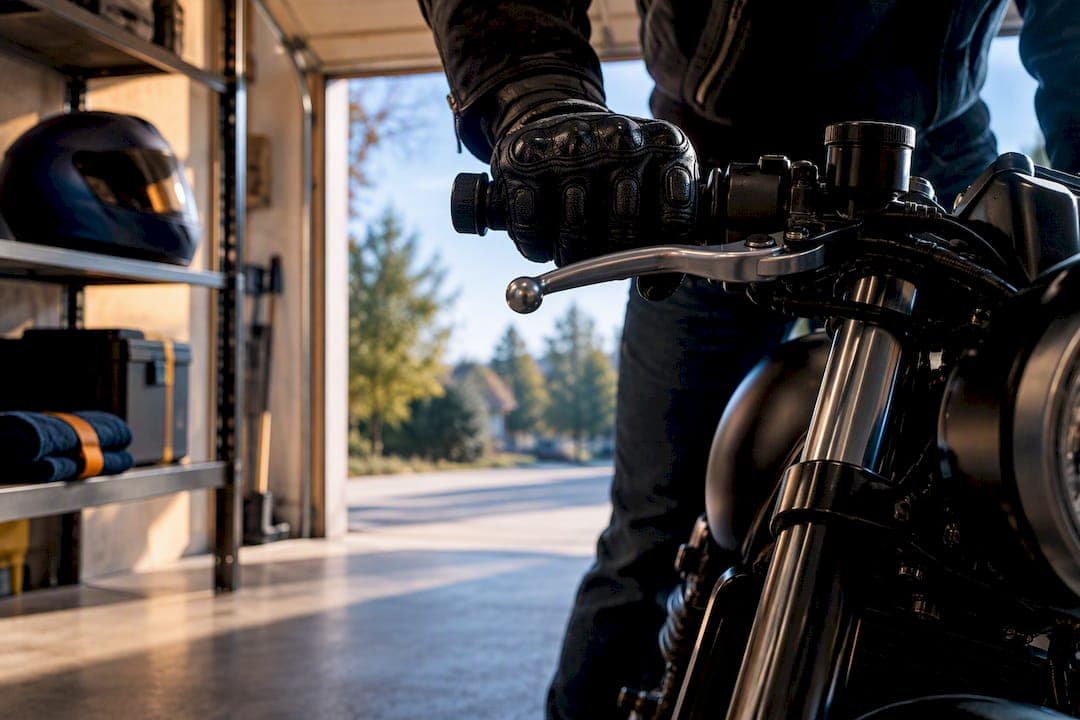
Every state that requires motorcycle insurance mandates liability coverage, and that protects other people, not you or your bike. For real protection, most riders should pair liability with uninsured/underinsured motorist coverage, then add collision and comprehensive if the bike has real value or a loan attached. Riders with custom parts or a classic bike should also look at agreed value settlement. Your actual premium depends on your age, record, bike type, storage, and the discounts you qualify for.
TL;DR:
- Uninsured motorist coverage is crucial because it often covers riders' medical bills when the at-fault driver is uninsured or underinsured, especially since riders face higher injury risks.
- Enhanced protection through agreed value settlement is recommended for customized and classic bikes to avoid depreciation and ensure a fair payout after a total loss.
- State minimum liability requirements vary and often align with passenger vehicle standards, making it essential to verify coverage limits via your state's official resources to avoid being underinsured.
- Optional add-ons like accessory coverage, trip interruption, and roadside assistance provide valuable protection but may only be cost-effective if your bike has high value, frequent travel, or resides in high-theft areas.
- Adopting safety courses, bundling policies, insuring multiple bikes, and accurately reporting low mileage can significantly reduce your insurance premiums.
Table of Contents
- Core coverages: liability, collision, comprehensive, and UM/UIM, and what each pays for
- State requirements: how minimums vary and how to verify you meet them
- Optional coverages riders commonly buy and when each is worth the cost
- What drives premiums and practical steps to reduce your cost
- How to choose limits and deductibles: a short checklist
- After a crash or theft: step-by-step claims expectations and settlement types
- Agent perspective: common gaps and quick fixes
- How an independent agency can help you get the right motorcycle insurance
- Sources
- FAQ
Core coverages: liability, collision, comprehensive, and UM/UIM, and what each pays for
Liability coverage is the foundation, and in most states it is also the law. It splits into bodily injury liability and property damage liability, often written as three numbers showing the per-person injury limit, the per-accident injury limit, and the property damage limit. These numbers vary by state law and insurer. It pays for the other person's damages. It does nothing for your bike or your own medical bills.
Collision coverage picks up where liability stops for your own machine. It pays to repair or replace your motorcycle after a crash, minus your deductible, regardless of who caused it. Comprehensive covers the events that have nothing to do with a collision: theft, fire, vandalism, hail, or a tree branch that falls on your bike in a storm.
Then there is UM/UIM, which protects you when the other driver is at fault but carries no insurance or not enough of it. Given how much more exposed riders are compared to someone in a car, that gap in protection matters more on two wheels. Many riders skip it because it feels optional, but it is often the coverage that actually pays their medical bills after a serious crash.
A few states also require guest passenger liability if you regularly ride with someone on the back.
- Liability pays for injuries and property damage you cause to others.
- Collision repairs your bike after a crash, minus your deductible.
- Comprehensive covers theft, fire, and weather damage.
- UM/UIM protects you when the at-fault driver has no insurance or too little.
State requirements: how minimums vary and how to verify you meet them
Coverage rules are not the same everywhere. Most states require motorcycle liability insurance, and some also require uninsured motorist coverage or medical benefits, with Florida applying its own specific minimum medical benefits rules to motorcycles. Assuming your state's minimums match your neighbor's is one of the easier ways to end up under-insured or in violation of the law without realizing it.
Motorcycle liability minimums often track closely with the minimums required for passenger vehicles in the same state, but the details, like whether UM/UIM or medical payments are mandatory, can differ. The only reliable way to confirm your exact numbers is to check your state's Department of Insurance or DMV website, or ask your agent to walk you through your declarations page.
Once you know your minimums, keep proof of coverage accessible:
- A digital or printed insurance ID card in your wallet or saved to your phone.
- A photo of your current declarations page in case an officer or another driver asks.
- Your agent's contact information saved for quick reach after any incident.
Optional coverages riders commonly buy and when each is worth the cost
Beyond the basics, a handful of optional coverages solve specific problems. MedPay and personal injury protection (PIP) both cover medical bills after a crash regardless of fault, but availability and rules vary by state, so ask your agent which applies where you ride.
For total-loss settlements, you generally choose between actual cash value, stated amount, and agreed value. Actual cash value factors in depreciation, which can leave you short if your bike is customized or a discontinued classic. Agreed value locks in a settlement figure you and the insurer agree on ahead of time, and it is usually the smarter pick for collectors and heavily modified bikes.
Other add-ons worth knowing about:
- Accessory or custom parts coverage protects aftermarket exhausts, custom paint, and upgraded components that standard policies often cap at a low limit.
- Trailer coverage protects the trailer you use to transport your bike.
- Trip interruption covers lodging or transportation costs if your bike breaks down far from home.
- Roadside assistance covers towing and on-site repairs.
Collision and comprehensive become worth the extra premium quickly if you have a loan or lease requiring them, if repair costs on your bike run high, or if you store it somewhere with real theft risk.
Pro Tip: Photograph every custom part with receipts attached before you ever need to file a claim. It is the fastest way to prove value later.

What drives premiums and practical steps to reduce your cost
Insurers price motorcycle policies based on a handful of measurable factors, and rider age, driving record, motorcycle type, bike age, annual mileage, and storage location all move the number up or down. A sportbike with a powerful engine typically costs more to insure than a cruiser with a similar price tag, and a bike stored in a locked garage usually costs less to insure than one parked on the street.
You have more control over your premium than you might think:
- Complete a Motorcycle Safety Foundation (MSF) course. Many carriers offer a discount for riders who finish a recognized safety course.
- Bundle your motorcycle policy with your auto or home insurance. Multi-policy discounts are one of the most common ways to save.
- Insure multiple bikes on one policy if you own more than one.
- Stay claims-free. A clean history over several years often earns a meaningful rate reduction.
- Report low annual mileage accurately. Fewer miles ridden generally means lower risk in the insurer's eyes.
If you store your bike for the winter, ask about a lay-up policy. It suspends certain coverages to lower your premium during months you are not riding, but if you take the bike out during that lay-up period, you may have no coverage at all. Tell your agent the exact dates you plan to store the bike so the policy matches reality.
How to choose limits and deductibles: a short checklist
State minimums are a floor, not a target. If you have assets worth protecting, ride with passengers often, or own a bike that is expensive to repair or still carries a loan, buying higher liability limits than the state requires is worth the extra premium. A serious crash can generate medical bills far beyond a minimum policy's limits, and whatever it does not cover comes out of your own pocket.
Your deductible works the opposite way: a higher deductible lowers your premium, but only choose one you could actually pay out of pocket the day after a crash.
Before you set your limits, run through this:
- What is the bike actually worth, including any modifications?
- Is there a loan or lease that requires collision and comprehensive?
- Where do you store it, and how much theft risk does that location carry?
- How often do you ride with a passenger?
- What personal assets, savings, home equity, or future wages, would a lawsuit put at risk?
After a crash or theft: step-by-step claims expectations and settlement types
The first few minutes after a crash or theft shape how smoothly your claim goes later.
- Check for injuries first and get medical help if anyone needs it.
- Call the police so there is an official report on record.
- Photograph the scene, the bike, and any visible damage before anything is moved.
- Save receipts for custom parts, recent maintenance, and accessories.
- Call your agent or insurer promptly to open the claim.
How your insurer pays out depends on the settlement type in your policy. Actual cash value factors in depreciation, while agreed value and stated amount lock in a set number ahead of time, which can mean thousands of dollars of difference on a heavily customized or classic bike.
Claims most often stall over the same few issues: no documentation for custom parts, riding during a suspended lay-up period, or failing to notify the agent about a change in storage or use.
Pro Tip: Keep a folder, digital or physical, with your declarations page, parts receipts, and recent photos of the bike. It turns a stressful claim into a fast one.
Agent perspective: common gaps and quick fixes
The most common gaps seen are riders who undervalue their custom parts, skip UM/UIM entirely, or buy liability limits just barely above the state minimum. Each of those choices saves a little now and costs a lot later. Bundling a motorcycle policy with an auto or home policy, binding a policy the same day, and setting up agreed value for a collector bike are usually simple fixes once someone actually looks at the full picture.
— Mike
How an independent agency can help you get the right motorcycle insurance
An independent agency is not tied to a single carrier, which means they shop your motorcycle policy across multiple companies instead of pushing one option. That matters most when you need something specific, like agreed value on a customized bike or accessory coverage that actually reflects what you have put into it. Bundling your motorcycle with your auto or home policy through an independent agency can also lower your overall premium.
To get a quote moving quickly, have these ready:
- Your motorcycle's VIN and current mileage.
- Photos of the bike, including any custom parts or accessories.
- Where the bike is stored, garage, driveway, or storage facility.
- A list of aftermarket parts with receipts, if you have them.
- Your current declarations page, if you are switching from another insurer.
If you are ready to compare options or just want a second opinion on your current policy, request a motorcycle insurance quote from MF&T North America and we will walk you through it directly.
This article is general information, not a substitute for advice from a qualified financial advisor. Consult a qualified financial professional about your own circumstances before acting on anything here.
Sources
- Facts + Statistics: Motorcycle crashes | III
- A Complete Guide to Motorcycle Insurance - NerdWallet
- What does motorcycle insurance cover — ValuePenguin
FAQ
What is the minimum motorcycle insurance coverage required?
Most states require liability insurance for motorcycles, and some also require uninsured motorist or medical benefits coverage. The exact limits vary by state, so check your state's Department of Insurance or DMV site or ask your agent to confirm your specific numbers.
Does motorcycle insurance cover theft and vandalism?
Comprehensive coverage, not liability, is what pays for theft, vandalism, fire, and weather damage to your bike. If you only carry liability coverage, a stolen motorcycle is not covered at all.
What is the difference between agreed value and actual cash value?
Actual cash value factors in depreciation, so an older or customized bike may settle for less than you expect. Agreed value locks in a specific payout amount ahead of time, which is why it fits collectors and heavily modified bikes better.
Why should I carry uninsured motorist coverage on a motorcycle?
Riders are more exposed to injury in a crash than someone protected inside a car, and UM/UIM covers your medical bills and damages when the at-fault driver has no insurance or not enough. It is one of the most overlooked coverages riders regret skipping.
How can I lower my motorcycle insurance premium?
Completing a recognized safety course, bundling policies, insuring multiple bikes together, and staying claims-free are common ways insurers offer discounts. Storing your bike securely and reporting accurate low mileage can also bring your rate down.