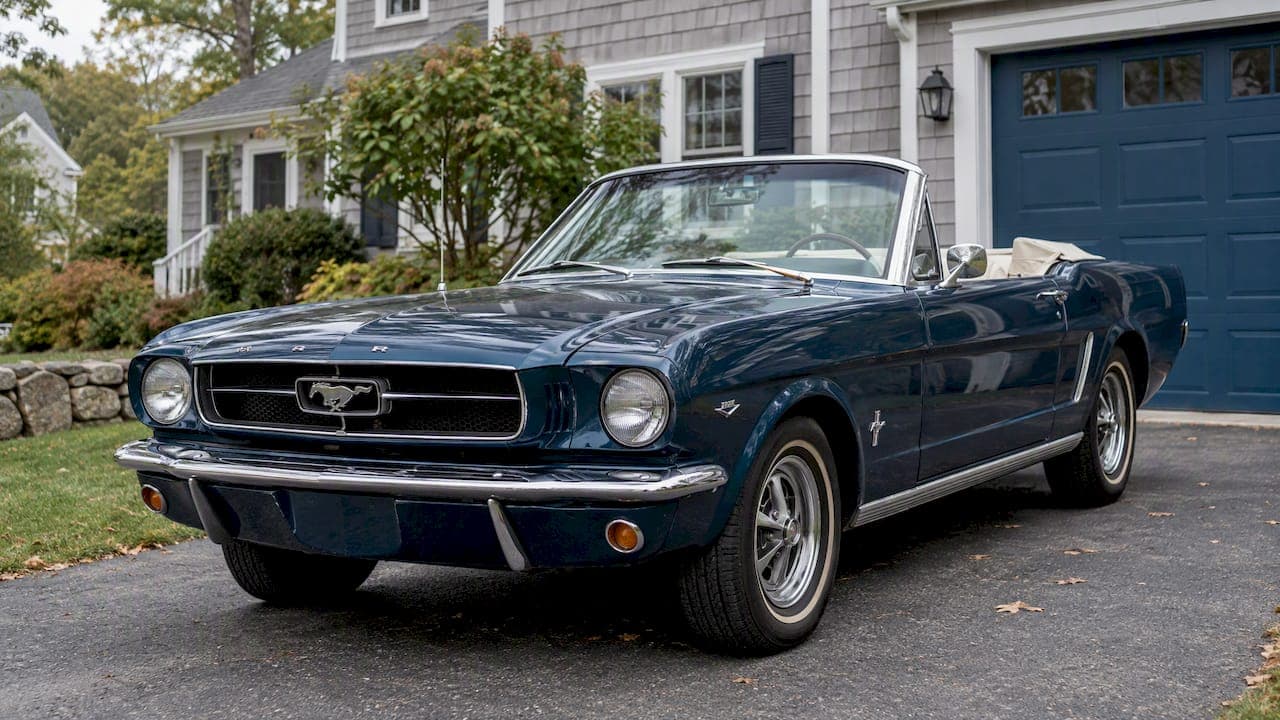
Classic car insurance in Massachusetts is a specialty policy for a collector vehicle that you maintain carefully and drive in limited ways. Its biggest advantage is that it can pay a value you and the insurer settle on in advance, rather than whatever a standard policy decides the car was worth on the day of a loss. You still have to carry the state's required coverages, and your plate type and how you use the car both matter. This guide covers how to line all of that up.
TL;DR
- A classic or collector policy usually insures the car for an agreed value, so a total loss does not turn into a depreciation argument.
- Massachusetts requires the same compulsory coverages on an antique as on any other car, including bodily injury, personal injury protection, uninsured motorist and property damage.
- An antique plate is a state rule: the car must be over 25 years old and used for limited purposes. An insurer's "classic" definition is a separate contract term and can differ.
- Collector policies often come with limits on mileage, storage and daily use. Read them before you buy, not after a claim.
- Premiums depend on the car, its value, where it is kept and how you use it. We shop it across carriers so you can compare.
Table of Contents
- What classic car insurance is, and how it differs from a standard policy
- Agreed value vs. actual cash value
- What Massachusetts calls an antique car
- Can you drive an antique-plated car every day?
- Coverage Massachusetts still requires on a classic
- Restrictions collector policies commonly place
- What affects the price
- Our perspective on insuring a classic
- Get a quote that fits your car
- A short checklist before you buy
- FAQ
- Sources
What classic car insurance is, and how it differs from a standard policy
A standard auto policy is built for a daily driver. It assumes the car loses value every year, so after a total loss it pays what the car was worth at that moment. For a 2019 sedan, that works. For a 1967 convertible that has been restored and has gained value, it does not.
Classic car coverage flips the assumption. The car is treated as something that holds or grows in value, and the policy is shaped around that. In exchange, insurers usually expect that the car is not your only transportation, that it is stored carefully and that it is driven sparingly.
The differences you will notice most:
- How value is set. Agreed value, stated value or actual cash value (more on this below).
- Who can drive it and how much. Many collector policies limit use to shows, club events, pleasure drives and maintenance trips.
- Storage expectations. A locked garage or similar secure space is commonly asked for.
- Restoration and parts. Coverage can be a better fit for original or restored parts than a standard policy that assumes ordinary repairs.
These are typical features, not guarantees. Every carrier writes its own terms, which is the reason to compare actual policy language rather than headlines.
Agreed value vs. actual cash value
This is the part of the policy that matters most when something goes wrong.
| Valuation | How a total loss is paid | What to watch |
|---|---|---|
| Actual cash value (ACV) | The insurer decides what the car was worth at the time of loss, factoring in depreciation and comparable sales | Can undervalue restored, rare or modified cars |
| Stated value | You declare an amount, but many policies pay the lesser of that amount or ACV | The number on the page is not always the number you collect |
| Agreed value | You and the insurer settle the value up front and a total loss pays that figure | You must document the car and update the value as the market moves |
That comparison follows how agreed, stated and actual cash value are explained by a classic car restoration shop, which notes that ACV is the usual method on traditional auto policies and can fall short for classics and modified cars.
How to set an agreed value that holds up:
- Photograph the car inside and out, including the engine bay, odometer and VIN plate.
- Keep restoration receipts and any appraisal in one folder.
- Compare recent sales of similar cars in the same condition, not just asking prices.
- Revisit the number every year or two, and after any major work.
An agreed value that is too low leaves you short. One that is wildly inflated can cause problems when the insurer asks for proof. Aim for a number you can defend with paperwork.
What Massachusetts calls an antique car
Two definitions get mixed up, and it helps to separate them.
The state definition (plates). According to the RMV Passenger Plates Manual, an antique-plated vehicle must be over 25 years old and maintained solely for exhibitions, club activities, parades, other public-interest functions, preparation drives and travel to or from repair. The same manual confirms that an antique motor car may display an antique or year-of-manufacture plate under 540 CMR 2.05.
The insurer definition (the policy). A carrier's idea of a "classic" or "collector" car is a contract term. It often looks at collectible value, condition, storage and limited use rather than only the plate category. So a car can be:
- antique-plated and insured on a collector policy,
- older than 25 years, registered with regular plates and insured on a collector policy that allows more driving, or
- a newer car with strong collector appeal that a carrier will still consider.
The label on your plate does not decide your coverage. The policy wording does. If you are not sure which side of the line your car falls on, send us the year, make and model and how you plan to use it.
Can you drive an antique-plated car every day?
Generally, no. The RMV's listed purposes for an antique-plated car are exhibitions, club activities, parades, other public-interest functions, preparation drives and trips to or from repair, as the Passenger Plates Manual lays out. Everyday errands and commuting are not on that list, and the state's specialty-car rule likewise says the vehicle must not be used primarily to carry passengers or goods.
That matters for insurance in two ways. First, driving outside the plate's permitted use can create a registration problem. Second, a collector policy that limits use may refuse or complicate a claim if the car was being used as a daily driver when the loss happened.
If you want a classic you can enjoy more freely, consider:
- keeping standard registration and insuring on a policy that allows more pleasure driving,
- keeping a separate daily driver on your regular auto policy, or
- asking the carrier in writing what counts as permitted use before you sign.
Coverage Massachusetts still requires on a classic
A collector car does not get a pass on the state's compulsory coverage. Massachusetts requires bodily injury to others, personal injury protection (PIP), bodily injury caused by an uninsured auto and damage to someone else's property. The state raised its minimums on July 1, 2025: bodily injury to others and uninsured-auto bodily injury are now $25,000 per person and $50,000 per accident, and property damage is $30,000 per accident. PIP stayed unchanged.

Our own guide to what to check at renewal on the 25/50/30 minimums walks through what each number means.
On top of that, collector policies are where you add the protection for the car itself:
- Collision and comprehensive for crashes, theft, fire, vandalism and weather.
- Spare parts and tools coverage, if you keep rare parts on the shelf.
- Towing or roadside suited to a car that you may not want to see on a flatbed from just anyone.
Also think about liability beyond the minimums. Minimum limits go quickly in a serious accident, which is why many owners add a personal umbrella through our auto insurance page. If you want to understand how uninsured motorist protection works in general, this explainer on uninsured versus underinsured motorist coverage is a clear starting point, though the legal specifics differ from state to state.
Restrictions collector policies commonly place
Collector coverage is often cheaper than insuring the same car on a regular policy because the insurer expects less risk. In return, you may agree to some conditions. Ask about each of these:
- Mileage. Some policies set an annual mileage cap. Ask what happens if you go over.
- Storage. A locked, enclosed garage is a common requirement. Know whether a carport, a shared garage or a rented space qualifies.
- Other vehicles. Some insurers want proof that you have a regular car for daily use.
- Driver rules. Age, driving record or limits on who else can drive the car.
- Condition and inspection. The insurer may ask for photos or an appraisal before binding.
- Modifications. A modified car may be treated differently than an original or correctly restored one.
Storage deserves particular care. If you do not have your own garage, look into classic car storage options that offer an indoor, secure space, and then confirm with the carrier that the location satisfies the policy. A good facility does not help you if the policy says something different.
What affects the price
We do not publish set prices for classic policies, because the premium depends on the car and the carrier. We will not quote a number we cannot support. These are the factors that usually move it:
- The agreed value. Higher value means more to insure.
- Make, model and age. Rarity and repair costs matter.
- Storage. Secure, enclosed storage generally helps.
- Annual mileage and use. Less driving typically means less risk.
- Driver history. Tickets, claims and years of experience.
- Where you live. Garaging address within Massachusetts.
- Deductible and coverage limits. Higher deductibles can lower the premium but raise your out-of-pocket cost at claim time.
Here is a quick example of how to think about it. Suppose you own a restored 1970s convertible that stays in a garage in Arlington and comes out for weekend drives and a couple of shows. That profile looks very different to an insurer than the same car parked on the street and driven to work. Describe your use honestly, because that is what the policy will be priced and judged on.
Other Massachusetts drivers sometimes ask how local rates compare. Our pages on auto insurance cost in Arlington and affordable auto insurance in Massachusetts show how everyday auto pricing works, which is the baseline a collector policy is compared against.
Our perspective on insuring a classic
We are an independent agency, and we have been doing this for over 30 years. That means we are not tied to one carrier. When someone calls about a classic, the first thing we do is ask how they actually use it, not what the car is worth.
The most common mistake we see is a mismatch between how the car is driven and what the policy allows. Someone buys a collector policy because it is cheaper, then starts taking the car on regular errands. It feels harmless until a claim. We would rather you pick the policy that fits your real life than the one with the lowest number.
The second mistake is a value that never gets updated. Classics can move in value, and your policy should keep up with that. Put a reminder on your calendar at renewal.
Third, check how the classic policy works alongside your other coverage. If you also own a home, a garage or other vehicles, it is worth looking at the whole picture, which is easier for one agent to see than for three separate companies.
We help you compare, explain the wording in plain English and make sure the compulsory Massachusetts coverages are in place.
— Mike
Get a quote that fits your car
If you want to insure a classic, antique or collector car in Massachusetts, we will review how you use it, where it is kept and which coverages you need, then shop the options for you. You can also start with our auto insurance services to see everything we cover for drivers.
Tell us the year, make and model, where the car is stored and how often you plan to drive it. We will come back with options and explain the trade-offs. Ready to start? Visit our free Massachusetts insurance quotes page.
A short checklist before you buy
- Confirm the car's age and whether you want antique plates, using the RMV's manual as the reference.
- Decide how you will really use the car, then ask carriers what use is allowed.
- Gather photos, receipts and an appraisal if you have one.
- Choose agreed value if the car is restored, rare or modified.
- Check the storage requirement against your actual garage.
- Confirm the Massachusetts compulsory coverages and limits.
- Ask what happens if you exceed a mileage cap or drive the car for a non-permitted purpose.
- Put the renewal date in your calendar and update the value.
FAQ
Is antique car insurance different from classic car insurance in Massachusetts?
The terms overlap, but they come from different places. "Antique" is how the RMV classifies a plate, and it requires the car to be over 25 years old and used for limited purposes. "Classic" or "collector" is an insurer's term and is defined in each policy. You can have one without the other, so check both.
Do I still need the state's required coverage on a classic?
Yes. Massachusetts requires the same compulsory coverages on all registered cars, including bodily injury, PIP, uninsured auto and property damage. The minimums were raised on July 1, 2025. Collector policies then add protection for the car itself.
Can I drive my classic to work?
With antique plates, generally no. The RMV lists exhibitions, club activities, parades, public-interest functions, preparation drives and trips to or from repair as the permitted purposes. Many collector policies also limit use. If you want to drive it more often, ask about a policy that allows it.
Is agreed value better than actual cash value?
For a restored, rare or modified car, usually yes, because the payout for a total loss is settled in advance instead of being decided after the fact. The trade-off is that you need documentation and should review the value regularly. For a car that is not rising in value, a standard policy may be enough.
How much does classic car insurance cost in Massachusetts?
It varies with the car's value, storage, mileage, your driving record and the carrier. We do not publish a flat price, because a number that fits one car will not fit another. Send us the details and we will compare real quotes.
Sources
- Passenger Plates Manual, Massachusetts RMV
- Massachusetts auto insurance requirements and 2025 minimum limits
- Agreed vs. stated vs. actual cash value explained
- Uninsured vs. underinsured motorist coverage
- Classic and exotic car storage