Yes, standard homeowners and renters policies typically cover sudden and accidental smoke damage — but whether your specific claim gets paid depends on three things: your policy form, the source of the smoke, and how well you document the loss. According to the Insurance Information Institute, smoke is listed as a covered peril across most common homeowners policy forms, though the scope varies by form type and whether the damage affects your dwelling or your personal property.
Two factors decide coverage faster than anything else:
- Policy form and trigger language. An HO-3 (open-peril dwelling, named-peril contents) or HO-4 renters policy covers smoke differently than an HO-2 or older DP form. The key phrase to find in your policy is "direct physical loss or damage" — if the smoke caused a demonstrable physical change to your property, coverage is far more likely. You can learn how to read your homeowners policy to locate these trigger phrases quickly.
- Sudden and accidental vs. gradual. Smoke from a kitchen fire, a neighboring structure fire, or a wildfire is typically covered. Slow staining from years of candle burning or a fireplace with poor ventilation usually is not.
Pro Tip: Before you clean anything, photograph every affected surface, item, and room. Contact your insurer to open a claim before discarding damaged materials — disposing of evidence can complicate your settlement.
Key Takeaways
Standard homeowners and renters policies cover sudden and accidental smoke damage tied to a covered peril, but the payout depends on your policy form, documented proof of physical damage, and how thoroughly you build your claim file.
| Point | Details |
|---|---|
| Coverage depends on policy form | Coverage under HO-3 and HO-5 policy forms is generally broader for smoke damage than under HO-2 forms.; check named-perils list for contents. |
| Document before you clean | Photos, video, and an itemized inventory taken before any cleanup are the foundation of a paid claim. |
| Surface cleaning vs. full remediation | Independent air quality and HVAC testing is often needed to justify remediation beyond surface cleaning. |
| Regulators back policyholders on testing | CDI Bulletin 2025-7 requires insurers to pay for professional testing when warranted; cite it in appeals. |
| M F and T North America | The agency provides policy reviews, claim documentation support, and remediation contractor referrals. |
Table of Contents
- What does smoke damage coverage typically include?
- What smoke damage claims commonly exclude
- How do insurers decide whether your smoke claim is covered?
- How to prove smoke damage: your documentation checklist
- Remediation options and the disputes you should expect
- How to file a smoke-damage claim and appeal a denial
- What smoke remediation costs and when a home becomes a total loss
- Immediate safety steps and how to prevent future smoke damage
- What regulators and courts say about smoke-damage claims
- An independent agent's perspective on smoke claims
- How M F and T North America helps you through a smoke-damage claim
- Sources
What does smoke damage coverage typically include?
Smoke damage insurance responds across several coverage components in a standard homeowners or renters policy. Understanding each one helps you know what to claim and what to expect from your adjuster.
Forbes Advisor notes that smoke from a covered peril — wildfire, kitchen fire, or a neighboring structure fire — is generally covered, but whether a lingering odor alone qualifies is a gray area that depends on policy language and proof of physical alteration.
Here is how the main coverage categories typically respond:
Dwelling coverage pays for smoke-damaged walls, ceilings, insulation, and structural components when the damage is tied to a covered peril. HVAC contamination — soot and particulates pulled into ductwork — falls under dwelling coverage on most forms and is one of the most frequently disputed line items.
Personal property covers smoke-damaged clothing, electronics, furniture, and appliances. On an HO-3, personal property is typically covered on a named-peril basis, so smoke must appear on the named-perils list. On an HO-5 or with a replacement-cost endorsement, contents get broader treatment.
Additional living expenses pay for reasonable temporary housing and increased living costs when smoke renders your home uninhabitable. FEMA's disaster recovery resources can supplement ALE for federally declared disasters, but your policy's ALE benefit is the primary source for most smoke events. A detailed primer on loss-of-use coverage explains how to document and maximize this benefit.
What smoke damage claims commonly exclude
Not every smoke-related loss triggers a payout. PropertyCasualty360 explains that modern property forms cover sudden and accidental smoke from almost any source — with two notable carve-outs: agricultural smudging (intentional burning to protect crops) and industrial operations. Those exclusions exist because they represent predictable, recurring exposures rather than sudden accidents.
Beyond those two, the most common reasons a smoke claim gets limited or denied include:
- Gradual or long-term damage. Slow discoloration from years of candle use, a wood-burning stove, or a poorly maintained fireplace is treated as wear and tear, not a covered loss event.
- Neglect or lack of maintenance. If a chimney fire spreads because the flue was never cleaned, the insurer may attribute part of the loss to neglect rather than a sudden peril.
- Pollutant exclusions in older forms. Some older commercial or residential forms contain broad pollutant exclusions that insurers have attempted to apply to smoke. Courts have split on this, but it remains a risk in certain policy forms.
- Sublimits on contents. High-value items like jewelry, art, or collectibles often carry sublimits that cap reimbursement well below replacement cost unless you have a scheduled personal property endorsement.
- Odor without demonstrable physical damage. Lingering smell alone, without visible soot, discoloration, or measurable contamination, can be difficult to claim under policies requiring "direct physical loss or damage."
Pro Tip: Pull out your declarations page and locate the named-perils list, the exclusions section, and any endorsements. Smoke should appear on the named-perils list for contents coverage. If you see a broad pollution exclusion, ask your agent whether it has been narrowed by endorsement or case law in your state.
How do insurers decide whether your smoke claim is covered?
Insurers run every smoke claim through a two-part test: first, does the policy language trigger coverage, and second, is the damage demonstrable?
The phrase "direct physical loss or damage" is the most important trigger in most modern homeowners forms. Courts and insurers have generally interpreted this to require a physical alteration of the property — not just an unpleasant odor. Soot embedded in drywall, discolored paint, contaminated HVAC ductwork, and smoke-saturated insulation all tend to satisfy this standard. A faint smell that dissipates after airing out the home typically does not.
PropertyCasualty360's analysis reinforces that contamination which "seriously impairs or destroys" an item's function is more likely to meet the direct-physical-loss test than removable soot or transient odors. That distinction matters practically: if your HVAC system circulated smoke particulates through every room, the functional impairment argument is much stronger than if a single room smells faintly of smoke.
Here is how the two most common claim outcomes compare:
| Outcome | Evidence That Supports It | Typical Insurer Action |
|---|---|---|
| Surface cleaning and deodorization | Visible soot on surfaces; no HVAC contamination; odor confined to one area | Adjuster approves cleaning crew and deodorization; lower settlement |
| Full remediation and replacement | Lab/air quality tests showing elevated particulates; HVAC contamination confirmed; porous materials saturated | Insurer pays for professional remediation, duct cleaning, and material replacement |
Insurers typically send their own adjuster and may recommend surface cleaning as a first step. Policyholders who need full remediation usually have to provide independent air quality or surface-sample testing to document contamination levels that justify the deeper scope. The CDI Smoke Claims and Remediation Task Force Report found inconsistent insurer practices on testing and remediation across California claims, urging insurers to adopt reasonable standards and avoid broad denials without proper investigation.
How to prove smoke damage: your documentation checklist
Strong documentation is what separates a paid claim from a disputed one. Follow these steps as soon as it is safe to re-enter your home.
- Record the date, time, and source of the smoke event. Note the fire's address if it was a neighboring structure, or the incident report number if fire department responded.
- Photograph every affected surface before touching anything. Capture soot lines, discoloration, damaged items, and any visible structural damage. A video walkthrough narrated room by room is even more useful.
- Document odors and symptoms. Write down where you smell smoke, how strong it is, and whether household members are experiencing symptoms. CDC guidance on wildfire smoke health risks identifies vulnerable populations — children, elderly adults, and people with respiratory conditions — whose health impacts can strengthen the case for full remediation.
- Create an itemized inventory. List every damaged item with purchase dates, model numbers, and estimated values. Attach receipts where you have them; for older items, use bank statements or photos from before the event.
- Separate high-value items. Electronics, heirlooms, and collectibles warrant their own documentation file and may need a separate appraisal.
- Get professional testing when contamination is not obvious. Air quality sampling, surface wipe tests, and HVAC inspection reports are the most persuasive evidence when an insurer disputes the extent of damage. A licensed industrial hygienist or certified remediation contractor can provide these.
- Preserve all damaged items until the adjuster inspects. Avoid discarding anything. If you must clean for safety reasons, photograph the item first and keep a sample if possible.
- Collect remediation estimates from at least two licensed contractors. Independent estimates give you a benchmark against the insurer's preferred vendor and support a higher settlement if needed.
Pro Tip: Ask an independent contractor or public adjuster to provide a written scope of work that itemizes every affected material, the recommended treatment method, and the reason surface cleaning alone is insufficient if that is the case. That document becomes your primary rebuttal to a low-ball offer.
Remediation options and the disputes you should expect
Smoke remediation is not one-size-fits-all. The scope depends on how deeply particulates penetrated your home's materials and systems.
Surface cleaning and deodorization is the starting point for most claims. Technicians wipe down hard surfaces, apply deodorizing agents, and use air scrubbers to reduce particulate levels. This is appropriate when smoke exposure was brief and confined to non-porous surfaces.
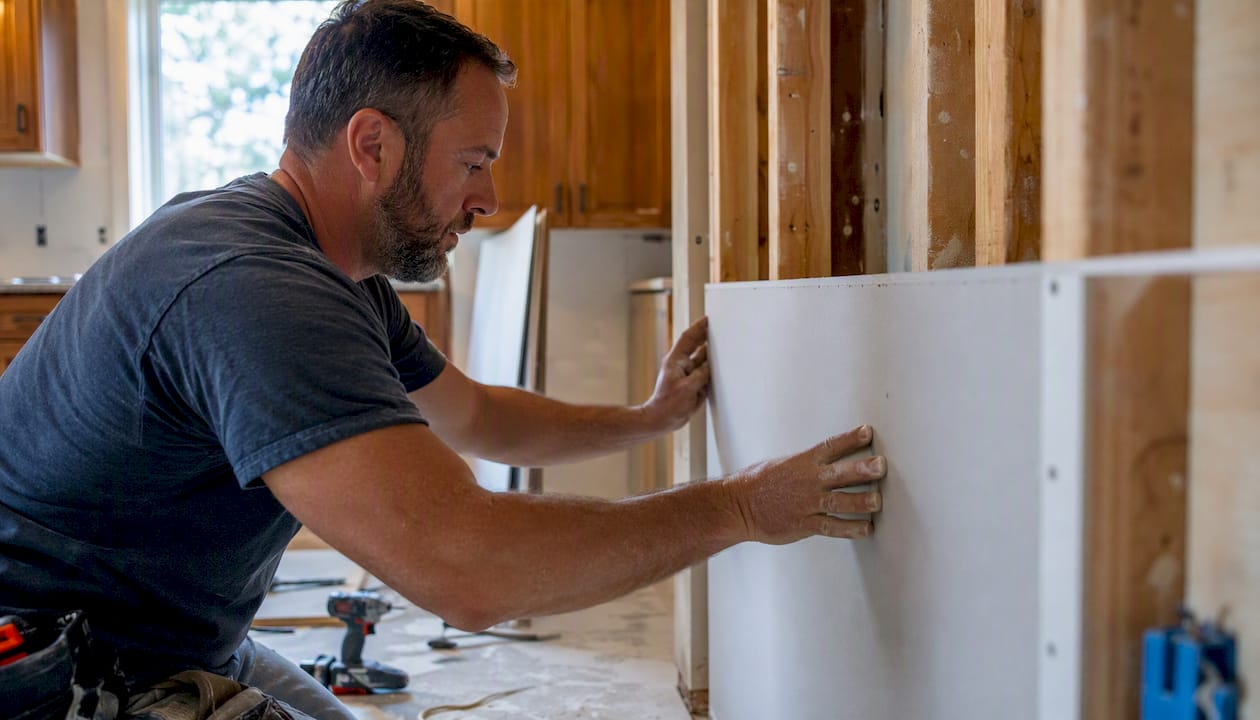
Deep cleaning and porous material treatment is needed when smoke penetrated drywall, insulation, carpeting, upholstered furniture, or wood framing. Porous materials absorb odor compounds and fine particulates that surface cleaning cannot reach. Replacing drywall or insulation is sometimes the only way to fully restore habitability.
HVAC and ductwork cleaning or replacement is one of the most common dispute points. If your HVAC system ran during or after a smoke event, particulates spread through every room. Duct cleaning by a certified contractor (look for NADCA-certified firms) is often necessary, and in severe cases, components need replacement rather than cleaning.
Professional odor neutralization using thermal fogging or ozone treatment can address residual odors after physical cleaning, but these methods work best after the source material has been removed or thoroughly cleaned.
Why do disputes happen? Insurers often favor surface cleaning because it costs less. Policyholders sometimes need full remediation to restore safety and habitability, especially when children, elderly residents, or people with asthma live in the home. EPA guidance on indoor air cleaning and ARB-certified air cleaners provide a useful reference when selecting equipment for post-remediation air quality management.
- If the insurer offers only surface cleaning, request the adjuster's written rationale.
- Get an independent industrial hygienist to test air and surface samples after the insurer's proposed cleaning.
- If results still show elevated particulates, submit those results with a written demand for a broader remediation scope.
- Document any health symptoms that persist after the insurer's cleaning is complete.
Pro Tip: Independent remediation estimates and documented health concerns — especially for vulnerable household members — are the two strongest levers for pushing an insurer toward a fuller remediation scope. Put both in writing and submit them together.
How to file a smoke-damage claim and appeal a denial
Filing promptly and correctly protects your rights. Here is the step-by-step process.
- Notify your insurer immediately. Most policies require prompt notice. Call your insurer's claims line or submit online the same day you discover the damage. Note the claim number.
- Mitigate further damage. Take reasonable steps to prevent additional loss — board broken windows, cover exposed areas, shut off HVAC if ductwork contamination is suspected. Keep all receipts for mitigation expenses; most policies reimburse them.
- Upload your documentation. Submit your photo inventory, video walkthrough, itemized contents list, and any professional testing results through the insurer's claims portal or by certified mail.
- Schedule the adjuster inspection. Be present during the inspection. Walk the adjuster through every affected area and point out HVAC vents, porous materials, and any items you believe need replacement rather than cleaning.
- Review the estimate carefully. Compare the insurer's scope of work against your independent contractor estimates. If line items are missing or the scope is narrower than your evidence supports, respond in writing with specific objections.
- Request itemized explanations for any denial or reduction. Ask for the rationale in writing, citing the specific policy language the insurer is relying on.
If the insurer denies or underpays your claim:
- Request a complete copy of your claim file.
- Submit independent testing results and a detailed remediation scope from a licensed contractor.
- File a complaint with your state insurance department. In California, CDI Bulletin 2025-7 explicitly states that insurers should contract and pay for professional testing when warranted — cite this in your complaint if your insurer refused to pay for testing.
- Consider hiring a public adjuster, who works on your behalf (typically for a percentage of the settlement) to negotiate with the insurer.
- Consult a policyholder attorney if the denial appears to violate your state's claims-handling regulations.
Pro Tip: When asking your insurer to pay for testing, use language like this: "Pursuant to my policy's coverage for direct physical loss and applicable state claims-handling regulations, I am requesting that you contract and pay for professional air quality and surface sampling to determine the full extent of smoke contamination before any remediation scope is finalized." Put it in writing and keep a copy.
What smoke remediation costs and when a home becomes a total loss
Smoke remediation costs vary widely depending on the size of your home, the severity of contamination, and whether HVAC systems and porous materials are involved. Minor surface cleaning for a single room might run a few hundred dollars. A whole-house remediation involving ductwork, insulation replacement, and specialty testing can reach tens of thousands of dollars for a mid-sized home.
How your deductible and valuation method affect the payout:
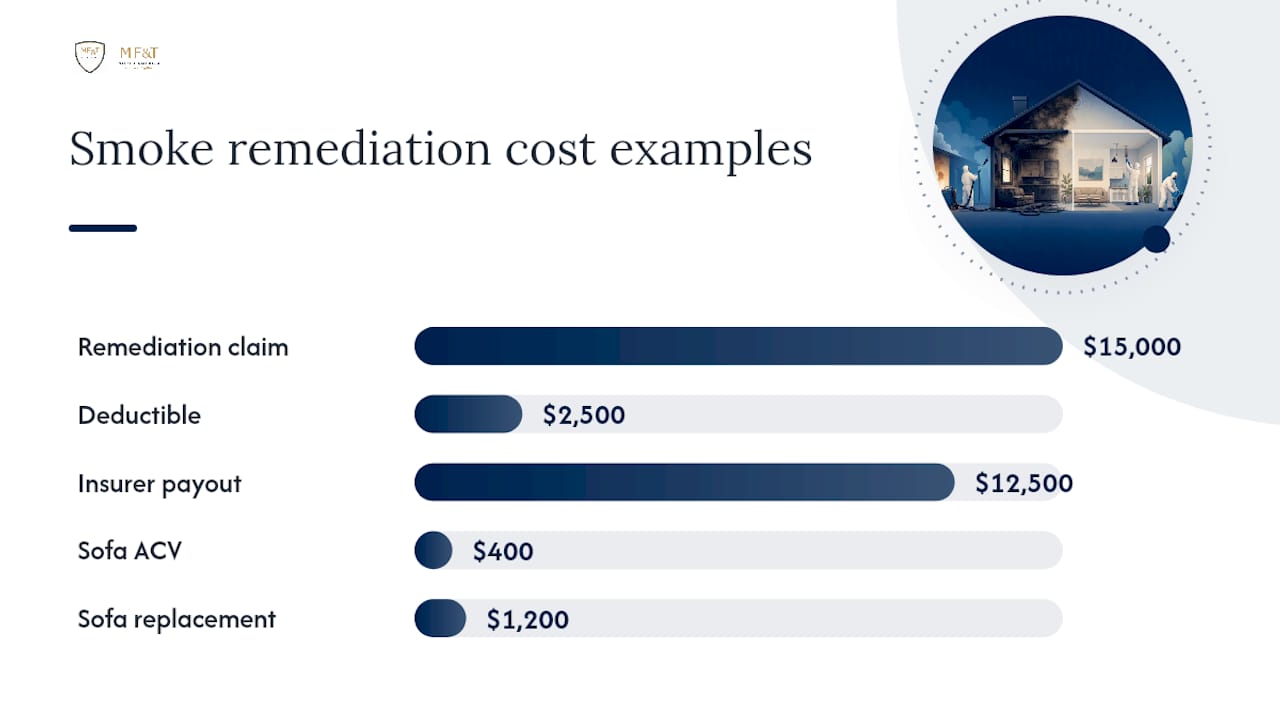
- Your deductible comes off the top of every claim. A $2,500 deductible on a $15,000 remediation claim means the insurer pays $12,500.
- Actual cash value (ACV) pays replacement cost minus depreciation. A five-year-old sofa with an ACV of $400 gets you $400, not the $1,200 it costs to replace it today.
- Replacement cost value (RCV) pays what it actually costs to replace the item or repair the structure with like kind and quality. Most HO-3 policies cover the dwelling at replacement cost; contents default to ACV unless you add a replacement cost endorsement. You can review how home insurance works for a fuller explanation of these valuation methods.
Key cost drivers to understand:
- Square footage and number of rooms affected
- Whether HVAC systems circulated smoke (adds duct cleaning or replacement costs)
- Presence of porous materials: insulation, drywall, hardwood floors, upholstered furniture
- Specialty testing: industrial hygienist fees, lab analysis of surface and air samples
- Temporary housing costs if ALE kicks in during remediation
When smoke damage becomes a total loss: A property can be declared a total loss when the cost to restore it to pre-loss condition exceeds a threshold defined by your state's law or your policy (often 50–80% of insured value). Severe wildfire smoke events that contaminate a home's entire structure, including framing and insulation, can reach this threshold. If your insurer declares a total loss, the settlement is typically based on the policy's dwelling limit minus your deductible, and you should request a detailed written explanation of how the total-loss determination was made.
Always request a detailed scope-of-work estimate from a licensed remediation firm before accepting any settlement. That document gives you a defensible basis for negotiating if the insurer's offer falls short.
Immediate safety steps and how to prevent future smoke damage
Right after a smoke event:
- Ventilate the home by opening windows and doors, but only when outdoor air quality is safe. Check your local air quality index before opening up.
- If heavy particulates are present, wear an N95 respirator before re-entering. Standard dust masks do not filter fine smoke particles.
- Shut off your HVAC system immediately if you suspect smoke entered the ductwork. Running the system spreads contamination to every room.
- Photograph all damage before touching or cleaning anything.
- Dry-clean or bag smoke-saturated clothing to prevent further absorption, but document each item first.
Prevention measures that also help future claims:
- Install smoke detectors and carbon monoxide detectors on every floor and test them monthly. Documented detector maintenance shows you took reasonable precautions.
- Upgrade to higher-MERV filters (MERV 13 or higher) in your HVAC system to capture fine particulates during smoke events. Replace filters after any significant smoke exposure.
- Service combustion appliances (furnaces, water heaters, fireplaces) annually and keep the service records. A well-maintained appliance is less likely to be the source of a covered loss, and the records rebut any "neglect" argument from an insurer.
- In wildfire-prone areas, create defensible space around your home by clearing dry vegetation and using fire-resistant landscaping within 30 feet of the structure.
- Consider certified air cleaners for rooms where vulnerable family members sleep or spend significant time.
Pro Tip: Keep receipts for HVAC service, filter replacements, and detector batteries in a dedicated home-maintenance folder. If an insurer ever questions whether damage resulted from neglect, those records are your first line of defense.
What regulators and courts say about smoke-damage claims
The regulatory and legal landscape around smoke-damage claims has shifted meaningfully in recent years, driven largely by California's wildfire losses.
CDI Bulletin 2025-7 sets a clear expectation: insurers must thoroughly investigate smoke claims, and where professional testing is warranted, the insurer should contract and pay for those services. The bulletin also encourages low-cost at-home test kits as a reasonable first step, and it warns against categorical denials without proper investigation. This is an enforcement lever policyholders in California can cite directly in appeals and regulatory complaints.
The CDI Smoke Claims and Remediation Task Force Report goes further, documenting inconsistent insurer practices on testing and remediation and urging insurers to adopt reasonable standards. The task force specifically asked insurers not to broadly deny smoke claims based on recent case law without conducting thorough individual investigations.
On the legal side, courts have been split on "direct physical loss or damage." Some courts have required visible, tangible alteration of the property. Others have found that severe smoke contamination that renders a space uninhabitable — even without visible soot — satisfies the standard. The outcome in any given case turns on the specific policy language and the facts of the loss, which is why documentation and independent testing matter so much.
- Some state insurance departments now require or encourage insurers to distribute low-cost test kits as a first step in smoke-claim investigations.
- Policyholders who receive a denial should ask whether the insurer conducted a physical inspection and what specific policy language supports the denial.
- Filing a complaint with your state insurance department creates a regulatory record and sometimes prompts insurers to reconsider a denial.
The CDI task force report urges insurers to "ensure thorough investigations" and comply with existing claims settlement regulations — a standard policyholders can cite when challenging inadequate claim handling.
An independent agent's perspective on smoke claims
Smoke claims reveal something most homeowners only discover after a loss: the gap between what they assumed their policy covered and what the policy language actually says. That gap is almost always wider than expected.
The single most common mistake I see is waiting too long to involve your agent. By the time a policyholder calls for help, they have already accepted a surface-cleaning offer, discarded damaged items, or signed a release they did not fully understand. An independent agent can review your policy wording before you accept any settlement, identify endorsements you may have forgotten about (replacement cost on contents, scheduled personal property, extended replacement cost on the dwelling), and help you submit a complete, well-documented claim file.
What an independent agent cannot do is undo a signed release or recover evidence you have already thrown away. That is why the documentation steps in this article matter so much before any insurer contact.
There is also a coverage-gap conversation worth having now, before a loss. Many homeowners carry ACV on their contents without realizing it. After a significant smoke event, the difference between ACV and replacement cost on a houseful of furniture and electronics can easily reach five figures. A policy review takes about 30 minutes and costs nothing. The cost of finding out you had the wrong valuation method is considerably higher.
An independent agency has been helping homeowners and renters understand and use their coverage for over 30 years. The agency's value in a smoke claim is not just filing paperwork — it is knowing which questions to ask, which endorsements to invoke, and when to push back on an insurer's initial offer.
How M F and T North America helps you through a smoke-damage claim
Navigating a smoke-damage claim is stressful enough without trying to decode policy language on your own. M F and T North America offers practical, hands-on support at every stage — from the moment you discover damage to the final settlement check.

As an independent agency with over 30 years of experience, M F and T North America can review your homeowners insurance policy to identify exactly what your form covers, flag any endorsements that apply, and help you build a complete claim file. The agency can also connect you with licensed remediation contractors, advise on ALE documentation, and provide sample claim language when you need to push back on an inadequate settlement offer.
Specific ways the agency supports smoke-damage claims:
- Policy analysis to confirm coverage triggers, valuation method, and applicable sublimits
- Assistance preparing and submitting documentation to your carrier
- Guidance on when to request independent testing and how to present those results
- Referrals to licensed remediation contractors for independent scope-of-work estimates
- Support navigating appeals and state insurance department complaints when needed
Ready to check whether your current policy gives you the protection you actually need? Request a free policy review from M F and T North America today and get clear answers before a smoke event forces the question.
Sources
These resources give you direct access to testing standards, health guidance, remediation references, and complaint-filing tools.
- CDI Smoke Claims and Remediation Task Force Report
- Which disasters are covered by homeowners insurance? - Triple-I®
- Your Home Reeks Of Wildfire Smoke. Will Insurance Pay For The Refresh?
- Smoke Damage Coverage
- EPA
- ARB certified air cleaners
- Wildfire smoke and health | CDC
- FEMA
This article is general information, not a substitute for advice from a qualified financial advisor. Consult a qualified financial professional about your own circumstances before acting on anything here.