
Non-owner car insurance is a liability-only policy that follows you, not a vehicle, paying for injuries or property damage you cause while driving someone else's car. It's the right fit if you're between vehicles, borrow or rent often, or need an SR-22 filed but don't own anything to insure. The tradeoff: it never pays for damage to the car you're driving.
TL;DR:
- Non-owner insurance typically costs around $486 annually, with rates varying significantly based on state minimum requirements and driving history.
- SR-22 filings are essential for certain drivers and must be confirmed with the insurer upfront to avoid delays or coverage gaps.
- The policy covers liability for injuries and property damage but does not pay for physical damage, theft, or weather-related vehicle damage.
- Non-owner policies do not cover rental car physical damage, requiring additional coverage like collision waivers or credit card protections.
- Maintaining continuous non-owner coverage during the SR-22 period is vital, as lapses can trigger license suspensions and extend the required filing period.
Table of Contents
- What Does Non-Owner Car Insurance Cover?
- Who Needs Non-Owner Insurance and How Do SR-22 Filings Work?
- How Much Does Non-Owner Car Insurance Cost?
- How Do You Buy a Non-Owner Policy? Checklist and Questions to Ask
- Does Non-Owner Insurance Cover Rental Cars?
- Should You Add Optional Coverage or Buy a Standard Policy Instead?
- How M F and T North America Helps Drivers Get Non-Owner and SR-22 Coverage
- What Happens If You Need to File a Claim on a Non-Owner Policy?
- How Is Non-Owner Insurance Different From a Named Driver Policy?
- How Long Does Non-Owner Coverage Last, and How Does Renewal Work?
- Will Non-Owner Insurance Affect Your Future Auto Insurance Rates?
- Who Qualifies for a Non-Owner Policy?
- Agent Perspective: Three Takeaways Before You Buy
- Get Non-Owner or SR-22 Coverage With Local Agent Support
- Sources
What Does Non-Owner Car Insurance Cover?
Non-owner car insurance pays for bodily injury and property damage liability when you're at fault behind the wheel of a car that isn't yours. A common limit structure uses a three-part format often seen as '25/50/25', referring to the amounts for bodily injury and property damage liability coverage, but the specific dollar amounts vary by policy and state requirements. States set their own minimums, so your actual required limits depend on where you live.
Beyond the liability basics, several states let you add optional protections:
- Medical Payments (MedPay) or Personal Injury Protection (PIP): covers your own medical bills after an accident, regardless of fault
- Uninsured/underinsured motorist coverage: protects you if the at-fault driver has no insurance or not enough
- Rental reimbursement: rare on non-owner policies, and worth confirming before you assume it's included
What it won't touch matters just as much. Non-owner policies exclude physical damage to the vehicle you're driving, along with theft, weather damage, and vandalism. They also don't cover you while driving for rideshare or delivery work. And because the policy is secondary, if you're driving a friend's or family member's car, their own auto insurance typically pays first, with your non-owner policy stepping in only if their limits run out.
Who Needs Non-Owner Insurance and How Do SR-22 Filings Work?
Three types of drivers typically buy this coverage: people temporarily without a car who still need proof of insurance, frequent renters or borrowers who want liability protection without paying for a full policy, and drivers ordered by the state to file an SR-22 after DUI in California who don't own a vehicle to insure it through.
A non-owner SR-22 is simply a non-owner liability policy with an SR-22 certificate attached, filed electronically with your state's DMV to prove you carry the minimum required coverage. Florida and Virginia don't use SR-22s at all; they require an FR-44, which carries higher minimum liability limits than a standard SR-22. Some states also have an SR-22A designation for drivers with especially serious violations.
Not every insurer that sells non-owner policies will file SR-22s. Confirm this before you buy rather than after, since a carrier's refusal after the fact can cost you weeks.
To get set up correctly:
- Buy the non-owner policy that meets or exceeds your state's minimum limits.
- Request the SR-22 or FR-44 filing at the same time.
- Confirm the insurer files electronically with your state's DMV and get a copy for your own records.
- Keep coverage active without a single lapse for the entire required period.
A lapse in an SR-22-linked policy typically triggers an automatic notification to the state, which can suspend your license again even if the lapse lasted only a day, according to CarInsurance.com's guidance on non-owner SR-22 insurance.
How Much Does Non-Owner Car Insurance Cost?
Non-owner insurance runs about $486 a year nationally, or roughly $41 a month, though your actual rate depends heavily on where you live and what's on your driving record.
State variation is significant. Rates in states like South Dakota tend to sit well below the national figure, while states like New Jersey run higher, a gap driven by differences in minimum coverage requirements, litigation costs, and regional accident rates. A handful of factors move your quote up or down:
- Your state's minimum liability requirements
- Your driving record, especially recent violations or accidents
- Whether you need an SR-22 or FR-44 attached
- How often you expect to actually drive
Non-owner policies tend to cost less than standard owner policies for one straightforward reason: they skip physical damage coverage entirely, so there's no vehicle value for the insurer to protect. SR-22 requirements push the price back up, sometimes substantially, since they signal higher risk to the carrier.
When you're comparing quotes, watch for SR-22 filing fees and administrative charges tacked onto the base premium. They're usually modest, but they should be itemized, not buried in a lump sum.
How Do You Buy a Non-Owner Policy? Checklist and Questions to Ask
Buying non-owner coverage is straightforward once you know the order of operations. Skip a step and you risk paying for a policy that doesn't actually solve your problem.
- Choose your liability limits. Match or exceed your state's minimums; consider higher limits if you have assets to protect.
- Identify whether you need an SR-22 or FR-44. Check your reinstatement letter or ask your state's DMV directly.
- Request quotes from multiple carriers, specifically ones that write non-owner policies in your state.
- Confirm the filing method and effective date before you pay, so there's no gap between your old and new coverage.
- Pay and maintain continuous coverage for as long as your state requires it.
When you talk to an agent or carrier, ask directly: Will you file my SR-22 electronically? Does this policy cover liability if I'm driving a rental car? Are there exclusions for household members or for driving the same vehicle regularly? Have your license number, dates of prior insurance coverage, and the reason for your SR-22 (if applicable) ready before you call, since it speeds up the quote significantly.
Pro Tip: If an insurer hesitates or gives you a vague answer about filing SR-22s, treat that as a red flag and move on. A carrier that handles these filings routinely will answer in one sentence, not five.
Watch for policies with unclear exclusions around rental cars or borrowed vehicles. Comparing quotes side by side makes these gaps easier to spot before you sign anything.
Does Non-Owner Insurance Cover Rental Cars?
Non-owner liability can pay for injuries or property damage you cause to someone else while driving a rental car, but it won't cover physical damage to the rental vehicle itself. That distinction trips up a lot of renters who assume "insurance" means everything is handled.
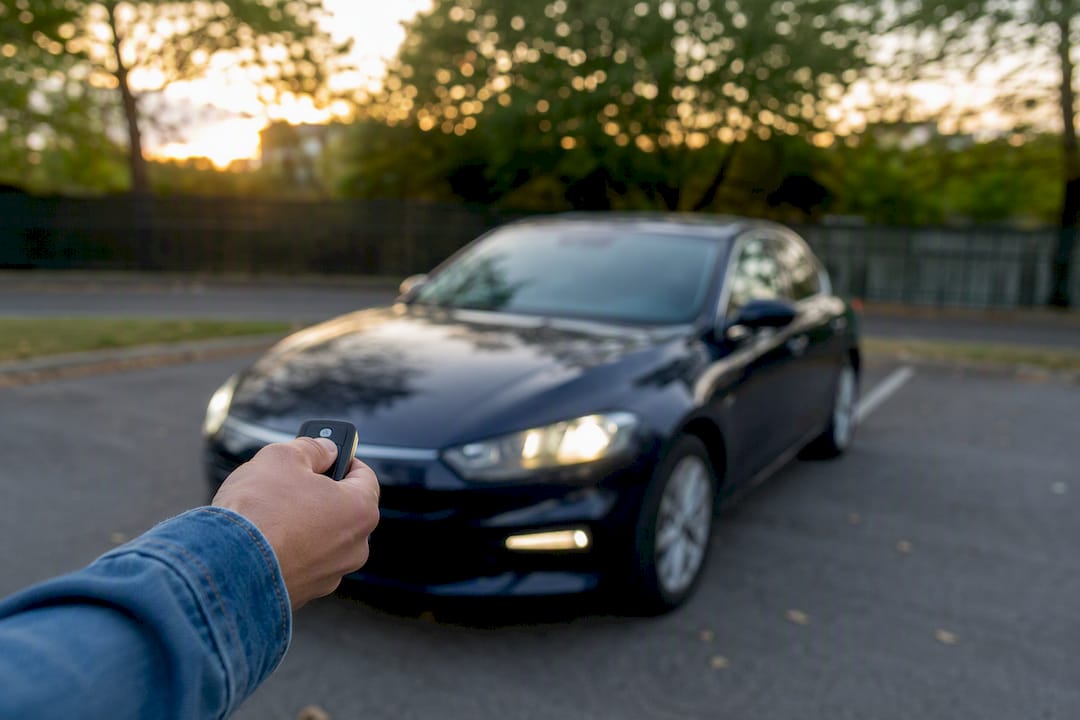
To close that gap, rental counters sell Collision Damage Waivers (CDW) or Loss Damage Waivers (LDW), and many credit cards include limited collision protection as a cardholder perk. Both come with their own exclusions and limits, so read the fine print rather than assuming full protection.
Picture this: you're driving a rental, run a stop sign, and hit another car. Your non-owner liability pays for the other driver's medical bills and vehicle repairs. But the dent in your rental? That falls to CDW, a credit card benefit, or your own pocket. If you rent often, pairing non-owner liability with one of those two options is worth the extra cost.
Should You Add Optional Coverage or Buy a Standard Policy Instead?
Some states let you layer UM/UIM or MedPay onto a non-owner policy, and it's worth doing if you frequently ride in or drive cars owned by people who might be underinsured. These add-ons work similarly to how they function on a standard owner policy, covering your medical costs regardless of who's at fault.
A non-owner policy stops making sense in a few situations:
- You drive the same vehicle regularly and would benefit from physical damage coverage
- You live with the vehicle's owner and could be added to their existing policy instead
- You need collision or comprehensive coverage because the car has real value to protect
If you drive for rideshare or delivery work, non-owner insurance won't help you at all. Those platforms require commercial or rideshare-specific coverage, and a standard non-owner policy typically excludes livery and delivery use entirely. Run through frequency of driving, your tolerance for out-of-pocket vehicle repair costs, and your household setup before deciding which direction fits.
How M F and T North America Helps Drivers Get Non-Owner and SR-22 Coverage
As a multi-state independent agency with over 30 years in business, M F and T North America shops multiple carriers to find one that actually writes non-owner policies and files SR-22s or FR-44s electronically in your state. We'll confirm filing capability upfront, help you pick the right limits and add-ons, and monitor your coverage so it never lapses. All we need from you is your license number and prior insurance history. Ready to start? Request a quote and we'll walk you through what comes next.
What Happens If You Need to File a Claim on a Non-Owner Policy?
Filing a claim on a non-owner policy works differently than filing on a standard owner policy, mostly because of who pays first. If you cause an accident while driving someone else's car, the vehicle owner's insurance is typically the primary payer for damage and injury claims. Your non-owner policy only kicks in as secondary coverage, covering costs above the owner's policy limits or filling gaps if their coverage lapses.
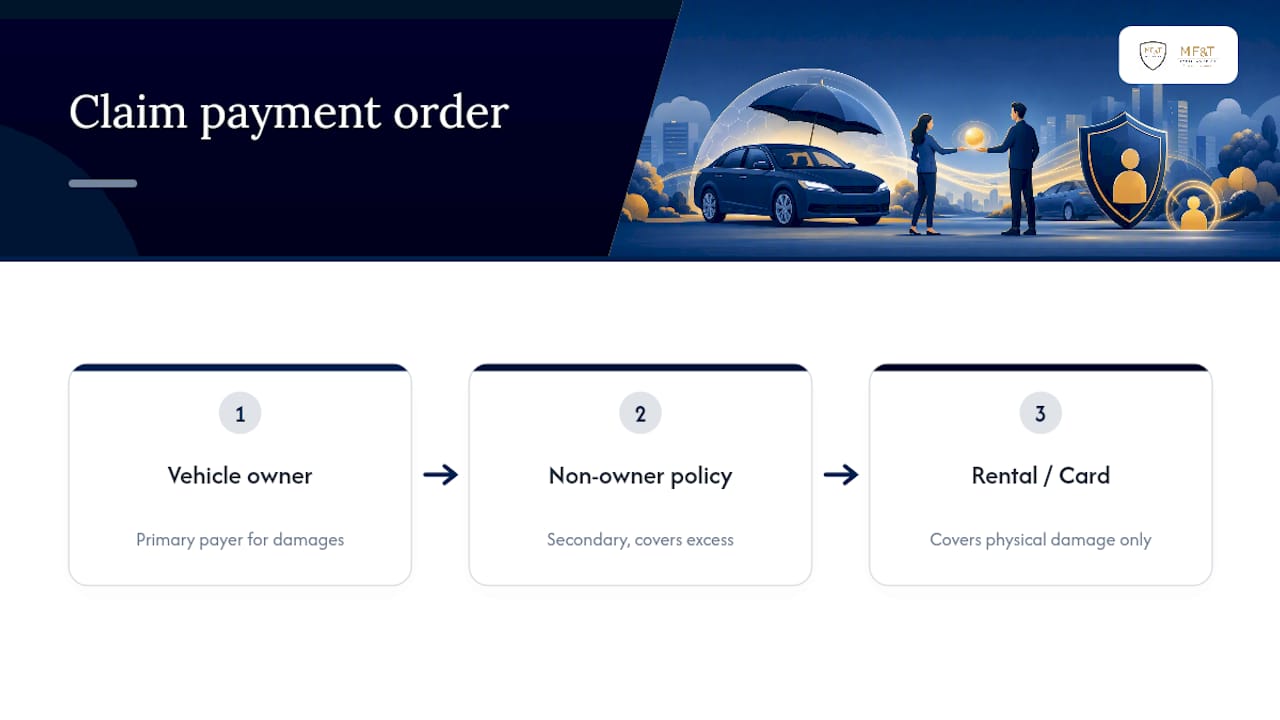
That means the claims process usually starts with the vehicle owner's insurer, not yours. You'll still need to report the incident to your own carrier promptly, even if you don't expect your policy to pay out, since most policies require notification within a specific window regardless of fault or payment order.
Have your policy number, the date and location of the accident, and the vehicle owner's insurance information ready when you call. Because non-owner claims involve coordinating between two insurers instead of one, expect the process to take a bit longer than a typical single-policy claim. Adjusters need to determine which policy pays first and confirm limits on both sides before finalizing anything.
If you're driving a rental at the time, the process gets a third layer: the rental company's own damage waiver or the credit card benefit you used may need to be looped in separately for any physical damage to the car itself, since your liability policy won't touch that piece regardless of fault.
How Is Non-Owner Insurance Different From a Named Driver Policy?
These two products solve different problems, and mixing them up leads to coverage gaps. A named driver policy adds a specific person to an existing vehicle owner's policy, giving that person coverage while driving that particular car, usually because they live in the household or drive it regularly. The policy is tied to the vehicle, and the named driver is just one authorized operator on it.
Non-owner insurance works in reverse. It's tied to you, the driver, not to any single vehicle, and it applies broadly whenever you drive a car you don't own, whether that's a rental, a friend's car, or a borrowed vehicle at a moment's notice. A named driver policy won't help you if you're driving a car other than the one specified. Non-owner insurance won't help if you're the primary driver of one particular car and need physical damage protection for it.
If you live with someone and drive their car regularly, being added as a named driver on their policy is usually cheaper and more complete than carrying a separate non-owner policy, since it can include collision and comprehensive coverage for that vehicle. Non-owner insurance makes more sense when your driving is unpredictable across multiple vehicles you don't have a fixed relationship with.
How Long Does Non-Owner Coverage Last, and How Does Renewal Work?
Non-owner policies typically renew every six or twelve months, similar to standard auto insurance, and most insurers offer automatic renewal unless you cancel. If you're carrying the policy for an SR-22 or FR-44 requirement, your state has set a specific filing period, often three years, though it varies by state and violation type, and you need continuous coverage for that entire window.
Letting the policy lapse, even briefly, during an SR-22 period typically resets the clock and can trigger another license suspension, so treat renewal dates as fixed deadlines rather than flexible ones. Set a calendar reminder well ahead of your renewal date, and if you're switching carriers mid-term for a better rate, make sure the new policy's effective date overlaps with the old one's expiration so there's zero gap.
Once your SR-22 obligation ends, you can drop the filing, but many drivers keep the underlying non-owner policy active if they still don't own a car and expect to keep driving borrowed or rented vehicles. If your situation changes, such as buying a car, you'll need to switch to a standard owner policy rather than trying to stretch non-owner coverage to fit a vehicle you now own outright.
Will Non-Owner Insurance Affect Your Future Auto Insurance Rates?
Carrying non-owner insurance, even for an SR-22, generally works in your favor over time compared to having a coverage gap. Insurers look closely at continuous insurance history when quoting a new policy, and a documented gap, even for a few months, tends to raise your rates more than the presence of a non-owner policy on your record.
If you eventually buy a car and move to a standard owner policy, your non-owner coverage history typically counts as prior insurance, which most carriers view favorably. It shows you maintained coverage responsibly even without a vehicle to insure. The SR-22 itself, however, is tied to the violation that triggered it, not the non-owner policy, so your rates going forward will reflect that underlying record (a DUI, a lapse, an at-fault accident) rather than the fact that you carried non-owner coverage.
One thing to watch: if you're added to a household member's policy as a named driver while also holding a separate non-owner policy, some insurers may ask why, since it can look like you're trying to keep a violation off the household policy. Being upfront about your situation with your agent avoids complications later, and it's one more reason working with an agency that files SR-22s directly makes the process smoother than navigating it solo.
Who Qualifies for a Non-Owner Policy?
Eligibility for non-owner insurance is generally more flexible than for standard auto policies, but it isn't automatic. Most insurers require a valid driver's license, and some restrict eligibility to drivers age 18 and up, though a handful will write policies for younger drivers with a parent's involvement.
Your driving record matters more here than almost anywhere else in auto insurance. A clean record gets you the lowest available rate; a DUI, multiple at-fault accidents, or several moving violations will narrow your carrier options and raise your premium, especially if an SR-22 or FR-44 is attached. Some insurers cap how many violations they'll accept before declining to write a non-owner policy at all, which is another reason to confirm eligibility with a specific carrier before assuming you qualify.
A few restrictions come up often. Insurers typically won't write a non-owner policy for someone who owns a registered vehicle, even if it's currently uninsured or in storage, since the product is designed specifically for people without a car in the household. If you live with someone who owns a vehicle you drive regularly, some carriers will decline non-owner coverage and push you toward being added to that household policy instead. And drivers who need coverage specifically for rideshare, delivery, or other commercial driving won't qualify for standard non-owner policies regardless of their driving record, since those uses require commercial auto coverage built for that purpose.
Agent Perspective: Three Takeaways Before You Buy
Non-owner insurance makes sense when you're truly between cars or need an SR-22 without a vehicle to attach it to. It stops making sense the moment you're driving one car regularly. If you need an SR-22, prioritize finding a carrier that actually files it electronically before comparing price. And always get more than one quote. Coverage details and filing reliability vary more than most drivers expect.
— Mike
Get Non-Owner or SR-22 Coverage With Local Agent Support
Shopping non-owner and SR-22 insurance alone means calling carrier after carrier just to find one that will file your paperwork correctly. M F and T North America does that legwork for you, comparing multiple carriers across the states we serve to find one that writes non-owner policies, files SR-22s or FR-44s electronically, and fits your budget.
Before you reach out, have your driver's license number, prior insurance dates, and the reason for your SR-22 (if you have one) on hand. It speeds up your quote significantly. Once you're set up, we monitor your policy to help you avoid the kind of lapse that can trigger a license suspension. Get a free quote or visit our auto insurance page to see coverage options in your state and get started today.
This article is general information, not a substitute for advice from a qualified financial advisor. Consult a qualified financial professional about your own circumstances before acting on anything here.