
An occurrence policy covers an incident that happens while the policy is active, no matter when the claim shows up later. A claims-made policy only covers claims first reported while the policy is active, so you have to manage a retroactive date and often buy tail coverage to avoid gaps. If you're not sure which one you have, check your declarations page or call your broker before you switch carriers or close your business.
TL;DR:
- Claims-made policies cover claims only if reported during the policy period and after the incident occurred on or after the retroactive date.
- Occurrence policies respond based on when the incident happened, regardless of when the claim is filed, with no retroactive date restriction.
- Switching claims-made carriers without preserving the retroactive date can create coverage gaps, which tail coverage can bridge with advanced planning.
- Premium costs for claims-made policies increase each year until they level off, while occurrence premiums are higher initially but more predictable.
- Business owners should verify policy form, retroactive date, and tail coverage options before renewing or changing carriers to prevent coverage lapses.
Table of Contents
- Claims-Made vs. Occurrence: How Each Policy Actually Works
- Claims-Made vs. Occurrence Insurance: Comparing the Key Differences
- Which Insurance Lines Use Claims-Made vs. Occurrence?
- Retroactive Dates, Prior Acts, and Tail Coverage: Closing the Gaps
- Budgeting for Claims-Made vs. Occurrence: What Premiums Actually Do
- How to Choose Between Claims-Made and Occurrence Coverage
- Real Scenarios: What Happens When the Clock Runs Out
- MF&T North America's Take on Protecting Clients Through Transitions
- Get a Policy Review Before Your Next Renewal
- Sources
- FAQ
Claims-Made vs. Occurrence: How Each Policy Actually Works
Every liability policy runs on one of two clocks. Occurrence coverage locks in based on when the incident happened. If your commercial auto policy was active on the date of a fender bender, that policy responds even if the injured party doesn't file suit for three years.
Claims-made coverage runs on a different clock entirely: it responds based on when the claim is reported, not when the mistake happened. A claims-made policy covers claims first reported while the policy is active, provided the underlying incident occurred on or after your retroactive date. Miss that reporting window, and coverage disappears, even if you were insured when the mistake happened.
Some carriers write a stricter variant called "claims-made-and-reported," which requires notice within a specific window (often 30 to 60 days) after you learn of a potential claim, not just before the policy expires.
Your declarations page tells you which form you're holding. Look for:
- A line labeled "Claims-Made" or "Occurrence" near the top of the form
- A "Retroactive Date" field (claims-made policies only)
- The policy period dates, which define your reporting window
Claims-Made vs. Occurrence Insurance: Comparing the Key Differences
Here's how the two forms stack up across the factors that actually affect your risk:
- Coverage trigger: Occurrence responds to the incident date; claims-made responds to the report date.
- Retroactive date effect: Occurrence has none; claims-made won't cover incidents before your retro date, even during an active policy.
- Tail coverage need: Occurrence never needs one; claims-made almost always does when you switch carriers, retire, or close the business.
- Premium behavior: Claims-made starts cheaper and climbs each year; occurrence stays comparatively steady from day one.
A quick example: a contractor's general liability occurrence policy from 2023 still covers a property-damage claim filed in 2026, as long as the damage happened in 2023. An accountant's claims-made E&O policy from that same year would only cover a 2026 claim if the policy was still active (or tail was purchased) when the claim landed and the error happened on or after the retro date.
Which Insurance Lines Use Claims-Made vs. Occurrence?
The form isn't random. Carriers assign it based on how long a mistake can take to surface.
Claims-made is standard for:
- Professional liability / errors and omissions (E&O)
- Directors and officers (D&O)
- Cyber liability
- Medical malpractice
Occurrence is standard for:
- General liability
- Commercial auto
- Workers' compensation
The logic is straightforward. A slip-and-fall claim usually surfaces within weeks, so general liability insures against bodily injury and property damage on an occurrence basis without much long-tail risk to the carrier. A design error or a bad piece of financial advice can take years to produce measurable harm, which is exactly why professional liability lines lean claims-made. Insurers price these lines around the report date because it caps their exposure to indefinite lookback periods. If you're a contractor carrying both a GL policy and a professional liability policy for design work, you're managing two different clocks under one business, which is exactly the kind of detail that trips up owners at renewal time.
Retroactive Dates, Prior Acts, and Tail Coverage: Closing the Gaps
Your retroactive date is the earliest point in time your claims-made policy will recognize an incident. Anything before that date, no matter how minor, falls outside coverage. This date typically matches your very first claims-made policy's inception date and should carry forward every year you renew.
The danger comes when you switch carriers. A new insurer may reset your retroactive date to the new policy's start date instead of honoring your original one. When that happens, any prior acts before the new retro date lose coverage entirely, even though you were continuously insured.
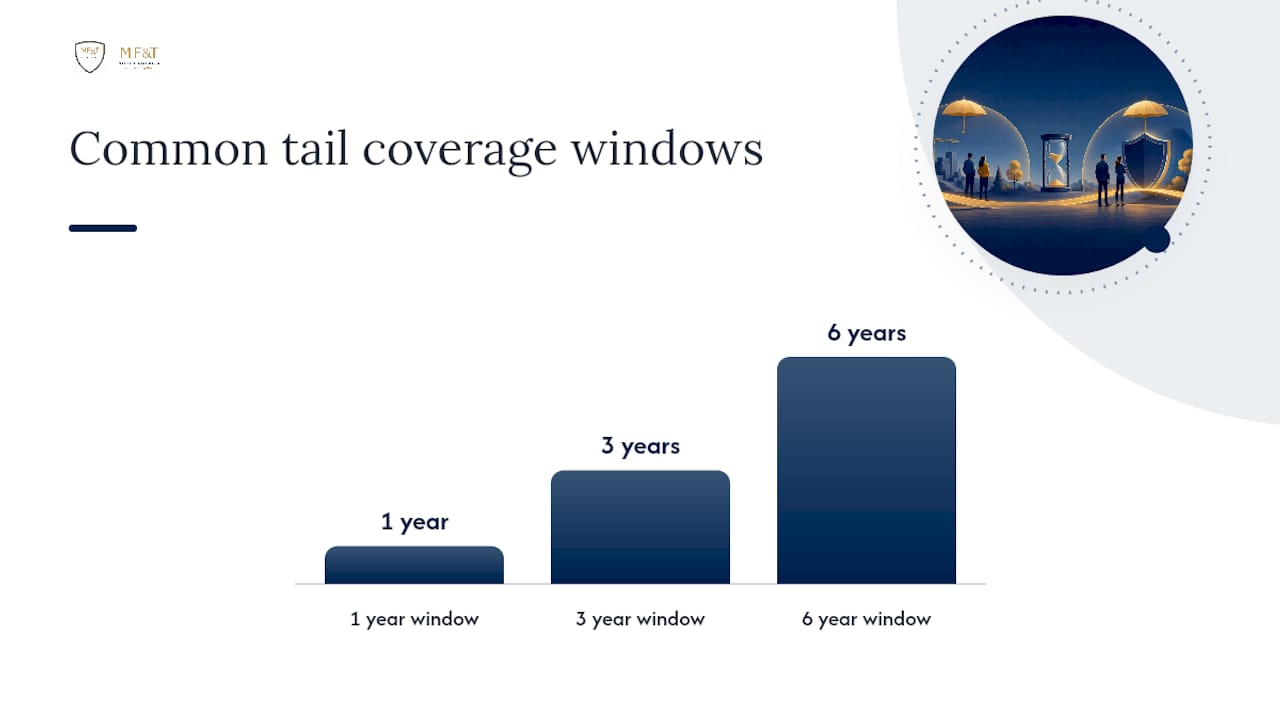
Tail coverage, formally called an extended reporting period (ERP), solves the exit problem. It's a one-time purchase that lets a lapsed claims-made policy keep accepting claims for a set window after the policy ends, commonly one, three, or six years.
Before switching carriers or winding down a business, work through this list:
- Confirm your current retro date in writing
- Ask the new carrier to match or "carry" that retro date, not reset it
- Get a tail quote before you need one, not after
- Negotiate prior-acts wording into the new policy if the retro date can't be preserved
Pro Tip: Get your tail quote at least 60 days before your policy lapses. Pricing swings by carrier and claims history, and waiting until the last week leaves you no room to negotiate or shop.
Budgeting for Claims-Made vs. Occurrence: What Premiums Actually Do
Claims-made premiums follow a predictable curve. First-year rates come in low because the insurer's exposure is limited to incidents that happen and get reported in that single year. Each renewal adds a "step" that raises the rate, since the carrier now covers a growing window of prior years too. By year five or so, claims-made pricing typically levels off near an occurrence-equivalent rate.
Occurrence premiums skip that ramp. They start higher because the insurer is on the hook for that policy year's incidents indefinitely, however long a claim takes to surface. What you lose in a cheap first year, you gain in predictability.
Budget for three variables beyond the annual premium:
- Claims history: A prior loss can spike your claims-made step factor faster than it affects occurrence rates.
- Industry risk: Design professionals and healthcare providers see steeper claims-made curves than lower-risk consulting fields.
- Tail cost at exit: A common planning heuristic puts a one-year tail around the cost of one annual premium, with multi-year tails priced as a multiple of that. Get an actual quote rather than relying on a rule of thumb.
How to Choose Between Claims-Made and Occurrence Coverage
Before you sign a renewal, run through this checklist on your declarations and policy forms:
- Confirm the form type stated on the declarations page.
- Locate the retroactive date and verify it hasn't quietly reset.
- Check the reporting window and any "claims-made-and-reported" language.
- Review your limits and aggregate caps against current contract requirements.
- Ask whether occurrence is even offered for your line, and at what premium difference.
When you talk to your broker at renewal, ask directly: "Can you carry my retro date forward?" and "What would a three-year tail cost if I closed this policy today?" A broker who can't answer either question quickly is a red flag. Insist on written confirmation of retro date portability whenever you change carriers. Small business owners juggling multiple policies should also review common renewal mistakes that create exposure gaps nobody notices until a claim arrives.
Pro Tip: Ask your broker to put retro date continuity in writing, ideally as an endorsement, not just a verbal assurance. A certificate confirming prior-acts portability is worth far more than a friendly promise when a dispute lands on the table.
Real Scenarios: What Happens When the Clock Runs Out
- The retired consultant: A consultant closes shop without buying tail coverage. Two years later, a former client files a claim over advice given while the policy was active. Denied, because no policy was in force to receive the report. A single tail purchase would have kept the door open.
- The contractor with occurrence GL: A worker on a job site is injured, but the claim isn't reported until 18 months later. Because the GL policy was occurrence-based and active on the injury date, it still responds without hesitation.
- The carrier switch: A firm changes carriers and the new insurer resets the retroactive date to the new start date. A claim tied to work performed the prior year gets denied, a gap that negotiated prior-acts wording or a carried-forward retro date would have prevented.
MF&T North America's Take on Protecting Clients Through Transitions
Renewals and carrier switches are where claims-made coverage quietly breaks down, and we've built our process around catching that before it becomes a denied claim. As an independent agency with over 30 years of experience, we review your declarations page, confirm your retroactive date, and shop tail quotes before you need them, not after. If you're unsure what you're holding, ask us for a no-obligation policy review.
— Mike
Get a Policy Review Before Your Next Renewal
Reviewing a claims-made policy on your own is one thing. Catching a retro date reset, or pricing out a tail before it becomes an emergency, is where an independent agent earns their keep. An independent agent shops multiple carriers on your behalf, so you're not stuck accepting whatever renewal terms show up in your inbox.
Our process covers the parts that trip up business owners most: policy form review, retroactive date verification, and tail procurement timed to your actual exit plans, whether that's a carrier switch, retirement, or a business sale. Licensed local agents handle the comparison work across carriers so you can get coverage suited to your specific exposure, not a generic package. If you're carrying professional liability, general liability, or a mix of both, start with a business insurance review to confirm your current form, retro date, and renewal timeline before your next policy period begins.
Sources
- Occurrence vs. Claims Made Policies Explained
- Claims-Made vs. Occurrence: What They Are and Why They Matter
- General liability vs. professional liability
This article is general information, not a substitute for advice from a qualified financial advisor. Consult a qualified financial professional about your own circumstances before acting on anything here.
FAQ
How Do I Know If My Insurance Is Claims-Made or Occurrence?
Check your declarations page for the words "Claims-Made" or "Occurrence" near the top of the form. A claims-made policy will also list a retroactive date; an occurrence policy won't have one at all.
Should I Choose Claims-Made or Occurrence Coverage?
It depends on the line of insurance, not personal preference. Professional liability, D&O, and cyber lines are typically only offered as claims-made, while general liability and commercial auto are usually occurrence, so the real decision is how you manage retro dates and tail coverage around the claims-made policies you're required to carry.
What's the Difference Between Claims-Made and Occurrence Coverage?
Occurrence coverage responds based on when the incident happened, regardless of when the claim is filed. Claims-made coverage responds based on when the claim is reported, and only if the incident happened on or after your retroactive date.
What Happens if I Don't Buy Tail Coverage?
Without tail coverage, a lapsed claims-made policy stops accepting new claims the moment it ends, even for incidents that happened while it was active. A tail purchase extends that reporting window for a set period, commonly one to six years, so past acts stay covered.
Can MF&T North America Help Me Review My Policy Form?
Yes. M F and T North America reviews declarations pages, confirms retroactive dates, and shops tail quotes across carriers as part of a standard business insurance policy review.